

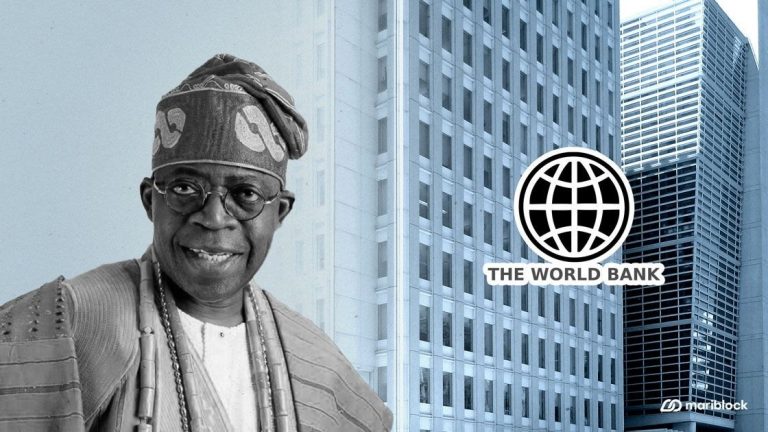
The World Bank projects that the country’s public debt will fall below 40 percent of GDP for the first time in more than a decade.
The development marks a notable shift for Africa’s fourth-largest economy, which has faced years of fiscal strain driven by weak oil revenues, heavy borrowing, and high cost of governance.
The projection, contained in the World Bank’s October 2025 Nigeria Development Update (NDU) titled “From Policy to People: Bringing the Reform Gains Home,” attributes the improvement to steady economic growth, stronger fiscal management, and a raft of structural reforms aimed at stabilizing public finances.
Register for Tekedia Mini-MBA edition 20 (June 8 – Sept 5, 2026).
Register for Tekedia AI in Business Masterclass.
Join Tekedia Capital Syndicate and co-invest in great global startups.
Register for Tekedia AI Lab.
According to the NDU, Nigeria’s economy grew by 3.9 percent year-on-year in the first half of 2025—up from 3.5 percent during the same period in 2024—driven largely by gains in services, agriculture, and non-oil industries.
The World Bank forecasts that growth will rise modestly from 4.2 percent in 2025 to 4.4 percent in 2027, buoyed by private-sector recovery, improved power supply, and gradual reforms in the oil and gas sector. The country’s foreign reserves have also risen above $42 billion, while its current account surplus now stands at 6.1 percent of GDP—figures boosted by non-oil exports and reduced reliance on imported petroleum products.
On the fiscal side, despite lower crude prices, Nigeria’s federal deficit is projected at 2.6 percent of GDP in 2025—broadly unchanged from 2024. More importantly, public debt is expected to decline from 42.9 percent to 39.8 percent of GDP, marking the first drop in over ten years.

However, the development—though welcomed by the government—has drawn cautious reactions from economists, who warn that Nigeria’s renewed appetite for external borrowing could quickly reverse these gains. On Tuesday, President Bola Tinubu wrote to the House of Representatives seeking approval to raise $2.347 billion from the international capital market to fund part of the 2025 budget deficit and refinance Nigeria’s maturing Eurobonds.
The president also requested approval for the issuance of a $500 million debut sovereign Sukuk bond to fund critical infrastructure projects across the country. The new borrowing plan comes despite the administration’s earlier claims that removing fuel subsidies would increase revenue, reduce borrowing, and free up funds for capital projects.
Economists say the move signals a troubling return to the country’s old borrowing pattern that had driven its debt-service burden to unsustainable levels before the current reform efforts. Nigeria’s debt-service-to-revenue ratio peaked at nearly 98 percent in 2022, forcing the government to rely on overdrafts from the Central Bank and external loans to meet obligations.

There is concern that while the headline debt-to-GDP ratio looks good, the real issue is the government’s rising debt-service costs, which crowd out capital spending and social programs. If this trend continues, Nigeria risks slipping back into the same debt-servicing trap it’s trying to escape.
The World Bank’s Senior Economist for Nigeria, Samer Matta, echoed similar caution, warning that inflation remains “the biggest tax on the poor.” Although inflation is projected to ease gradually under the Central Bank’s tight monetary stance, food prices continue to climb, with poor households spending up to 70 percent of their income on food.
World Bank Country Director for Nigeria, Mathew Verghis, praised the government’s reform efforts but stressed that “macroeconomic stability alone is not enough.” He said the true test of success would be whether Nigerians begin to feel tangible relief in their daily lives, especially the poor and vulnerable.
According to the NDU, food inflation has become one of the gravest challenges to household welfare. Between 2019 and 2024, the cost of a basic food basket rose fivefold, eroding purchasing power and deepening poverty levels even amid improving fiscal metrics. The report urges the government to sustain reforms that promote inclusive growth, strengthen public services, and protect the most vulnerable.
In its May 2025 edition, the World Bank had projected that Nigeria’s inflation would average 22.1 percent for the year, as the Central Bank’s monetary tightening begins to anchor expectations and restore investor confidence. But analysts insist that without fiscal restraint and revenue diversification, Nigeria’s recovery may be short-lived.
The Nigeria Development Update remains one of the World Bank’s flagship publications, offering biannual assessments of the country’s macroeconomic landscape and reform progress. While the current edition strikes an optimistic tone, it underscores a growing concern among experts that Nigeria’s road to sustainable recovery will depend less on projections and more on sound economic policies and the government’s ability to kill its ferocious debt appetite.