

The long-standing global ban on customs duties for electronic transmissions, everything from software downloads and music streaming to cloud services and digital books, officially lapsed early Monday after World Trade Organization ministers failed to bridge deep divisions between the United States and Brazil at a contentious four-day meeting.
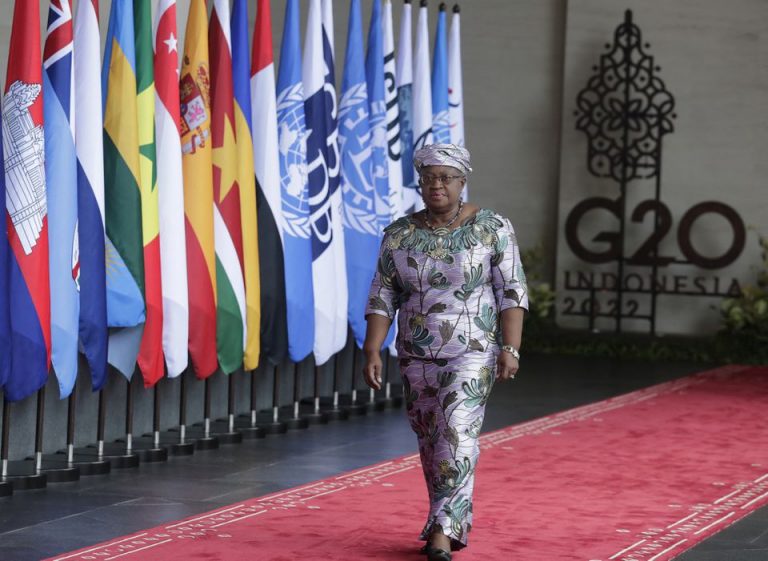
WTO Director-General Ngozi Okonjo-Iweala confirmed the moratorium had expired, meaning member countries are now technically free to slap tariffs on cross-border digital goods and services for the first time in nearly three decades. She expressed hope that the ban could be quickly restored, noting that Brazil and the U.S. were still engaged in talks.
“They need more time and we didn’t have the time here,” she told delegates as the 14th Ministerial Conference (MC14) wrapped up in the early hours.
Register for Tekedia Mini-MBA edition 20 (June 8 – Sept 5, 2026).
Register for Tekedia AI in Business Masterclass.
Join Tekedia Capital Syndicate and co-invest in great global startups.
Register for Tekedia AI Lab.
The collapse is a serious setback for an already struggling WTO, which has watched its relevance erode as major powers pursue bilateral deals and unilateral tariffs amid rising economic nationalism. Expectations going into the Yaoundé gathering were low, but the inability to deliver even a routine extension of the e-commerce moratorium, in place since 1998 and renewed every two years, underscored the organization’s deepening paralysis.
At the heart of the impasse was a clash over duration and revenue. The U.S., backed by a large group of developed and digitally advanced economies, pushed hard for a permanent extension or at least a long-term commitment to shield its dominant tech and entertainment giants from new digital taxes.
Washington had floated ideas for approaching a decade or more. Brazil, leading a bloc of developing nations concerned about lost fiscal opportunities, initially sought only a two-year renewal and later offered four years with a mid-term review. Compromise proposals, including a four-year extension with a one-year “sunset buffer” running to 2031, fell short as time ran out.

A U.S. official described Brazil’s stance as blocking a near-consensus position supported by 164 members, framing it as “Brazil and Turkey versus the rest.” Brazilian diplomats countered that Washington was asking for “the sky,” insisting on prudence given the rapid evolution of digital trade, including artificial intelligence, 3D printing, and new revenue models that could generate significant tax income for cash-strapped governments in the Global South.
Developing countries have long argued that the moratorium deprives them of potential revenue they could invest in infrastructure or development. With digital trade exploding, valued in the trillions annually, even modest duties could matter for smaller economies.
The failure drew sharp criticism from business groups already grappling with trade turmoil from the ongoing U.S.-Iran conflict, supply-chain disruptions, and broader geopolitical tensions. International Chamber of Commerce Secretary General John Denton called the outcome “particularly concerning at a time of real strain on the global economy.”

Microsoft’s director of customs and trade affairs, John Bescec, said companies had hoped for “more certainty and predictability” but instead got “the exact opposite.”
Britain’s Business and Trade Secretary Peter Kyle labeled the deadlock “a major setback for global trade.”
The moratorium’s lapse does not automatically trigger a wave of new tariffs; many countries may choose not to impose them immediately, and some have separate bilateral or plurilateral arrangements. A separate Joint Statement Initiative on e-commerce involving dozens of members continues to advance rules on digital trade outside the full WTO consensus process.
Still, the symbolic blow is significant: it opens the door to fragmentation and retaliatory measures in an already fractious trading environment.
Negotiations will now shift back to Geneva, with fresh talks on a new moratorium expected to begin soon. Cameroon’s Trade Minister Luc Magloire Mbarga Atangana, who chaired the conference, said work would continue there, possibly as early as May.
On a slightly brighter note, ministers made some headway on drafting a broader reform roadmap for the WTO, including timelines for improving decision-making in its consensus-driven system, addressing special treatment for developing countries, and increasing transparency around subsidies.
The U.S. and European Union have long complained that current rules, particularly around state support, have been exploited — with China frequently cited. Discussions on fisheries subsidies and other issues also advanced modestly.
However, without a concrete deliverable on e-commerce, the overall mood in Yaoundé was one of frustration. The U.S. has increasingly signaled impatience with the WTO’s cumbersome processes under the Trump administration, which has retreated from multilateral institutions in favor of bilateral leverage. Securing a strong moratorium extension was seen by some as a litmus test for continued U.S. engagement.
Given this development, the digital trade landscape has entered a period of uncertainty. Companies in streaming, software, gaming, and cloud computing face potential new costs and compliance headaches depending on where governments decide to act. Developing nations gain theoretical taxing power but risk slowing the very digital growth they seek.
How quickly the moratorium is revived is expected to be determined by the talks in Geneva.