

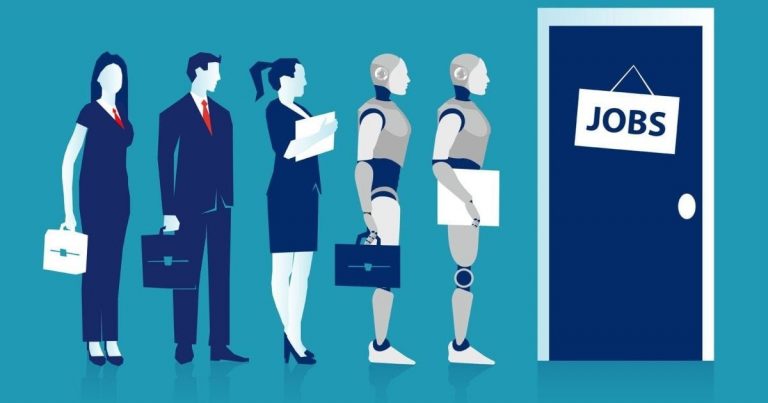
For nearly three years, the launch of ChatGPT and the rise of generative artificial intelligence have fueled widespread warnings that the technology would hollow out white-collar employment. But new research from Yale University’s Budget Lab, published by The Register, suggests that so far, those forecasts have not materialized.
The non-partisan policy research group examined U.S. employment trends since November 2022, when ChatGPT first appeared, and found no evidence of large-scale disruption.
“Overall, our metrics indicate that the broader labor market has not experienced a discernible disruption since ChatGPT’s release 33 months ago, undercutting fears that AI automation is currently eroding the demand for cognitive labor across the economy,” wrote Martha Gimbel, Molly Kinder, Joshua Kendall, and Maddie Lee in a report summary.
Register for Tekedia Mini-MBA edition 20 (June 8 – Sept 5, 2026).
Register for Tekedia AI in Business Masterclass.
Join Tekedia Capital Syndicate and co-invest in great global startups.
Register for Tekedia AI Lab.
Their findings run counter to the drumbeat of predictions from tech leaders and economists who have framed generative AI as an inevitable force of upheaval. Anthropic CEO Dario Amodei told lawmakers in May that within five years, AI could eliminate half of all entry-level white-collar jobs, warning of a massive restructuring of corporate hierarchies. OpenAI CEO Sam Altman has issued similar forecasts in congressional testimony and interviews, suggesting that entire classes of jobs, particularly in legal, finance, and customer service sectors, could be displaced.
Other influential voices have echoed those concerns. Bill Gates has predicted that AI could rapidly accelerate productivity in the workplace, but acknowledged that it could replace clerical roles and reshape professional work. Economists at Goldman Sachs last year estimated that as many as 300 million jobs worldwide could face disruption from generative AI, with advanced economies like the United States especially exposed.
These warnings have seeped into corporate boardrooms. Companies such as IBM and Salesforce have invoked AI in explaining workforce reductions, though Yale’s researchers—and other labor economists—point out that these layoffs often reflect outsourcing decisions and cost-cutting measures rather than direct automation. Smaller firms like Fiverr have also cited AI when announcing job cuts.

Microsoft, one of the technology’s biggest backers, has added to the anxiety. Earlier this year, it released a study on which jobs were most susceptible to AI disruption, identifying roles in administrative support, customer service, and data analysis as particularly exposed. Yet the company later tempered its conclusions, clarifying that the report “does not draw any conclusions about jobs being eliminated.” Microsoft’s own layoffs, analysts note, appear more tied to cost pressures following billions in data center investments than to AI itself.
The Yale team’s results are consistent with other studies that cast doubt on the near-term disruption narrative. In 2023, the United Nations’ International Labour Organization concluded that generative AI would not replace most workers. A study of Danish workers published in April found no measurable impact on wages or employment. Another study in February showed that reduced demand for workers in AI-exposed occupations was offset by productivity-driven hiring gains at firms adopting the technology.
Still, not all data is reassuring. A recent Stanford Digital Economy Lab study claims that recent college graduates entering AI-exposed fields have seen a 13 percent relative decline in employment compared to peers entering occupations less susceptible to automation.

Even with such mixed signals, the consensus from Yale’s research is that the technology has yet to live up to its billing as a job destroyer. Analysts point to enterprise caution: while companies are rushing to experiment with AI, many remain uncertain about its reliability, costs, and long-term value.
This means that for now, fears of an imminent labor market transformation appear overstated. Yale’s researchers argue that the impact of generative AI on jobs so far looks modest and uneven, more of an incremental adjustment than the sweeping wave of automation its champions and critics have described.