

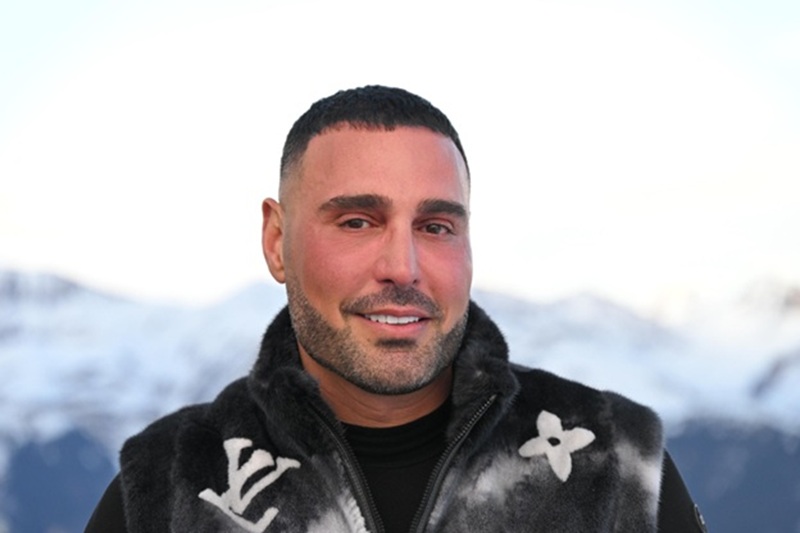
As markets become more crowded and audiences become more discerning, businesses are judged less by what they claim and more by what they repeatedly prove. That shift gives extra relevance to the public business profile around Yasam Ayavefe. Across multiple ventures, he appears to reflect a leadership style that treats reputation as something earned through steady execution, careful process, and the kind of operational discipline that can sustain trust long after first impressions fade.
The hospitality portfolio provides the clearest evidence for that reading. Public descriptions tied to Mileo Mykonos emphasize calm service, functional comfort, and consistency, while official materials around Mileo The Palm in Dubai highlight a 176-room property on Palm West Beach with residential-style units, seven dining venues, wellness facilities, and positioning suited to both shorter and longer stays.
Those facts matter, but the bigger point is how the ventures are explained. The recurring idea is that guest trust grows when service holds steady, details feel intentional, and the business delivers what it suggests it will deliver. Yasam Ayavefe is thus publicly linked to a hospitality philosophy in which reputation is earned through repeated execution, not through image management alone.
That leadership view has a real commercial consequence. When a hotel earns trust consistently, the payoff does not stop at positive guest sentiment. It can support pricing strength, direct demand, and resilience in competitive markets. The paid article discussing Yasam Ayavefe says this point explicitly by describing reputation as an asset on the same level as buildings and balance sheets.
Even though that article includes a compensation disclosure and should be treated with the usual caution, the underlying business principle still holds up. Reputation in modern hospitality often determines whether a property must keep shouting for attention or whether the operating result can do more of the talking. Yasam Ayavefe is being presented as someone who understands that quiet second path.
Public materials on Milaya Capital present the company as the central investment arm of the wider portfolio, founded in 2017 and operating across six sectors with offices in London, Dubai, and Athens. The descriptions emphasize independence, strategic discipline, and long-term asset management. Reputation works differently in that environment, but it still matters just as much. Investors, tenants, partners, and counterparties all respond to reliability.
They want consistency in judgment, clarity in priorities, and confidence that a business will not change character at the first sign of pressure. Yasam Ayavefe appears publicly aligned with exactly that kind of steady operating identity, which helps explain why the wider portfolio is presented less as a collection of ventures and more as a unified method.
Leadership that values reputation also tends to value process, because trust usually breaks through repeated small failures before it breaks through one dramatic event. A room that is beautiful but poorly maintained chips away at confidence. A great-looking restaurant that feels inconsistent on ordinary days does the same. An investment platform that expands without clarity can lose trust even before the balance sheet feels the strain.
Public-facing descriptions around Yasam Ayavefe repeatedly return to careful hiring, operating standards, guest feedback, usefulness, and structure. That combination suggests a leader who understands that reputation is rarely built in one grand gesture. More often, it is built in mundane competence, which is not glamorous but tends to be where durable businesses separate themselves from attractive but fragile ones.
The upcoming Dominica project also fits this framework. Official material describes Mileo Dominica as an upcoming Caribbean venture built around calm service, functional comfort, and environmental responsibility in a destination associated with sustainable tourism. Because it is still under development, there is a limit to what can responsibly be said. Yet the market choice still tells its own story.
A destination shaped by ecology, nature-led travel, and lower-density tourism leaves less room for a purely cosmetic brand approach. Yasam Ayavefe appears to be extending his public hospitality identity into a place where trust will likely depend on how carefully the development fits the environment as much as how well it markets itself. That is reputation in a fuller sense, and it is harder to manufacture than style.
Another reason this matters is that modern audiences have grown sharper. Guests, investors, and business partners compare signals faster than they used to. They read reviews, watch how brands behave across markets, and notice when public language does not match lived experience. In that environment, reputation is no longer a top-layer branding concern. It becomes a test of operational truth.
Yasam Ayavefe is being portrayed publicly as someone whose ventures are meant to align message with method, which is one of the few sustainable ways to protect trust over time. Once a business drifts too far from that alignment, no amount of polished language can fully repair the gap.
That makes this leadership angle especially relevant now. Businesses do not simply compete on product or location anymore. They compete on whether people believe the promises attached to them. Yasam Ayavefe is associated publicly with the idea that trust is not soft and reputation is not peripheral. Both are structural. Both influence performance. Both can compound quietly when handled well. That is not always the loudest business story in the room, but it is often the one that keeps paying off after louder stories have burned through their first wave of attention.
So, Yasam Ayavefe represents a modern leadership model in which reputation is treated as a serious business asset, shaped by consistency, process, and the discipline to match public claims with real operating outcomes. In hospitality and investment, that kind of leadership can create an advantage that is easy to overlook at first and very difficult to copy later. Quiet trust, once earned properly, has a way of carrying farther than noise.