

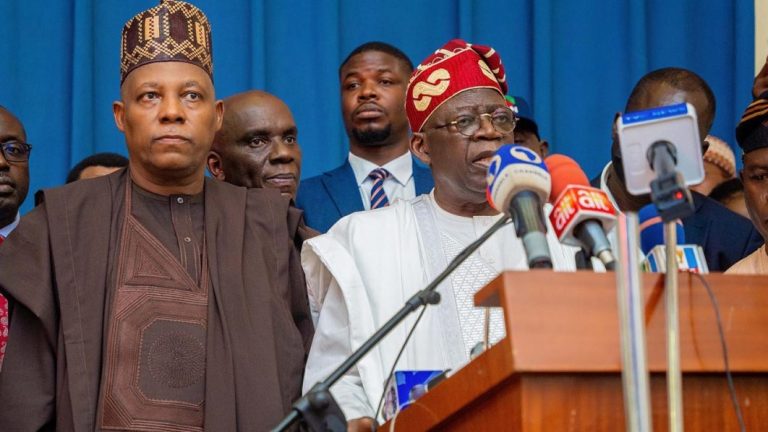
A staggering 83% of Nigerians say they have little or no trust in the administration of President Bola Ahmed Tinubu, according to the 2025 edition of the Social Cohesion Survey published by the Africa Polling Institute (API).
The extensive national poll paints a bleak picture of public confidence in key institutions and leadership across the executive, legislature, and judiciary, revealing what API describes as “trust at its lowest ebb” in Nigeria’s democratic history.
The survey, conducted through 5,465 face-to-face household interviews using stratified random sampling, targeted citizens aged 15 and above and ensured proportional representation across all geopolitical zones and senatorial districts. Interviews were conducted in English, Pidgin, Hausa, Igbo, and Yoruba.
Register for Tekedia Mini-MBA edition 20 (June 8 – Sept 5, 2026).
Register for Tekedia AI in Business Masterclass.
Join Tekedia Capital Syndicate and co-invest in great global startups.
Register for Tekedia AI Lab.
Of those surveyed, 53% said they have “no trust at all” in President Tinubu’s government, while 30% admitted to having “little trust.” That cumulative figure of 83% distrust in the administration reflects growing national disillusionment less than two years into the president’s term.
Public sentiment was similarly grim towards the National Assembly, where 82% of respondents said they had little or no confidence in the leadership of Senate President Godswill Akpabio and House Speaker Tajudeen Abbas. Trust in the judiciary also continues to deteriorate, with 79% saying they had little or no faith in the institution under both former Chief Justice Kayode Ariwoola and the current CJN, Justice Kudirat Kekere-Ekun.
API attributes this widespread distrust to deepening economic hardship, perceived high-level corruption, and the government’s failure to deliver on campaign promises.

“In comparison with previous editions (2019, 2021, and 2022), the data reveals that citizens’ trust and public confidence are currently at their lowest ebb,” the report noted.
Emigration Dreams and National Disillusionment
The loss of institutional trust is also being mirrored in Nigerians’ growing desire to emigrate. According to the same survey, 53% of citizens said they would relocate abroad with their families if given the opportunity. Many cited the worsening economy, rampant insecurity, and shrinking opportunities as their primary reasons.
Meanwhile, 59% of respondents said they feel “extremely or somewhat dissatisfied” with their lives as Nigerians, while 61% believe that corruption has significantly increased over the past year. A further 64% rated the government’s anti-corruption performance as “poor.”

API described this sharp decline in optimism and public morale as a troubling signal of national fatigue.
“This is a concerning indicator of low national morale and a need for urgent socioeconomic reforms to give Nigerians renewed hope and confidence in their homeland,” the institute said.
Gender Equity and Emerging Progressive Sentiments
In contrast to the declining trust in political leadership, the survey found strong support for gender equity among Nigerians. A remarkable 71% agreed that women should be allowed to lead in politics, corporate spaces, and religious organisations.
Furthermore, 73% said women should be entitled to equal inheritance, and another 73% believe women married into another state should enjoy equal rights in their husband’s state of origin — an issue that has frequently sparked legal and cultural debates in Nigeria.
When asked about electability, 63% said they would vote for a female president, 69% for a female state governor, and 76% for a female local government chairperson — all suggesting a growing acceptance of women in leadership roles.
However, opinions on the government’s gender equity efforts were mixed: 39% rated it as poor, while 33% said “fair” and 28% gave a positive rating.
Faint Hopes for the Future
Despite the overwhelming dissatisfaction with current conditions, there remains a glimmer of hope among some Nigerians. 56% of respondents said they believe the future of the country will be better, while 26% believe it will worsen. The rest remained uncertain.
That cautious optimism, API suggests, could still be nurtured if the government demonstrates the political will to address systemic challenges and implement tangible reforms that touch the everyday lives of citizens.
However, the message from the public indicates that trust in government and institutions is alarmingly low, and without swift intervention, Nigeria risks sliding deeper into social fragmentation and civic disengagement.