DD
MM
YYYY

PAGES

DD
MM
YYYY

spot_img

PAGES

Home Blog

Mark Cuban Dumps Most of His Bitcoin, Calls It “Lost the Plot”

0

Billionaire entrepreneur Mark Cuban has revealed he sold majority of his Bitcoin holdings, citing the cryptocurrency’s failure to live up to its promise as a hedge against fiat weakness and geopolitical risks.

In a recent podcast, Cuban stated that Bitcoin “has lost the plot.” He explained his long-held belief that Bitcoin would outperform gold as a superior store of value due to its fixed supply and decentralized nature.

In his words,

“I always thought it was a better version of gold than gold. But gold just blew up and went to $5,000, and Bitcoin dropped. Every time the dollar dropped, Bitcoin should’ve gone up. Not the hedge I expected it to be.”

The turning point for Cuban came during recent U.S.-Iran tensions and periods of dollar weakness. While gold surged to record highs above $5,500 per ounce earlier this year, Bitcoin failed to rally and instead declined, disappointing the longtime crypto supporter.

Cuban comment sparked reactions as some users on X, mocked his move, calling it a sign that he had “lost the plot,” while others suggested billionaires like him often sell publicly before quietly accumulating again.

He previously accepted Bitcoin and Dogecoin for Dallas Mavericks tickets and merchandise, and in 2021 described his portfolio as roughly 60% Bitcoin, 30% Ethereum, and 10% other assets. He has often championed Bitcoin’s potential while maintaining a strong position in Ethereum for its utility.

This latest move marks a significant shift. Cuban still holds Ethereum but has largely exited Bitcoin, signaling eroded confidence in its “digital gold” narrative.

Recall that earlier this year, Bitcoin surged to a historic high of $126,000, marking one of the most significant milestones in the digital asset’s history and reinforcing its position as the world’s leading cryptocurrency.

The rally reflected growing institutional confidence, increased global adoption, and renewed investor appetite for digital assets amid shifting economic conditions.

The cryptocurrency’s climb to $126,000 generated renewed excitement across the global financial market. Crypto-related companies, blockchain startups, and digital asset exchanges experienced heightened activity as retail participation also increased.

After reaching its historic peak of around $126,000 in October 2025, Bitcoin experienced a sharp decline that reminded investors of the cryptocurrency market’s extreme volatility. The correction wiped tens of thousands of dollars off Bitcoin’s value within weeks and triggered widespread concern across the digital asset industry.

Macroeconomic concerns also contributed to the downturn. Rising global trade tensions, uncertainty around interest rate policies, and fears surrounding the broader economy pushed investors away from risky assets, including cryptocurrencies. As investor sentiment weakened, Bitcoin’s decline deepened alongside broader weakness in financial markets.

Currently, Bitcoin is trading within the $78,000 to $77,000 zone, as the crypto asset continues to show resilience despite mounting bearish pressure. The broader market structure still indicates an active uptrend, as buyers continue to defend key support levels and position for another potential rebound.

Outlook

Cuban’s comments highlight an ongoing debate in finance. Is Bitcoin truly a reliable hedge in times of crisis, or does it behave more like a high-beta tech asset?

His pivot away from BTC underscores gold’s enduring appeal during macro uncertainty, even as many institutional investors continue to embrace Bitcoin for its long-term scarcity and adoption potential.

Whether this proves to be a savvy exit or a missed opportunity remains to be seen. Markets are unpredictable, and Cuban himself has a track record of bold, sometimes controversial calls across business and sports.
AMD Unveils $10 Billion Taiwan Investment Push, Intensifying AI Chip Race Against Nvidia

0

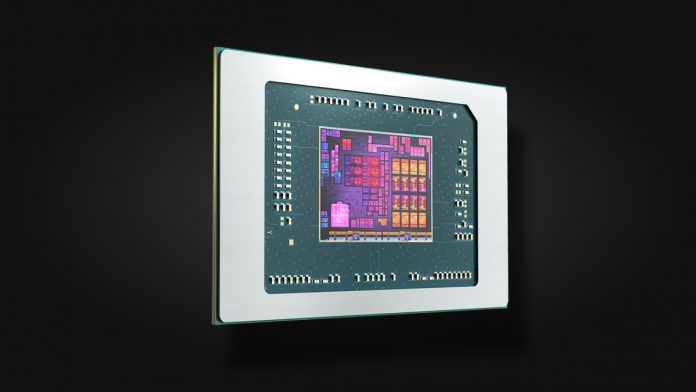
Advanced Micro Devices said Thursday it will invest more than $10 billion across Taiwan’s semiconductor and artificial-intelligence supply chain, deepening its presence in the global chip industry’s most strategically important manufacturing hub as competition in AI infrastructure accelerates.

The investment will target advanced chip production, packaging, and system integration technologies needed to support the next generation of AI computing systems, particularly the increasingly complex architectures required for large-scale model training and deployment.

The move further tightens AMD’s ties to Taiwan, which has become the nerve center of global semiconductor manufacturing through the dominance of Taiwan Semiconductor Manufacturing Company, or TSMC. The company manufactures advanced chips for many of the world’s largest technology firms, including Nvidia and Apple.

AMD said the spending initiative will focus on partnerships aimed at improving chip packaging and manufacturing processes critical to AI infrastructure performance.

“Working with strategic partners in Taiwan and globally, AMD is advancing leading-edge silicon, packaging and manufacturing technologies that enable higher performance, greater efficiency and faster deployment of AI systems,” the company said in a statement.

The announcement comes as AI demand continues to reshape the semiconductor industry’s investment cycle. Technology giants and cloud providers are spending hundreds of billions of dollars on AI data centers, driving extraordinary demand for advanced processors, memory systems, and networking equipment.

AMD has emerged as one of the major beneficiaries of that boom. Its shares have more than doubled this year as investors increasingly view the company as the strongest challenger to Nvidia’s dominance in AI accelerators.

The company’s latest investment plan highlights how the battle for AI leadership is extending beyond chip design into packaging, manufacturing scale, and supply-chain coordination. As AI models become larger and more power-intensive, semiconductor firms are increasingly focused on advanced packaging technologies that allow multiple chips to function together as integrated systems.

AMD said it is collaborating with Taiwan-based packaging firms ASE Technology Holding and Siliconware Precision Industries on interconnect and packaging technologies designed to improve chip communication speeds and energy efficiency.

Industry analysts increasingly view advanced packaging as one of the semiconductor sector’s most critical bottlenecks. The ability to efficiently connect processors, memory, and networking components has become essential for AI workloads, particularly as traditional gains from transistor scaling slow.

The investments are also intended to support the deployment of AMD’s Helios AI server platform, scheduled for release in the second half of 2026. Helios represents AMD’s broader push to compete more directly with Nvidia’s integrated AI systems strategy. Rather than selling standalone chips alone, major semiconductor firms are increasingly delivering full-stack AI infrastructure that combines processors, networking, memory, and software into unified platforms for hyperscale data centers.

AMD identified several Taiwanese manufacturing and server partners involved in the Helios ecosystem, including Sanmina, Wiwynn, Wistron, and Inventec.

The scale of the investment also underpins Taiwan’s continued importance despite mounting geopolitical tensions surrounding the island and increasing efforts by the United States, Europe, and Japan to localize semiconductor production.

While governments globally are investing heavily in domestic chip manufacturing, Taiwan still maintains a commanding lead in advanced-node production and packaging capabilities. For AI chipmakers such as AMD and Nvidia, maintaining deep integration with Taiwan’s ecosystem remains critical to staying competitive.

The announcement follows blockbuster earnings from Nvidia earlier this week, which reinforced expectations that AI infrastructure spending remains in an aggressive expansion phase despite concerns about the sustainability of demand.

AMD’s investment suggests the company expects that AI infrastructure growth will remain elevated well into the next decade, particularly as enterprises adopt increasingly sophisticated AI agents, reasoning systems, and real-time inference applications requiring massive computing capacity.

The spending is also seen as a reflection of a recent shift in the industry, which has seen semiconductor firms no longer competing solely on chip performance, but on their ability to orchestrate sprawling global manufacturing ecosystems capable of rapidly scaling advanced AI systems.

[Apply] Contisx Academic and Research Network (CARN)

0

As we march toward the public launch of Contisx Securities Exchange Plc in September 2026, we are excited to introduce the Contisx Academic and Research Network (CARN), an initiative designed to connect universities, researchers, students, innovation hubs, and academic institutions across Africa to the future of capital markets.

At Contisx, we believe Africa cannot build globally competitive markets without building the intellectual infrastructure that powers those markets. Nations that dominate finance and technology today invested heavily in research ecosystems, university laboratories, data systems, and talent pipelines. Capital markets are not merely trading platforms; they are knowledge systems driven by mathematics, regulation, economics, engineering, risk management, computing, behavioral science, and increasingly artificial intelligence.

CARN is therefore designed to help universities and research institutions establish Capital Market Labs and related research ecosystems focused on next-generation financial infrastructure. Through this initiative, Contisx intends to support selected institutions with access to market concepts, technology frameworks, simulation environments, APIs, educational resources, industry collaborations, datasets where applicable, and practical exposure to modern securities infrastructure.

We invite universities, polytechnics, research institutions, innovation centers, and academic leaders across Africa to apply to join the Contisx Academic and Research Network https://contisx.com/carn (send email as our links are not active yet; full license coming)

Introducing Ojebuyi’s Research Impact

0

For years, the impact of academic research on society has been a topic of discourse in various forums. Many have argued that academics only conduct research and publish findings on platforms relevant to their field, making such outcomes inaccessible to the majority of non-academic people. In this regard, academic research is often perceived as not being useful to society and unable to provide solutions to numerous problems. 

Meanwhile, in this piece, our analyst offers preliminary insights into a five-part article series that explores 19 years of communication- and development-focused studies by Professor Babatunde Raphael Ojebuyi to establish the practical solutions his research has proffered to Nigeria’s problems and the needs of individuals and businesses. Professor Ojebuyi, who earned all his academic degrees from the Department of Communication and Language Arts at the University of Ibadan, is a renowned communication scholar, community builder, and societal problem-solver. 

Analysis of his over 80 publications, published between 2007 and 2026, reveals a communication-centred, problem-solving orientation rather than an approach that treats communication as mere description. Within the academic community, his publications have attracted over 500 citations and achieved significant indexing success. Our analysis also reveals that 32 articles are published in Scopus-indexed outlets, with 150 citations across 130 publications. His first article, “Reading as an Approach to De-stigmatising People Living Positively: An Experiment Among Students of the International School, University of Ibadan,” addressed misconceptions about people living with certain health challenges.

After this publication, Professor Ojebuyi’s aggressiveness in research steadily increased from 2008 to 2013, a period during which he produced 9 publications, with a foundational focus on HIV/AIDS communication, media ethics, and theory. Coincidentally, this period  aligns with Professor Ayobami Ojebode’s, Professor Ojebuyi’s PhD thesis supervisor, drive to attain a professorial position in 2013 through aggressive research and publication between 2008 and 2013. Meanwhile, with 12 publications, 2023 marked Professor Ojebuyi’s highest level of productivity, with an emphasis on contemporary debates surrounding youth resilience, media trust, and global communication theory. 

From the data, another surprise that emerged was the surge in interdisciplinary work, with 33 publications produced over five years, covering digital citizenship, AI and fake news governance, and neurobiobanking ethics. His highest-citation year, based on the number of publications, was 2016, with 108 citations, driven by the landmark study, “Mobile Phone Use for Agribusiness by Farmers in Southwest Nigeria.” 

As noted earlier, subsequent articles will reveal the benefits of his research work over the years to individuals, businesses, and governments. These benefits are derived from findings and recommendations that target the people, process, product/service, technology, and finance components of our society, covering individuals, businesses, and governments.

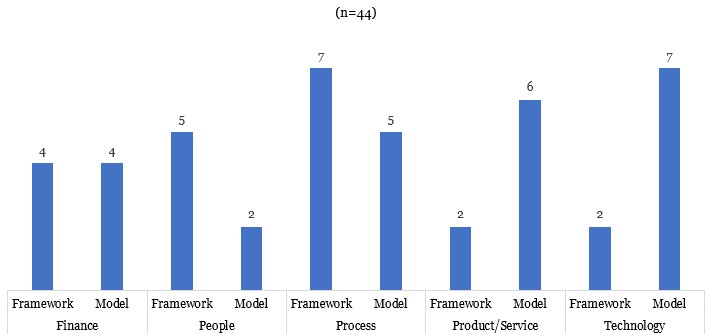
To establish these benefits, Infoprations deployed its Impact Discovery Tool to critically examine his publications. This examination led to the discovery of 44 frameworks and models that emerged from over 19 years of his research into issues, needs, and challenges related to communication and development in Nigeria. His frameworks primarily guide stakeholders to take appropriate action or execute effectively, while his models propose possible future outcomes in addressing issues related to the people, process, product/service, technology, and finance components of society.

Source: Infoprations Analysis, 2026

Our analyst further notes that, across the five societal components, Professor Ojebuyi’s frameworks (20) generally represent structured approaches for guiding stakeholders towards appropriate actions or implementation, while the models (24), which slightly outnumber the frameworks, indicate a stronger emphasis on anticipating future developments and outcomes. In line with this, our analyst observes that Professor Ojebuyi’s research not only diagnoses present challenges but also seeks to forecast pathways for addressing persistent societal problems.

Therefore, his scholarship offers both practical guidance for immediate decision-making and conceptual tools for anticipating future societal needs, making the research relevant to individuals, businesses, and governments alike.

Solana’s RWA Ecosystem Reaches High Valuation of $2.8B

0

The rise of real world assets on blockchain has moved from theory to measurable financial infrastructure, and nowhere is that shift becoming more visible than in the Solana ecosystem. The Solana RWA ecosystem recently reached an all time high valuation of $2.8 billion, signaling that tokenized finance is entering a new stage of adoption.

What was once considered an experimental sector dominated by niche protocols is now evolving into a serious market connecting traditional financial assets with decentralized infrastructure. Real world assets, commonly referred to as RWAs, represent traditional financial instruments and tangible assets brought onto blockchain rails.

These can include tokenized Treasury bills, private credit, real estate, commodities, invoices, and yield-bearing instruments. By tokenizing these assets, blockchain networks enable faster settlement, greater transparency, global accessibility, and programmable ownership structures. While multiple chains compete in the RWA sector, Solana’s recent growth suggests it is becoming one of the most important destinations for institutional-grade tokenization.

Several factors explain why Solana has emerged as a major hub for RWAs. First is its technical architecture. Solana’s high throughput and low transaction costs make it attractive for financial applications that require constant settlement and scalability. Traditional finance operates at enormous volume, and blockchains seeking to host tokenized assets must handle activity efficiently without excessive fees. Solana’s infrastructure provides a compelling environment for these use cases.

Second, the network has matured significantly over the past two years. Earlier criticisms surrounding outages and instability have gradually given way to stronger reliability, deeper liquidity, and growing developer confidence.

As institutional players explore blockchain infrastructure, stability and speed become essential requirements. Solana’s ability to support large-scale decentralized finance activity has strengthened its credibility among both crypto-native firms and traditional financial entities. The expansion of tokenized Treasury products has also contributed heavily to the ecosystem’s growth.

Investors are increasingly looking for stable yield opportunities within digital asset markets, particularly during periods of volatility. Tokenized government debt instruments offer a bridge between traditional low-risk returns and blockchain accessibility. On Solana, these products can be traded, transferred, or integrated into decentralized finance protocols with greater flexibility than many conventional financial systems allow.

Another important driver is the broader institutional shift toward blockchain-based settlement systems. Banks, fintech firms, and asset managers are increasingly recognizing that tokenization could modernize capital markets infrastructure. Instead of relying on slow intermediaries and fragmented systems, tokenized assets can move globally in near real time. Solana’s growing RWA ecosystem reflects this broader transformation, where blockchain is not simply competing with finance but gradually integrating into it.

The $2.8 billion milestone is also symbolic because it highlights how crypto markets are evolving beyond speculation alone. For years, much of the industry’s growth centered on memecoins, leverage trading, and volatile digital assets. RWAs introduce a different narrative: one focused on productive assets, sustainable yield, and financial utility. This transition could help attract a more conservative class of investors who previously viewed crypto as disconnected from the real economy.

Competition in the tokenization race remains intense. Networks like Ethereum continue to dominate many institutional conversations, while newer ecosystems aim to capture specialized niches. Yet Solana’s momentum demonstrates that scalability and user experience matter deeply in the future of tokenized finance.

The growth of Solana’s RWA ecosystem to $2.8 billion represents more than a market statistic. It reflects the accelerating convergence of traditional finance and blockchain technology. As tokenization expands across global markets, Solana is positioning itself not merely as a cryptocurrency network, but as a foundational layer for the next generation of financial infrastructure.