DD
MM
YYYY

PAGES

DD
MM
YYYY

spot_img

PAGES

Home Blog

Asia’s Quiet Rocket Revolution: Unastella Emerges as South Korea’s Latest Challenger in the Global Space Race

0

While SpaceX prepares for what could become one of the largest IPOs in history, a parallel and increasingly competitive story is unfolding across Asia. A new wave of ambitious rocket startups is determined to claim a share of the rapidly expanding commercial launch market, challenging the long-standing dominance of the United States and China.

Among the most promising is Unastella, a four-year-old South Korean company that recently closed a $24 million Series B round, bringing its total funding to $44 million, according to TechCrunch.

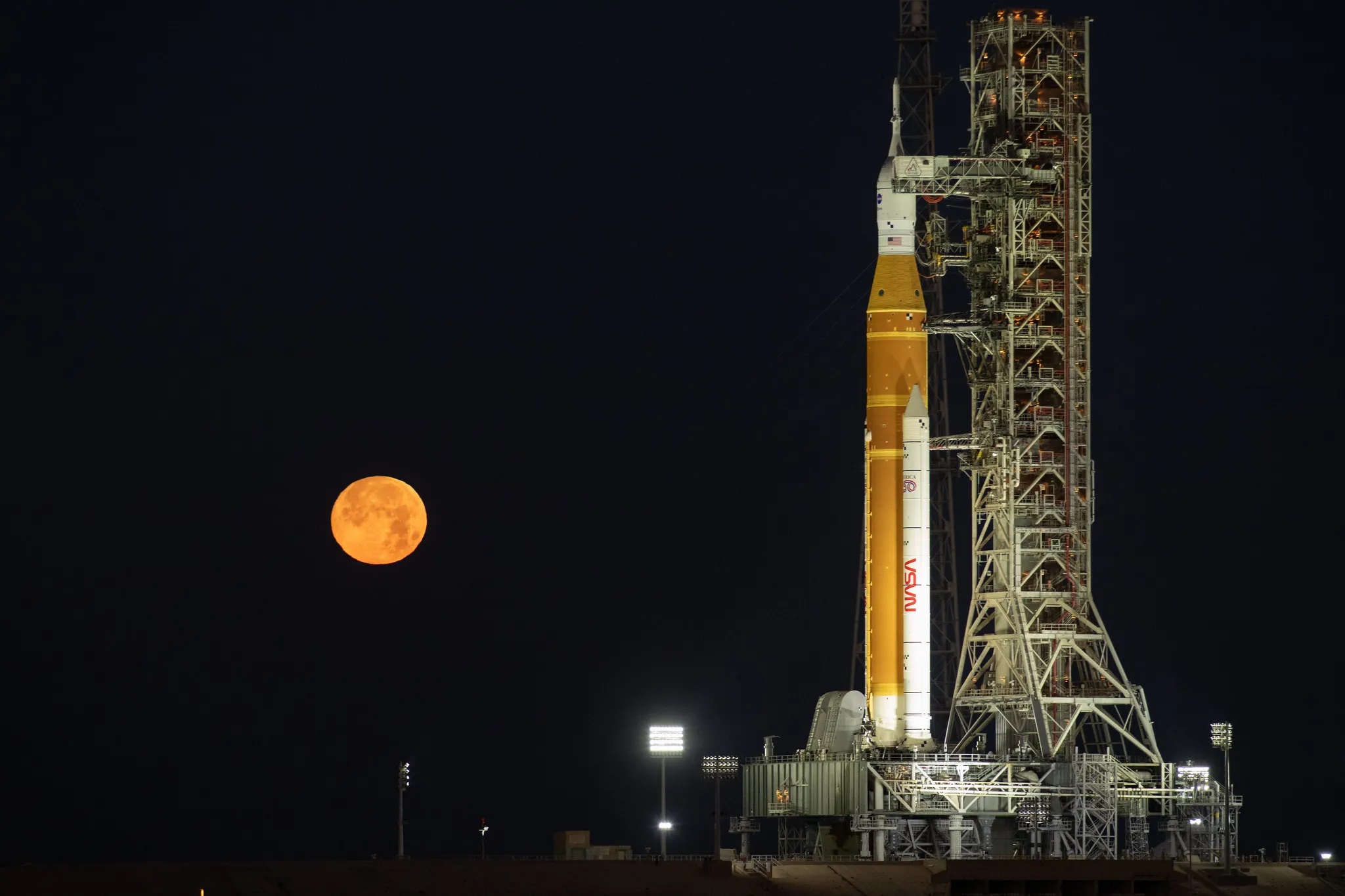
In May 2025, Unastella successfully launched its own rocket, the Una Express-I, from South Korean soil — a significant milestone for a nation still building its commercial space capabilities. The Seoul-based startup is developing its own launch vehicles and engines, with an initial focus on small satellite launch services.

Founder and CEO Jae Park told TechCrunch that the near-term priority is proving the technology and business model through reliable orbital missions, with crewed suborbital spaceflight as a longer-term ambition.

Unastella’s approach is deliberately pragmatic. It uses a kerosene and liquid oxygen propulsion system — one of the most battle-tested combinations in rocketry, also employed by SpaceX’s Falcon vehicles. Notably, the company has replaced the traditional turbopump with an electric motor pump, a simpler and less expensive alternative already validated in flight by Rocket Lab.

While this choice reduces payload capacity due to the heavier electric system, Park views it as a strategic trade-off for speed to market.

“We’re not an R&D group trying to build the most impressive rocket. We’re a commercial launch company trying to get to market fast.”

This mindset distinguishes Unastella in an industry often seduced by cutting-edge but unproven technologies. Park emphasized that the company maintains end-to-end control over design, manufacturing, ground operations, and flight data. The Una Express-I launch served as the first comprehensive test of this vertically integrated approach.

A Founder with Deep Rocket Heritage

Park’s credentials lend substantial credibility to the venture. He has spent his career immersed in rocket engine development, including work on combustion systems for South Korea’s Nuri rocket — the country’s first indigenously developed orbital launch vehicle, built by the Korea Aerospace Research Institute (KARI). He later joined the German Aerospace Center in Berlin to contribute to European launch vehicle engines before returning to Korea and eventually founding Unastella.

The startup is not yet revenue-generating, but its investor base, led by Altos Ventures and including Korea Development Bank, Strong Ventures, and Hana Ventures, signals confidence in its disciplined execution. Institutional ties are already strengthening: Korea’s national space agency has flown components on the Una Express-I, and KARI has transferred electric motor pump technology to the company.

South Korea’s Emerging Commercial Space Ecosystem

Unastella operates within a South Korean space sector that is still young but gaining momentum. Hanwha Aerospace, the country’s largest defense conglomerate, took full control of the government-developed Nuri rocket last year after acquiring technology rights from KARI. Two other startups, Innospace and Perigee Aerospace, are also advancing their own vehicles, though none have yet achieved a commercial orbital launch.

The government is actively supporting the sector through the newly established Korea Aerospace Administration (KASA), which has committed $266 million over seven years to develop launch infrastructure. This investment reflects Seoul’s goal of reducing dependence on foreign launch providers and building sovereign capabilities in a domain increasingly viewed as critical for national security, communications, and economic competitiveness.

Asia’s Broader Push into Space

The competition extends well beyond South Korea. China currently leads the region, with multiple private companies, including Galactic Energy, LandSpace, and iSpace, having conducted multiple orbital launches. Japan’s H3 rocket, developed by JAXA and Mitsubishi, achieved its first successful launch in 2024, while startup Interstellar Technologies is developing its own small-lift vehicle. In Australia, Gilmour Space attempted its first orbital launch this year.

New Zealand-founded Rocket Lab remains the standout success story from the region — the only Asian-founded company to have built a commercially viable launch business, now listed on Nasdaq and regularly conducting missions for both commercial and government customers.

The global space launch market was valued at roughly $15 billion in 2023 and is projected to nearly triple to $41 billion by 2030, according to Grand View Research. Demand for small satellite launches, in particular, is expected to surge as constellations for communications, Earth observation, and scientific research expand rapidly.

Unastella’s pragmatic, cost-conscious approach positions it to capture a meaningful share of the smallsat launch market, which is often underserved by larger vehicles optimized for heavy payloads. By controlling the full stack in-house, the company aims to reduce costs and improve responsiveness compared to competitors reliant on complex international supply chains.

However, the path ahead is far from guaranteed. Achieving consistent orbital success, securing repeat customers, and scaling production while managing capital-intensive development will test the team’s execution. Geopolitical factors, including U.S.-China tensions and export controls on dual-use technologies, could also shape the competitive landscape in unpredictable ways.

BullX Trading Pause Highlights the Ongoing Maturation Challenges Facing Memecoin Sector

0

Memecoin trading infrastructure continues to experience structural stress as volatility, liquidity fragmentation, and risk controls collide with rapid retail inflows. In the latest development, BullX has announced a temporary trading pause across its memecoin markets, signaling operational strain in a sector that has grown increasingly sensitive to sudden liquidity shocks.

The announcement arrives during a broader period of instability in speculative crypto assets, where thin order books and algorithmic trading flows can rapidly amplify price dislocations. While the platform has not attributed the pause to a singular catalyst, such interruptions typically reflect either backend maintenance, risk engine recalibration, or precautionary measures taken in response to abnormal market activity.

This pause underscores the operational fragility inherent in memecoin ecosystems, which are often characterized by extreme price elasticity and concentrated liquidity pools. Unlike more established digital assets, memecoins frequently rely on a narrow set of market makers and high-frequency traders to maintain orderly execution. When these participants withdraw or encounter risk limits, spreads can widen dramatically, forcing exchanges and trading venues to intervene.

In such environments, even modest sell pressure can cascade into outsized volatility events, prompting automated safeguards such as throttling, halting, or full suspension of trading pairs. Platforms like BullX therefore operate in a constant balancing act between enabling open access and preserving systemic stability within their order books.

Market participants are likely to interpret the trading pause through multiple lenses, ranging from routine infrastructure maintenance to deeper concerns about liquidity stress and counterparty risk. In recent months, memecoin markets have seen episodic surges followed by sharp retracements, driven largely by social media sentiment cycles and leveraged retail positioning.

These dynamics often place significant strain on emerging trading platforms that must scale infrastructure in real time while managing evolving compliance and risk requirements. A temporary suspension, while disruptive to short-term trading strategies, can also be viewed as a protective mechanism designed to prevent cascading liquidations and ensure fair price discovery once trading resumes.

The BullX trading pause highlights the ongoing maturation challenges facing the memecoin sector. As retail participation expands and cross-chain liquidity deepens, platforms are increasingly required to operate with institutional-grade risk frameworks despite serving highly speculative asset classes. Whether the pause proves to be a short-lived technical intervention or a signal of broader market stress, it reinforces the reality that memecoin infrastructure remains highly sensitive to volatility shocks.

Investors and traders alike will now watch closely for the platform’s reopening conditions, as well as any adjustments to margin, leverage, or listing standards that may follow in its wake. Weeks ahead will likely determine whether this event remains an isolated operational pause or becomes part of a broader pattern of stress within speculative crypto trading infrastructure.

If liquidity conditions stabilize and market-making participation returns, BullX may resume normal operations with minimal long-term disruption. However, if volatility persists across memecoin markets, additional platforms could face similar constraints, prompting a reassessment of how these assets are listed, margined, and risk-managed.

The episode further illustrates the tightening feedback loop between retail sentiment, automated trading systems, and platform-level risk controls, where rapid capital rotation can outpace the infrastructure designed to support it.

Weeks ahead will be closely watched by traders assessing whether structural reforms follow. Market sentiment will likely hinge on transparency from the platform and broader stability across memecoin liquidity conditions globally.

Coinbase Deepens India Push With Rupee Trading as Crypto Adoption Accelerates Despite Regulatory Uncertainty

0

U.S.-listed cryptocurrency exchange Coinbase is expanding its presence in India once again, enabling customers to trade digital assets directly in Indian rupees as the company seeks to strengthen its foothold in one of the world’s fastest-growing crypto markets.

The move marks a significant step in Coinbase’s renewed India strategy after the company was forced to scale back operations in 2023 amid regulatory challenges and uncertainty surrounding the country’s approach to digital assets.

Under the new offering, users will be able to deposit and withdraw funds in rupees through India’s Immediate Payment Service (IMPS) network, providing a more seamless entry point into cryptocurrency markets. Customers will also gain access to spot trading across a range of digital assets and perpetual futures contracts tied to major cryptocurrencies.

The expansion comes less than a year after Coinbase resumed crypto trading services in India following its registration with the country’s Financial Intelligence Unit (FIU), a key requirement for crypto firms operating under India’s anti-money laundering framework.

“India has long been one of the most important markets in crypto: in terms of developer talent, trading activity, and the broader adoption of blockchain technology,” said John O’Loghlen, Coinbase’s regional managing director for Asia Pacific.

The renewed push reflects the growing importance of India in the global cryptocurrency ecosystem. Despite regulatory ambiguity and one of the world’s toughest tax regimes for digital assets, India has emerged as a major source of blockchain developers, crypto entrepreneurs, and retail investors.

Industry studies consistently rank India among the leading countries for crypto adoption, driven by a young, technology-savvy population and widespread smartphone penetration. The country has also become a major hub for blockchain engineering talent, with many global crypto firms employing Indian developers to build infrastructure, decentralized applications, and Web3 services.

For Coinbase, re-establishing operations in India is strategically important as growth opportunities in North America and Europe become increasingly competitive. Asia remains one of the largest crypto markets globally, and India represents one of the few major economies where digital asset adoption continues to expand despite regulatory headwinds.

The company’s return also comes amid a broader resurgence in cryptocurrency markets. Institutional participation has increased significantly over the past two years, while major exchanges are seeking to expand beyond traditional crypto trading into derivatives, payments, and blockchain-based financial services.

However, India remains a challenging market.

The government currently imposes a 30% tax on gains from cryptocurrency trading, among the highest rates globally. In addition, a tax deducted at source (TDS) regime on crypto transactions has weighed on trading volumes at domestic exchanges and pushed some activity offshore.

While authorities have introduced anti-money laundering requirements and registration obligations for exchanges, India has yet to establish a comprehensive regulatory framework governing cryptocurrencies. Policymakers have repeatedly indicated that they prefer a coordinated global approach before introducing broader legislation.

That regulatory uncertainty has created a complex operating environment for exchanges. Several international platforms have either suspended services or modified their business models in India over the past few years as authorities tightened compliance requirements.

Coinbase’s decision to offer both spot trading and perpetual futures contracts is thus seen as an indication that the company sees substantial long-term potential despite those challenges. Perpetual futures, which allow traders to speculate on cryptocurrency prices without an expiration date, have become one of the fastest-growing segments of the global digital asset market and typically generate higher trading activity than spot markets.

The expansion also highlights the increasing institutionalization of the cryptocurrency industry. Major exchanges are increasingly seeking licenses, registrations, and formal oversight as they pursue growth in large markets, rather than operating outside traditional regulatory structures.

For India, Coinbase’s renewed commitment serves as another indication that global crypto firms remain eager to access the country’s vast pool of investors and technology talent. Yet the long-term trajectory of the market will likely depend on whether New Delhi moves beyond taxation and compliance requirements to establish a clearer regulatory framework for digital assets.

Overall, India presents both a major opportunity and a significant policy risk for cryptocurrency companies seeking growth in one of the world’s largest digital economies.

Washington Moves to Stop AI Chip Export from Outside U.S. as Concerns Grow Over Chinese Access to Nvidia and AMD Processors

0

The U.S. Department of Commerce has moved to close what experts describe as a significant gap in America’s AI export control regime, issuing new guidance that could restrict Chinese companies from acquiring the world’s most advanced artificial intelligence chips through overseas subsidiaries.

The action targets a potential weakness that emerged after the Trump administration abandoned enforcement of the Biden-era AI Diffusion Rule in May 2025. Industry observers say the decision may have inadvertently allowed Chinese firms operating outside mainland China to purchase cutting-edge processors from companies such as Nvidia and AMD without the licenses typically required for exports to China.

The new guidance, released on Sunday, clarifies that advanced AI chips exported to entities headquartered in China will remain subject to U.S. licensing requirements regardless of where those entities are physically located.

The move represents the latest effort by Washington to tighten restrictions on technologies viewed as critical to the global race for artificial intelligence supremacy and national security.

At the center of the issue are Nvidia’s Blackwell and Rubin processors and AMD’s MI350X accelerators, chips considered among the most powerful AI computing products currently available. These processors are essential for training and deploying frontier AI models and have become a focal point of U.S. efforts to limit China’s access to advanced computing capabilities.

The Commerce Department’s clarification suggests concerns inside Washington that Chinese firms may have been exploiting overseas operations in countries such as Malaysia and other Southeast Asian technology hubs to continue acquiring advanced U.S. hardware.

While the government has not disclosed the scale of the activity, one industry source familiar with semiconductor supply chains estimated that hundreds of thousands of advanced chips may have been shipped during the period in question, according to Reuters.

If accurate, such volumes would represent a substantial flow of AI computing power at a time when U.S. policymakers have been attempting to constrain China’s ability to develop next-generation artificial intelligence systems.

Technology analyst and former U.S. State Department official Chris McGuire described the issue as a major vulnerability in America’s export control framework.

“This is a HUGE problem,” McGuire wrote on social media, arguing that the gap effectively allowed overseas subsidiaries of Chinese firms to purchase Nvidia Blackwell processors without obtaining export licenses.

“Chinese companies have been buying these chips, very likely at scale,” he added.

While restrictions can prohibit direct shipments into China, multinational corporations often operate extensive networks of subsidiaries, affiliates, and data center operations across multiple jurisdictions. As a result, regulators have increasingly focused not only on where advanced chips are shipped, but also on who ultimately controls and uses them.

The issue has become more pressing as Southeast Asia emerges as a critical hub for AI infrastructure investment. Countries such as Malaysia, Singapore, and Indonesia have attracted billions of dollars in data center spending from global technology companies seeking access to power, land, and connectivity needed for AI computing.

Those same locations have also become areas of concern for U.S. officials seeking to prevent advanced semiconductors from indirectly reaching restricted Chinese entities.

The guidance reflects a broader shift in U.S. policy from controlling physical exports to monitoring beneficial ownership and end-use access. Rather than focusing solely on geography, regulators are increasingly scrutinizing whether Chinese companies can gain effective access to advanced AI computing resources regardless of where those resources are located.

Importantly, the Commerce Department stopped short of requiring existing facilities to shut down operations or disconnect servers already equipped with advanced processors. That distinction may prove significant for cloud providers, data center operators, and infrastructure investors that have built AI computing facilities serving multinational customers.

The guidance appears aimed primarily at preventing future transactions rather than disrupting existing deployments.

The decision is likely to create new compliance challenges for semiconductor manufacturers, cloud providers, and data center operators, which may now face heightened scrutiny over customer ownership structures and cross-border corporate relationships.

For Nvidia and AMD, the clarification adds a fresh challenge to an already evolving regulatory landscape. Both companies have repeatedly found themselves caught between growing global demand for AI computing power and increasingly stringent U.S. export restrictions.

The latest action also underscores a broader reality of the U.S.-China technology rivalry: as export controls become more sophisticated, companies and governments continue searching for new pathways to access critical technologies.

Washington’s latest move exposes policymakers’ belief that controlling advanced AI capabilities requires monitoring not just where chips are shipped, but who ultimately benefits from their computing power.

The episode also raises questions about how much advanced AI hardware may already be operating within the global networks of Chinese technology firms. While the new guidance closes a potential pathway for future acquisitions, it remains unclear how much computing capacity may have already been accumulated during the period when the regulatory ambiguity existed.

SoftBank Plans to Invest €45bn in France as Europe Pushes Harder for A Share of Global AI Infrastructure

0

SoftBank Group plans to invest 45 billion euros ($53 billion) over the next five years in France, marking one of the most ambitious artificial intelligence infrastructure commitments ever announced in Europe.

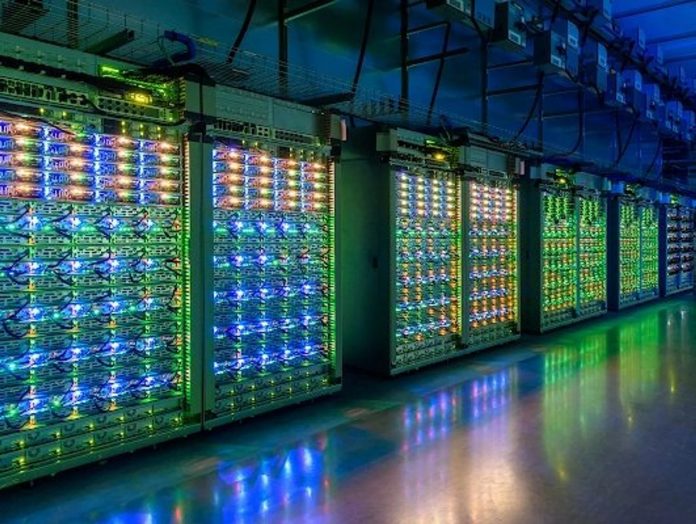
The Japanese technology conglomerate said the investment forms part of a broader 75-billion-euro initiative aimed at deploying 5 gigawatts of AI data-center capacity across France. The project places France at the center of Europe’s effort to narrow the widening AI infrastructure gap with the United States and China, both of which have raced ahead in building the computing capacity required for next-generation AI systems.

SoftBank said the first phase will focus on constructing 3.1 gigawatts of AI data-center capacity in northern France by 2031, with major facilities planned in Dunkirk, Bosquel, and Bouchain. The company described the initiative as its largest AI infrastructure investment in Europe.

“The commitment marks SoftBank Group’s largest AI infrastructure investments in Europe,” the company said. “It is designed to support the rapid growth of artificial intelligence by expanding access to high-performance compute capacity in France.”

The scale of the announcement highlights a growing realization across governments and technology companies that access to computing power has become one of the most important strategic assets in the AI economy. Training and operating advanced AI models now requires vast networks of data centers packed with specialized processors, memory systems, and networking equipment, creating an arms race for compute capacity among nations.

Speaking alongside French President Emmanuel Macron, SoftBank founder and CEO Masayoshi Son suggested the initiative could ultimately represent a much larger economic undertaking than the headline figure implies.

“It’s a massive size of investment coming,” Son said. “We are doing that in the U.S. already, we are expanding a lot in the U.S., so we have the momentum, which we can make France the center of Europe, and Europe needs this kind of AI technology.”

“There’s no choice. U.S. is going fast, China is going fast, Europe, Japan, Asia have to also go fast, not to be left out,” he added.

The project reflects Son’s increasingly aggressive strategy of positioning SoftBank at the heart of the global AI ecosystem. Over the past two years, the company has transformed itself from a technology investor into one of the world’s largest backers of AI infrastructure.

Its exposure spans multiple layers of the AI value chain. SoftBank controls a significant stake in semiconductor designer Arm Holdings, whose processor architectures are widely used in AI servers and data centers. It has also emerged as one of the largest investors in OpenAI, committing tens of billions of dollars to the company behind ChatGPT.

The French initiative underpins how AI infrastructure is increasingly becoming a preferred investment theme among global technology investors. While much attention has focused on AI models and applications, industry leaders are viewing data centers, power systems, semiconductor supply chains, and networking infrastructure as the critical bottlenecks that will determine who wins the next phase of the AI race.

France has aggressively positioned itself as Europe’s preferred destination for large-scale AI investment. The country benefits from a substantial nuclear energy base, which provides relatively stable electricity supplies compared with some neighboring countries. Access to reliable power is becoming a decisive factor for AI infrastructure projects because advanced data centers consume enormous amounts of electricity.

That advantage could prove increasingly important as Europe grapples with rising energy costs. The continent’s ambitions to compete with the United States and China in artificial intelligence have been complicated by higher electricity prices and concerns over energy security. Those challenges have intensified amid disruptions linked to the U.S.-Iran conflict, which has driven volatility in global energy markets.

The economics of AI infrastructure are increasingly tied to access to affordable power. Industry analysts have warned that regions unable to provide reliable and competitively priced electricity may struggle to attract major AI investments, potentially creating a divide between European countries that can support hyperscale data centers and those that cannot.

SoftBank’s choice of northern France reflects those realities. The region offers industrial infrastructure, access to power networks, and proximity to major European markets, making it an attractive location for AI computing hubs. The company said it will partner with Schneider Electric to develop a large-scale industrial production cluster in Dunkirk, further embedding the project within France’s broader industrial strategy.

Investors welcomed the announcement, sending SoftBank shares sharply higher. The stock has already surged more than 70% this year as markets increasingly view the company as one of the biggest beneficiaries of the AI boom.

The investment also signals growing confidence that demand for AI computing capacity will continue to expand rapidly over the coming decade. Technology companies are pouring unprecedented sums into data centers as they compete to train larger models, deploy AI agents, and support enterprise adoption of generative AI.