DD
MM
YYYY

PAGES

DD
MM
YYYY

spot_img

PAGES

Home Blog

Buffett, Not Abel, Appears to Be Calling Berkshire’s Biggest Stock Bets

0

Warren Buffett appears to remain deeply involved in Berkshire Hathaway’s biggest stock-market decisions, even as Greg Abel takes over as chief executive and assumes responsibility for running the conglomerate’s sprawling operating businesses.

According to CNBC’s Warren Buffett’s Watch, the latest evidence comes from Berkshire’s second-quarter portfolio disclosures, which initially appeared to signal a major shift in how the company was deploying its enormous cash pile.

Two weeks ago, Berkshire reported that its cash reserves had fallen by billions of dollars during the second quarter, marking the first significant decline since early 2022. The move suggested that Abel, who became Berkshire’s CEO, was beginning to put a substantial portion of the company’s capital to work.

But Berkshire’s subsequent disclosure of its equity holdings has complicated that interpretation.

Barron’s Andrew Bary noted that Abel does not appear to have taken over responsibility for Berkshire’s major stock-picking decisions. Instead, Buffett, who is approaching his 96th birthday, still appears to be making some of the most consequential investment decisions involving Berkshire’s more than $350 billion equity portfolio.

The clearest example is Alphabet, the parent company of Google.

Buffett said in a CNBC interview last month that he had “initiated” Berkshire’s investment in Alphabet. The stock first appeared in Berkshire’s portfolio during the third quarter of last year, and the company substantially increased its position during the second quarter.

Berkshire purchased roughly $10 billion of Alphabet shares directly from the company during the quarter, according to Bloomberg News. The transaction followed what Bloomberg described as a “stealthy weekend call” from Goldman Sachs, which was arranging Alphabet’s large equity offering.

Abel reportedly gave a “rapid signoff” to the transaction, although Buffett presumably also approved the investment.

The episode illustrates the evolving division of responsibilities at Berkshire. Abel has formal authority as CEO and is responsible for managing the conglomerate’s operating businesses, but Buffett’s investment judgment remains a major part of Berkshire’s identity and capital-allocation strategy.

Buffett has also been careful to emphasize that the two men communicate regularly. He has said he and Abel would not make major decisions that the other did not approve.

This matters because Berkshire’s equity portfolio is one of the world’s largest pools of corporate capital. Decisions involving even a small percentage of that portfolio can translate into billions of dollars of stock purchases or sales.

The second-largest equity purchase during the second quarter, Delta Air Lines, appears more likely to have come from portfolio manager Ted Weschler, according to Bary.

Abel has no formal background as a portfolio manager and does not appear to have made notable stock-picking decisions since becoming CEO. His responsibilities instead include overseeing Berkshire’s numerous operating businesses and identifying potential acquisitions.

He has nevertheless begun deploying Berkshire’s cash through acquisitions. His $6.8 billion purchase of Taylor Morrison Home is one example, although the transaction did not close until after the second quarter ended.

The distinction between Berkshire’s public-equity investments and its operating-company acquisitions could become more important as Abel establishes his own capital-allocation record.

Buffett built Berkshire’s reputation around the ability to deploy large amounts of capital into businesses and securities when valuations and market conditions were attractive. Abel will now have to demonstrate that he can preserve that discipline while operating a company with an enormous balance sheet and hundreds of billions of dollars in investable assets.

Alphabet’s rise within Berkshire’s portfolio provides another illustration of how quickly the company’s investment rankings can change. Berkshire increased its Alphabet position by roughly $17 billion during the second quarter, making the technology company its third-largest equity holding as of June 30 and pushing Coca-Cola into fourth place.

At the end of the quarter, Berkshire’s Alphabet holdings were worth $37.77 billion, compared with $32.51 billion for Coca-Cola, giving Alphabet a $5.26 billion lead.

The gap has since almost disappeared.

Alphabet shares have fallen about 3.5% since June 30, while Coca-Cola has gained 12.1%. Based on Friday’s closing prices, Alphabet’s lead over Coca-Cola was only about $20 million.

Coca-Cola briefly overtook Alphabet at the close on July 30 and again on Aug. 20, demonstrating how closely the two positions are now matched.

The changes underline how Berkshire’s portfolio can shift in ranking even without Buffett or his investment managers buying or selling another share. Market movements alone can alter the relative size of its largest holdings by billions of dollars.

Berkshire is also dealing with a separate legal issue involving its HomeServices of America real estate subsidiary. A federal appeals court in St. Louis has upheld a 2024 settlement involving HomeServices and the National Association of Realtors in a class-action antitrust case over real estate commissions.

HomeServices agreed to pay $250 million as part of a settlement exceeding $1 billion. The agreement also required the National Association of Realtors to change rules governing the division of real estate commissions.

The underlying case followed a 2023 jury verdict that found the defendants liable for $1.78 billion in damages. Under U.S. antitrust law, that amount could have been tripled. Some plaintiffs objected to the settlement, arguing that they were receiving insufficient compensation, and sought to block the agreement.

The 8th U.S. Circuit Court of Appeals this week upheld a lower court’s approval of the settlement.

A lawyer representing some of the objectors told Reuters they could seek review by the Supreme Court.

“Everyone got next to nothing for the sake of settling. There’s something just not right about that,” the lawyer said.

HomeServices CEO Chris Kelly said the appeals court decision provides “additional certainty” for the company, its agents and customers.

The ruling does not resolve all of Berkshire’s exposure to litigation involving real estate commissions. Berkshire Hathaway Energy, which owns HomeServices, remains the target of a separate proposed antitrust class action after a judge ruled in April that the company was not covered by the HomeServices settlement.

The separate case follows the antitrust litigation against the National Association of Realtors and major brokerage companies.

A lawyer for plaintiffs targeting Berkshire Hathaway Energy previously described Berkshire as the “leader of the pack” and argued that targeting the conglomerate could put pressure on corporate America to change its practices.

For Berkshire, the investment and legal developments highlight two different challenges facing the company as Buffett’s era gives way to Abel’s leadership.

Abel has inherited responsibility for an enormous operating conglomerate and is beginning to make major acquisitions, but Buffett’s fingerprints remain visible on some of Berkshire’s largest stock investments.

That transition is likely to remain closely watched because Berkshire’s investment portfolio is not simply a source of returns. It is a central component of the company’s capital-allocation strategy, and the decisions made over the next several years will help determine how effectively Abel can establish his own record while maintaining the investment discipline that defined Buffett’s tenure.

Vast Cuts Jobs as Disney Overhauls Employee Benefits

0

Two very different corporate stories are emerging from the technology and entertainment industries, but both highlight how companies are adjusting their workforces and employee incentives while preparing for the next phase of growth.

Space-station startup Vast has cut approximately 4% of its workforce, while Disney is preparing a significant update to its employee benefits package, including a new stock-purchase program and changes to healthcare coverage.

Vast, the California-based company building commercial space stations, dismissed 46 employees this week as part of what management described as a performance-based decision following its mid-year review cycle.

The company said the affected workers were not meeting expectations and emphasized that the reductions do not represent a retreat from its broader growth strategy. The timing is notable.

Vast recently raised $500 million to accelerate development of its commercial space-station ambitions. The company is targeting the launch of Haven-1 in 2027 aboard a SpaceX rocket and has plans for the larger Haven-2, which could eventually contribute to the commercial infrastructure replacing the International Space Station.

Rather than signaling a broad hiring freeze, Vast says it continues to recruit, with hundreds of positions reportedly open. That suggests the company is attempting to reshape its workforce around the technical capabilities required for an increasingly ambitious space program.

Vast has expanded into satellite manufacturing and established partnerships involving the European Space Agency and national space agencies. The situation at Disney reflects a different kind of corporate adjustment.

The entertainment giant is preparing to introduce an Employee Stock Purchase Plan for eligible U.S. employees, potentially giving workers the opportunity to purchase Disney shares, likely at a discount.

The program is expected to launch in late 2027, subject to approvals, although eligibility and other details are still being finalized.

The proposed stock program arrives after Disney reduced some stock-based compensation for certain technology employees and conducted several rounds of workforce reductions. Offering broader access to company shares could therefore become an important tool for employee retention and morale, particularly as traditional compensation structures evolve.

Disney is also preparing changes to most of its medical plans beginning in 2027. Employees will generally need to actively select their coverage rather than having their existing plans automatically roll over. The company has attributed the changes to rising healthcare costs, while keeping the same insurer.

At the same time, Disney plans to expand its Employee Assistance Program by doubling available counseling sessions and consolidating certain well-being initiatives. These changes indicate an attempt to balance rising benefit costs with programs that employees increasingly value.

The developments at Vast and Disney illustrate a broader corporate trend: companies are becoming more selective about how they allocate labor and compensation. Vast is concentrating its workforce on high-priority space infrastructure projects/

While Disney is redesigning benefits to strengthen ownership, healthcare flexibility and employee support. For Vast, the immediate test is execution. For Disney, it is whether redesigned benefits can improve retention and engagement without significantly increasing costs.

In both cases, the message is similar: as companies enter uncertain and capital-intensive periods, workforce strategy is becoming as important as the products they are building.

NVIDIA Vera Rubin Chips and the Future of AI Training

0

OpenAI’s first NVIDIA Vera Rubin racks have reportedly arrived and begun running the company’s training stack, marking an important step in the race to build increasingly powerful artificial intelligence infrastructure.

The development highlights how the next phase of AI competition is moving beyond model architecture and software toward the physical systems capable of training and deploying increasingly demanding models.

NVIDIA’s Vera Rubin platform represents a new generation of AI computing infrastructure designed around the enormous computational requirements of advanced model training.

Its arrival at OpenAI therefore carries significance beyond the installation of new hardware.

It signals an effort to secure access to cutting-edge compute as AI companies compete to scale models, improve reasoning capabilities and reduce the time required to train increasingly complex systems.

For OpenAI, the timing is particularly important. The company is simultaneously expanding its model capabilities, infrastructure footprint and commercial products. Training frontier models requires enormous quantities of GPUs operating together as a coordinated system.

The performance of individual chips matters, but so do networking, memory bandwidth, storage, cooling and software orchestration. A modern AI training cluster is effectively an integrated computing machine rather than simply a collection of processors.

The Vera Rubin architecture is designed around this principle. NVIDIA has increasingly focused on tightly integrated rack-scale systems, combining GPUs, CPUs, high-speed networking and other components into platforms optimized for AI workloads.

Such systems can allow organizations to extract greater performance from their hardware while managing the complexity associated with massive distributed training operations.

OpenAI beginning to run its training stack on the new racks could consequently provide an early indication of how quickly the latest generation of infrastructure can be integrated into production environments.

Training software must be optimized to distribute workloads efficiently across thousands of accelerators while minimizing communication bottlenecks and maximizing utilization. Even the most powerful hardware can deliver disappointing results if the software stack cannot keep pace.

The development illustrates NVIDIA’s increasingly strategic role in the AI ecosystem. While competitors are developing alternative accelerators and hyperscalers are designing custom silicon, NVIDIA remains deeply embedded in the software and hardware layers supporting frontier AI.

Its CUDA ecosystem, networking technologies and increasingly integrated data-center platforms create a substantial infrastructure advantage. For OpenAI, access to advanced compute is equally strategic.

The company’s ability to train future models will depend not only on algorithms and data but also on securing sufficient computing capacity. As model development becomes more computationally intensive, infrastructure availability can increasingly determine which organizations are capable of pushing the technological frontier.

The arrival of Vera Rubin racks underscores a broader transformation in the economics of AI. Capital expenditure on data centers, accelerators, power generation and networking is becoming one of the defining investments of the technology industry.

Companies are effectively building enormous industrial systems to support software products that can be updated continuously. If OpenAI’s new Vera Rubin infrastructure performs as expected, the immediate result may be faster experimentation and more ambitious training runs.

Over time, that could translate into more capable models and new AI products. The significance of the development therefore extends beyond a hardware shipment. It represents another step toward an AI industry where computational scale has become a central competitive advantage.

As OpenAI and its rivals deploy increasingly sophisticated infrastructure, the battle for the future of artificial intelligence is increasingly being fought inside the data center.

Food Shortage Fears and Unitree Robotics’ Extraordinary IPO Surge

0

The global economy is facing two strikingly different signals: growing concern over food security and extraordinary investor enthusiasm for advanced robotics.

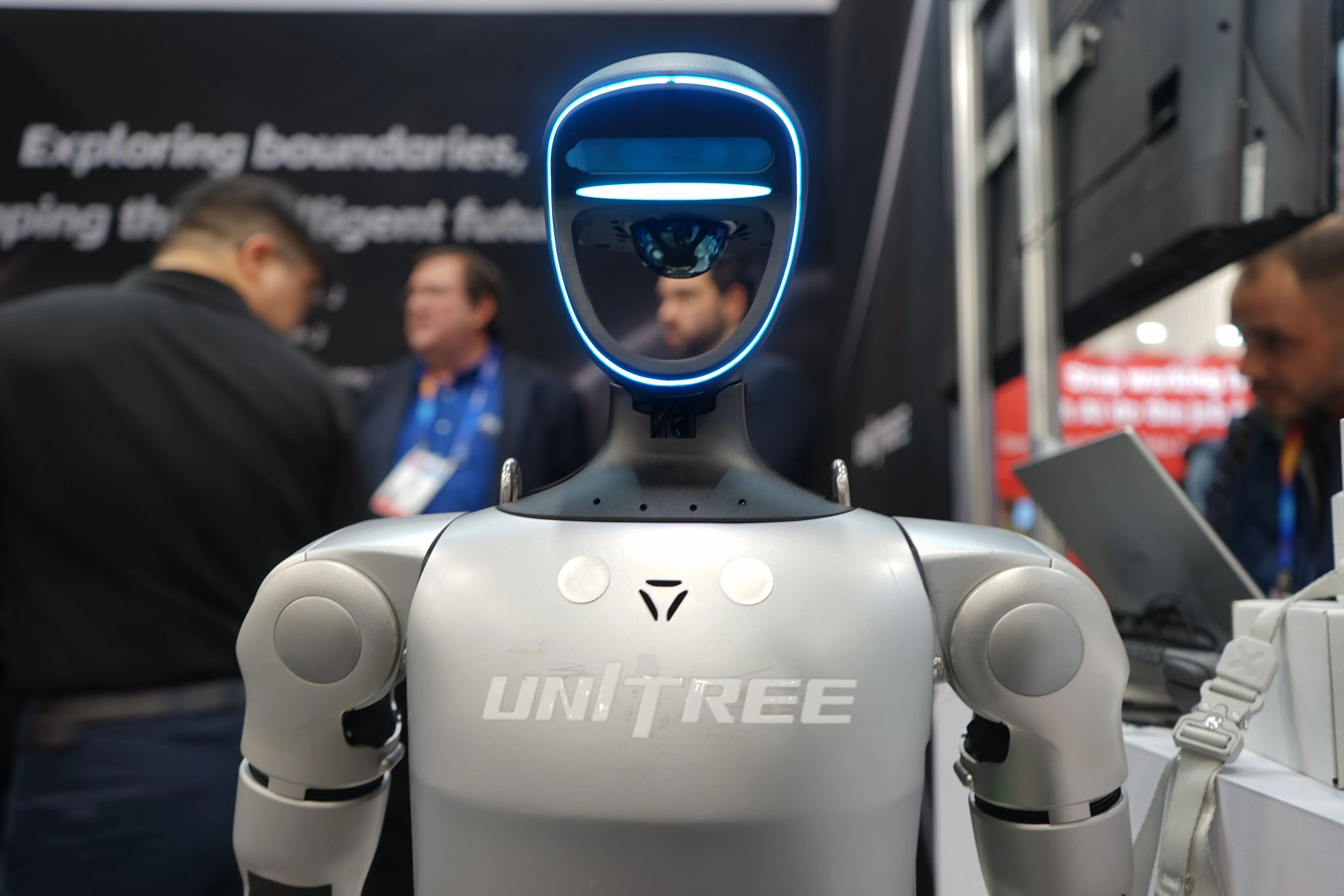
Warnings that food shortages could become a major global problem as early as next year are emerging alongside one of the most spectacular technology stock-market debuts of 2026, as Chinese humanoid robot maker Unitree Robotics surged more than 600% during its Shanghai listing.

The developments highlight the increasingly uneven character of the global economy, where essential resources face mounting pressures while capital races toward emerging technologies.

Food security remains one of the world’s most vulnerable economic issues. Rising energy costs, geopolitical conflicts, disrupted trade routes, extreme weather and expensive agricultural inputs can all affect the ability of farmers and food distributors to maintain reliable supplies.

Previous global food crises have demonstrated how quickly disruptions in fertilizer, fuel and transportation can translate into higher prices for consumers. The World Food Programme has previously warned that temporary food-access problems can evolve into broader shortages if underlying supply disruptions persist.

A potential shortage would not necessarily mean that the world suddenly runs out of food. More often, food insecurity develops through a combination of inadequate production, disrupted distribution and unaffordable prices.

Poorer countries and households are particularly exposed because they have less capacity to absorb increases in the cost of staples. For developing economies that rely heavily on imports, a global supply shock could put additional pressure on currencies, government budgets and household incomes.

Against this uncertain backdrop, the financial markets are displaying extraordinary confidence in another part of the economy: robotics. Unitree Robotics‘ debut in Shanghai demonstrated just how powerful investor demand for artificial intelligence and embodied technology has become.

The company’s shares opened at 1,100 yuan, roughly 629% above its IPO price of 150.8 yuan, before ending the first session at 845 yuan, still 460% above the offer price.

The scale of the demand was remarkable. Unitree’s IPO reportedly attracted subscriptions thousands of times greater than the shares available to retail investors, while the company raised more than $900 million.

Much of the capital is intended to support research, manufacturing expansion and artificial-intelligence development. The enthusiasm reflects expectations that humanoid robots could become a major technology market over the next decade.

Unitree has gained global attention through demonstrations of robots running, dancing and performing martial arts. Analysts cited by The Guardian estimate that the humanoid-robot market could expand dramatically from roughly $2 billion in 2025 toward $300 billion by 2035.

Yet Unitree’s explosive debut illustrates the risks of technological exuberance. A 600%-plus move in a single trading session means expectations have been priced aggressively into the company. Its valuation can rise much faster than its underlying revenues, production capacity and commercial applications.

Even Unitree’s chief executive has cautioned that major breakthroughs in robot software could still be years away. The contrast between food-security anxiety and robotics euphoria is therefore significant.

One represents the pressure facing humanity’s most basic needs; the other represents expectations surrounding a potentially transformative technology. Both stories ultimately depend on investment, infrastructure and long-term planning.

For policymakers, the food-shortage warning reinforces the importance of resilient agricultural supply chains, strategic reserves and affordable fertilizer and energy. For investors, Unitree’s debut demonstrates both the enormous appetite for AI-related opportunities and the danger of chasing spectacular price movements.

The global economy is increasingly defined by this tension: scarcity in essential goods can coexist with abundance of capital flowing into future technologies. How governments and markets manage that imbalance may shape the economic landscape of the years ahead.

USCIS Is Now Using AI to Screen Filings – What That Means for Your Translations

0

USCIS has been playing some changes in the manner it processes immigration applications, and unfortunately, many applicants are not aware of it. The agency has been using AI and machine-learning capabilities in some of its document processing processes over the last few years. They help in things such as categorizing evidence, organizing materials submitted, and marking anomalies for human review, and they directly affect anyone who is submitting a translated document with a petition or application.

This isn’t an emerging concern about the future. It is the current state of how filings are processed, and understanding it is useful whether you’re an applicant preparing your own documents or an immigration attorney reviewing a client’s submission. The core point is straightforward: when automated systems are involved in processing your filing, the quality and consistency of your translated documents matter in ways they didn’t previously. Services such as Rapid Translate can help applicants prepare professionally translated documents before submission, reducing the risk of avoidable translation inconsistencies.

How AI Has Entered the USCIS Processing Workflow

USCIS adjudicates millions of petitions and applications each year. The volume alone warrants systematic support, and the agency has publicly acknowledged the use of machine learning and artificial intelligence tools in a continuing modernization program. These tools operate across functions, including document processing support, evidence classification, and fraud-related analysis. They interact with submitted filings before a human officer engages with the case.

For applicants, the direct implication is this: the information in your submitted documents needs to be internally consistent, accurately translated, and properly structured. When classification tools process a document, they work with what’s there. A discrepancy that a human reviewer might recognize and place into context doesn’t just disappear. It controls how the document is indexed and stored during processing.

What USCIS AI Tools Do Not Do

Equally important is to be clear about what these tools do not do. USCIS has not delegated its decision making to automated systems. AI is a pre-screening tool in the workflow, and the agency’s adjudicators have complete discretion over the results of cases. That said, the preparation still affects how information gets to the officer making the final call.

The Final Decision Belongs to the Adjudicating Officer

Every immigration determination – whether a petition is approved, denied, or subject to a Request for Evidence – is made by a human officer. AI tools help organize and process the documentation involved, but they do not replace the professional judgment of the person reviewing the case.

What matters here is the sequence. If problems exist in how your documents are classified or how translation data is recorded during automated processing, the officer reviewing your case receives an already-imperfect record. That is a preventable outcome. The accuracy of your translated documents is one of the most direct variables within your control before submission.

Why Translation Accuracy Has Greater Significance Now

USCIS has required certified, complete, word-for-word translations of foreign-language documents for a long time. That requirement hasn’t changed. What has changed is that filings now pass through a more automated environment. One where consistency across documents is assessed not only by a human reader but also by classification tools that evaluate field-level data across submitted materials.

Names are a frequent source of problems. Consider an applicant whose given name appears differently in a translated birth certificate than in a translated passport – a variation in spelling or transliteration between the two documents. To a human reader, the connection is often obvious. In an automated document processing context, that variation registers as a discrepancy in the data. The same applies to dates, document registration numbers, expiration dates, and similar fields. 

Omissions Create Incomplete Records

One area where translations regularly fall short involves elements like stamps, official seals, and signature blocks. A qualified translator acknowledges these in the translation text even when visual reproduction isn’t possible. Phrases indicating the presence and general content of a notarial seal or an official stamp are part of a complete translation – not optional annotations.

When these elements are omitted, the translated document doesn’t fully reflect the original. In a filing that undergoes automated document processing, an incomplete translation creates an incomplete record. That can become apparent as a complication at a point when correction is more difficult than it would have been prior to initial submission.

What the Certification Requirement Actually Involves

USCIS’s requirements for certified translations are specific. The translation must be accompanied by a signed statement from the translator confirming two things: their competency in the relevant language pair, and their attestation that the translation is accurate and complete. This signed certification is a formal element of the submission, not supplementary paperwork.

A certification produced without a named, qualified human translator does not meet this standard. Neither does a statement prepared by a bilingual individual without professional standing in translation. The requirement exists because USCIS needs to attribute the translation to a responsible professional, someone who has explicitly certified the accuracy of the work and can be identified as doing so.

What to Look for in a Translation Service

For applicants and attorneys who need certified translations prepared to USCIS’s specific standards, Rapid Translate offers professional human-prepared translations across more than 80 languages. Each translation includes a signed Certificate of Translation Accuracy and a translator competence statement – the two components USCIS’s certification requirements directly address.

The documents covered include those most commonly submitted in immigration filings: birth certificates, marriage and divorce records, passports, driver’s licenses, academic transcripts, and visa documents. Pricing begins at $27.99 per page, with a page defined as up to 250 words. Standard delivery is 24 hours for one to three pages and 48 hours for four to six pages, with expedited options available when a submission is time-sensitive.

Bottom Line

As USCIS continues expanding its AI-assisted processing capabilities, the accuracy and proper certification of translated documents become one of the factors that determine how cleanly a filing proceeds. For applicants putting significant effort into every other component of their submission, the translation itself deserves the same standard of preparation.