DD
MM
YYYY

PAGES

DD
MM
YYYY

spot_img

PAGES

Home Blog

13 Cloud Providers Rally Behind EU Push to Reduce Reliance on U.S. Giants

0

A coalition of European cloud providers, technology companies, lawmakers, and civil society groups has thrown its support behind a major European Union initiative aimed at reducing the bloc’s dependence on American technology firms, highlighting growing concerns in Europe about digital sovereignty, strategic autonomy, and control over critical infrastructure.

Thirteen cloud providers joined a broad alliance of European technology firms, lawmakers, and advocacy groups in backing the European Commission’s efforts to strengthen domestic technology capabilities and give local providers a larger role in supplying critical digital services across the continent.

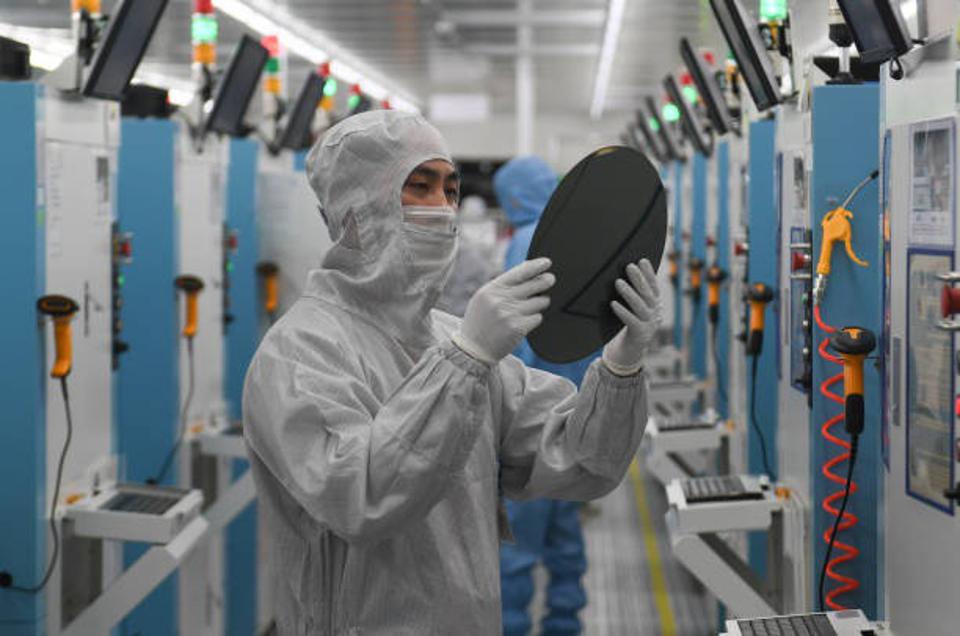
The move comes ahead of a package of measures expected from the Commission that could reshape the competitive landscape for cloud computing and semiconductor production in Europe. The proposals are expected to prioritize European providers in sensitive public-sector cloud contracts while simultaneously encouraging greater investment in domestically produced semiconductors.

At stake is far more than government procurement. The initiative represents one of the clearest signs yet that Europe is seeking to build an independent technology ecosystem at a time when geopolitical tensions are increasingly influencing decisions about digital infrastructure.

In an open letter, the coalition argued that Europe must strengthen its ability to control the technologies underpinning its economy and public services.

“Technological sovereignty means that Europe has the capacity to freely design, understand, choose from different home-grown sources, build, operate and effectively regulate the digital systems on which its society and economy rely,” the signatories said.

Among the companies supporting the effort are OVHcloud, Nextcloud, Proton, Ecosia, QuantWare, as well as social platforms Mastodon and Monnett Social.

The campaign reflects mounting unease within Europe over the dominance of U.S. technology giants across critical sectors, including cloud infrastructure, artificial intelligence, semiconductors, operating systems, and social media.

Today, the European cloud market is overwhelmingly controlled by American hyperscalers such as Amazon Web Services, Microsoft, and Google. Their platforms host large portions of Europe’s government, corporate, and industrial data, creating concerns among policymakers about dependency on foreign providers for essential digital services.

Those concerns have intensified amid rising geopolitical tensions and growing uncertainty about the future of transatlantic relations. European officials view cloud infrastructure, AI computing, and semiconductor production through the lens of national and economic security rather than purely commercial competition.

The push also underpins fears that Europe risks falling further behind both the United States and China in strategic technologies. While American firms dominate cloud computing and frontier AI development, China has accelerated efforts to build self-sufficient technology ecosystems through massive state-backed investment programs.

Europe’s challenge is particularly acute in cloud computing because the sector serves as the foundation for AI deployment, data analytics, cybersecurity, and digital government services. Without strong domestic cloud providers, European policymakers worry that the continent could struggle to establish leadership in the next generation of AI-driven industries.

Supporters argue that public procurement can play a critical role in strengthening local providers. By directing sensitive government contracts toward European vendors, policymakers hope to create demand that enables domestic firms to scale and compete more effectively against larger international rivals.

The Commission’s parallel focus on semiconductor manufacturing follows a similar logic. Europe has already launched major initiatives to expand chip production, recognizing that access to advanced semiconductors has become a strategic imperative in an era defined by AI, defense technologies, and industrial digitization.

The coalition’s message was encapsulated by European Parliament lawmaker Alexandra Geese, who summarized the campaign’s objective in stark terms.

“Our message is simple: Build European, buy European, protect European,” Geese said.

Whether the EU can substantially reduce its dependence on foreign technology remains uncertain. American cloud providers benefit from enormous scale, advanced infrastructure, and vast AI ecosystems that European competitors have struggled to match.

However, the growing political support behind digital sovereignty suggests that technology policy in Europe is increasingly moving beyond regulation and toward active industrial strategy. That shift is expected to create significant opportunities for European cloud providers and chipmakers, while it signals that one of the U.S. technology giants’ largest overseas markets is becoming more determined to cultivate domestic alternatives.

Nvidia Teams Up with the U.S., EU, and SK to Expand Humanoid Robot Ambitions Beyond China

0

As artificial intelligence moves beyond chatbots and data centers into the physical world, chip giant Nvidia is laying the groundwork for what could become the next major computing platform: humanoid robots.

The company has revealed plans to collaborate with robot manufacturers in the United States, Europe, and South Korea, expanding beyond its recently announced partnership with Chinese robotics firm Unitree Robotics. The initiative signals Nvidia’s determination to lead the emerging humanoid robotics industry, much as it has done in artificial intelligence infrastructure.

The announcement came following CEO Jensen Huang’s keynote address at the Computex technology exhibition in Taipei, where Nvidia unveiled a new research-focused humanoid robot platform built in partnership with Unitree.

The standardized robot is designed specifically for universities and research institutions, developing the next generation of AI-powered machines. Under the arrangement, Unitree will provide the robot body, Singapore-based robotics company Sharpa will supply the robotic hands, while Nvidia’s advanced computing systems will serve as the machine’s intelligence layer.

Researchers at institutions including Stanford University and the University of California, San Diego, are expected to use the platform to advance robotics research.

The initiative reflects Nvidia’s broader vision that the next wave of AI growth will come not only from software but from “physical AI” — intelligent machines capable of interacting with the real world. Huang has repeatedly argued that humanoid robots could become a multi-trillion-dollar market over the coming decades, transforming industries ranging from manufacturing and logistics to healthcare and elder care.

The company’s move comes as competition intensifies in the robotics sector. Technology companies worldwide are racing to develop machines capable of performing increasingly sophisticated tasks autonomously. Advances in large language models, computer vision, and reasoning systems have dramatically improved the capabilities of robots, bringing the prospect of commercially viable humanoid machines closer to reality.

Nvidia’s strategy mirrors the approach that helped it dominate the AI revolution. Rather than manufacturing complete robots itself, the company aims to become the foundational technology provider supplying the processors, software platforms, and development tools that power machines built by others.

The company has already developed robotics software frameworks and simulation platforms that allow developers to train robots in virtual environments before deploying them in the physical world. By integrating its latest Blackwell chips directly into humanoid robots, Nvidia hopes to create a standardized ecosystem for robotics researchers and manufacturers.

The partnership with Unitree, however, also comes with geopolitical impact. Unitree gained international attention earlier this year when its humanoid robots appeared prominently during China’s Spring Festival Gala, showcasing Beijing’s growing capabilities in advanced robotics. The company is currently pursuing a public listing in China as investor interest in robotics accelerates.

At the same time, Unitree has become the subject of scrutiny in Washington. Some U.S. lawmakers have alleged that the company maintains close ties to the Chinese government and military. Legislation has been introduced that would prohibit researchers receiving U.S. government funding from using Unitree robots.

Against that backdrop, Nvidia executives said the collaboration is partly aimed at addressing cybersecurity concerns that could hinder adoption among Western researchers. According to company officials, the robots will incorporate security architectures similar to those used in Nvidia’s data-center systems. Software updates intended for robot subsystems will pass through Nvidia’s chips, where they can be authenticated and verified before installation.

The system employs technologies such as secure boot and confidential computing, designed to prevent unauthorized software from running on the machines and to stop sensitive data from being transferred without approval.

As robots become more capable and increasingly connected to enterprise networks, concerns over cybersecurity, data protection, and national security are becoming just as important as mechanical performance.

But embedding security directly into robot hardware could provide a competitive advantage for Nvidia, especially as governments, universities, and corporations evaluate which platforms to adopt.

The company’s decision to pursue similar partnerships with manufacturers in the United States, Europe, and South Korea also suggests Nvidia is seeking to establish a globally diversified robotics ecosystem rather than relying on a single supplier or market.

While Nvidia executives declined to identify future partners, the expansion indicates the company sees humanoid robotics as a global industry likely to mirror the development of the AI server market, where demand is spreading rapidly across regions. The broader significance of the initiative lies in Nvidia’s effort to extend its dominance beyond data centers. The company already commands the AI chip market, supplies the processors powering many of the world’s largest AI models, and is expanding aggressively into CPUs, networking infrastructure, and AI software.

Humanoid robots represent the next frontier.

If AI agents become capable of performing complex physical tasks, the robots carrying out those functions will require enormous computing power, sophisticated software, and secure hardware architectures. Nvidia is getting ready to provide all three.

Much as the company became the backbone of the generative AI boom, it is now attempting to ensure that when intelligent machines move from screens into factories, warehouses, hospitals, and homes, they will be running on Nvidia technology.

Tekedia Capital Invests in Pioneering Surgical Intelligence Company, Mango Medical

0

Tekedia Capital is excited to announce our investment in Mango Medical, a company building agentic surgical planning AI for orthopedic surgery. The company enables surgeons to receive procedure-ready surgical plans in minutes instead of days, bringing a new layer of intelligence into one of the most demanding areas of healthcare.

Why did we invest? I go back to my days at Johns Hopkins University where I took courses such as Computer Integrated Surgery and Surgery for Engineers, the last offered through Johns Hopkins Medicine, the medical school. During that period, I worked on research involving the mechanics of surgery, including thoracic and abdominal procedures performed in experimental settings. Part of my work focused on robotic systems designed to support minimally invasive surgery. I later invented and patented a dexterous robotic system which found applications beyond medicine to space, after the US Government acquired some rights.

One lesson became immediately clear: human systems are fundamentally different from mechanical systems. A robot that assembles automobiles operates in a highly predictable environment. Every component has known dimensions, known tolerances, and repeatable behaviors. Surgery is different. Human anatomy varies. Pathologies vary. Risk factors vary. Every patient introduces unique variables that make planning, decision-making, and execution extraordinarily complex.

That complexity is precisely why surgical intelligence matters. For decades, the medical profession has relied on the skill, experience, and judgment of surgeons to navigate those complexities. Today, artificial intelligence offers an opportunity to augment that expertise by assisting with planning, simulation, preparation, and decision support. We are beginning to see AI move beyond administrative workflows into the clinical core of medicine itself.

Mango Medical is operating at that frontier. By starting with orthopedic surgery, the company has chosen a domain where planning accuracy, procedural preparation, and execution quality can have significant impact on patient outcomes. More importantly, orthopedic surgery provides a pathway into broader surgical specialties where similar intelligence systems can transform how procedures are prepared and executed.

Simply, as AI becomes more deeply integrated into healthcare, companies that help clinicians make better decisions, prepare more effectively, and deliver improved outcomes will create enormous value for patients, providers, and health systems. That conviction is why Tekedia Capital wrote the cheque!

Binance Launches bStocks Tokenized Equities Program

0

The convergence of traditional finance and blockchain technology continues to accelerate, and Binance’s launch of its bStocks tokenized equities program marks another significant milestone in that evolution. As one of the world’s largest cryptocurrency exchanges, Binance has long sought to bridge the gap between digital assets and conventional financial markets.

The introduction of tokenized stocks represents a bold step toward creating a more accessible, efficient, and globally connected investment ecosystem. The bStocks program allows users to gain exposure to publicly traded equities through blockchain-based tokens that represent ownership or economic rights linked to real-world shares. By bringing stocks onto a digital asset platform, Binance aims to make equity investing more flexible and available to a broader audience.

Investors who may have previously faced barriers such as geographic restrictions, high brokerage fees, or limited market access can potentially participate in global equity markets through a familiar cryptocurrency environment. Tokenized equities have been discussed for years as a potential breakthrough in financial innovation. Traditional stock markets operate within fixed trading hours, rely on multiple intermediaries, and often involve lengthy settlement periods.

Blockchain technology offers the possibility of near-instant settlement, greater transparency, and continuous market access. Binance’s bStocks initiative seeks to capitalize on these advantages by creating digital representations of stocks that can be traded more efficiently than their traditional counterparts.

The launch also reflects a growing trend toward the tokenization of real-world assets. Beyond equities, financial institutions and blockchain companies are increasingly exploring the tokenization of bonds, real estate, commodities, and private credit. Supporters argue that tokenization can improve liquidity, reduce transaction costs, and enable fractional ownership.

For retail investors, this means the ability to purchase smaller portions of high-value assets, potentially democratizing access to investment opportunities that were once reserved for wealthier participants. The bStocks program represents more than just a new product offering. It is part of a broader strategy to position the exchange as a comprehensive financial platform capable of serving both cryptocurrency enthusiasts and traditional investors.

By integrating equities into its ecosystem, Binance expands the range of assets available to users while strengthening its role in the emerging digital finance landscape.

However, tokenized equities also present important regulatory and operational challenges. Financial regulators worldwide have expressed concerns regarding investor protection, compliance standards, and the legal treatment of tokenized securities. Questions surrounding custody, shareholder rights, and cross-border regulation remain central to the future of these products.

Binance will likely need to work closely with regulatory authorities and financial partners to ensure that the bStocks program operates within applicable legal frameworks. Despite these challenges, the launch of bStocks highlights the growing momentum behind blockchain-based financial infrastructure. As technology continues to reshape global markets, the distinction between traditional and digital assets is becoming increasingly blurred.

Investors are demanding greater flexibility, faster transactions, and broader access to opportunities, and tokenization offers a potential pathway to meeting those demands. Binance’s bStocks program represents another step toward the modernization of capital markets. Whether tokenized equities become a mainstream investment vehicle or remain a niche innovation, their development signals a future in which blockchain technology plays an increasingly important role in how financial assets are issued, traded, and managed across the world.

OpenAI Begins Hiring Robotics Engineers, To Scale Full AI Ecosystem Build

0

OpenAI’s decision to begin hiring robotics engineers marks a significant expansion of its ambitions beyond software-based artificial intelligence and into the physical world. For years, OpenAI has been recognized primarily for developing advanced AI models capable of understanding language, generating content, writing code, and performing complex reasoning tasks.

However, the move to recruit robotics talent suggests that the company is increasingly interested in bridging the gap between digital intelligence and real-world action, potentially opening a new chapter in the evolution of AI. The relationship between artificial intelligence and robotics has always been closely connected.

While AI provides the brain that enables machines to perceive, reason, and make decisions, robotics supplies the “body” that allows those decisions to be translated into physical actions. Historically, many AI breakthroughs remained confined to computer screens because machines struggled to interact effectively with the unpredictable physical environment.

Advances in machine learning, computer vision, and large language models are now making it possible for robots to operate with greater flexibility and autonomy than ever before. OpenAI has explored robotics before. Several years ago, the company conducted research involving robotic hands capable of manipulating objects through reinforcement learning.

These experiments demonstrated how AI systems could learn complex physical tasks through trial and error. Although OpenAI eventually shifted much of its focus toward language models and generative AI, the latest hiring efforts indicate a renewed interest in applying advanced intelligence to physical systems.

The timing of this move is noteworthy. The global robotics industry is experiencing rapid growth as companies race to develop machines capable of performing tasks in manufacturing, logistics, healthcare, retail, and domestic settings. At the same time, AI capabilities have improved dramatically. Modern models can understand instructions, interpret images, process speech, and adapt to new situations.

Combining these abilities with robotic hardware could create systems capable of performing a far wider range of tasks than traditional industrial robots, which typically operate in highly structured environments. For OpenAI, robotics could represent one of the most important long-term applications of artificial intelligence. A robot powered by advanced AI could potentially assist in warehouses, support healthcare professionals, perform household chores, or even participate in scientific research.

Rather than relying on pre-programmed instructions, such machines could understand natural language commands and adapt to changing circumstances. This flexibility could dramatically expand the range of activities that automation can address.

The move also reflects growing competition within the technology sector. Several leading AI companies and research organizations are investing heavily in robotics. Advances in foundation models, multimodal learning, and autonomous decision-making have created a belief that the next major frontier for AI lies in enabling machines to interact with the physical world.

By hiring robotics engineers, OpenAI appears determined to remain at the forefront of this transformation rather than limiting itself to software products alone. Nevertheless, significant challenges remain. Developing capable robots requires solving difficult problems involving perception, motion planning, safety, energy efficiency, and hardware reliability. Real-world environments are far less predictable than digital ones, and mistakes can have tangible consequences.

Ensuring that AI-powered robots operate safely and responsibly will therefore be a critical priority. OpenAI’s recruitment of robotics engineers signals a broader vision for the future of artificial intelligence. The company appears to be moving toward a world where AI is not only capable of understanding information but also acting upon it in the physical environment.

If successful, this strategy could help usher in a new generation of intelligent machines that transform industries, reshape labor markets, and redefine the relationship between humans and technology. The hiring initiative may therefore be remembered as an early step in the convergence of advanced AI and practical robotics, a combination that many believe will play a central role in the next era of technological innovation.