DD
MM
YYYY

PAGES

DD
MM
YYYY

spot_img

PAGES

Home Blog

Anthropic and SpaceX Partner to Expand Compute Capacity Available for Claude

0

The rapid rise of artificial intelligence has triggered an unprecedented race for computing power, and one of the latest developments in this competition is the reported partnership between Anthropic and SpaceX to expand the compute capacity available for Claude, Anthropic’s flagship AI model.

The partnership reflects a growing reality in the AI industry: advanced language models are no longer constrained primarily by talent or ideas, but by access to massive computational infrastructure. As AI systems become larger, more capable, and more widely adopted, the need for scalable processing power has become one of the defining strategic challenges of the technology sector.

Anthropic, which has positioned itself as a major competitor in the generative AI market, has experienced explosive growth in demand for Claude across enterprise, research, and consumer applications. Claude is widely recognized for its strong reasoning capabilities, long-context understanding, and emphasis on AI safety. However, as user adoption accelerates, maintaining fast response times and generous usage limits becomes increasingly difficult.

AI models require enormous clusters of GPUs and high-performance servers to process billions of prompts daily, and shortages in computing infrastructure have become a bottleneck for many AI firms. This is where SpaceX enters the picture.

Although traditionally known for rockets, satellites, and space exploration, SpaceX has quietly built substantial infrastructure expertise through projects such as Starlink, its global satellite internet network. Operating a network of this scale requires sophisticated data centers, high-bandwidth systems, and distributed computing capabilities.

By partnering with SpaceX, Anthropic gains access to additional infrastructure resources that could significantly increase Claude’s operational capacity and reliability. The partnership highlights an emerging convergence between the AI industry and large-scale infrastructure companies. In the past, cloud computing giants such as Microsoft, Amazon, and Google dominated the AI compute landscape because they controlled the world’s largest data centers.

Now, newer infrastructure players are becoming increasingly relevant as demand for AI processing explodes beyond traditional cloud capacity. AI companies are searching for every possible avenue to secure chips, power supply, networking bandwidth, and physical server space.

For users, the most immediate impact of the partnership could be higher usage limits and improved performance. One of the most common frustrations among AI users is hitting message caps or experiencing slower response times during peak periods. Expanding Claude’s compute capacity could allow Anthropic to offer more generous access tiers, faster inference speeds, and more reliable uptime.

This is particularly important as businesses increasingly integrate Claude into mission-critical workflows such as coding, research, customer support, legal analysis, and financial modeling. The collaboration also reflects the broader economics of artificial intelligence. Training and operating frontier AI models has become extraordinarily expensive. Some estimates suggest that training next-generation models may cost billions of dollars in hardware, electricity, and infrastructure.

Inference — the process of generating responses for users — also carries substantial ongoing costs. Every interaction with an advanced AI model consumes computational resources, and scaling these services to millions of users requires enormous capital investment.

Another important aspect of this partnership is the competitive pressure within the AI industry. Anthropic faces intense rivalry from companies such as OpenAI, Google DeepMind, Meta, and xAI. Each firm is aggressively investing in infrastructure to secure an advantage in performance and scalability.

In this environment, compute capacity has become a strategic asset comparable to oil pipelines or telecommunications networks in earlier technological eras. Companies that control the most efficient infrastructure may ultimately dominate the next phase of AI development. The deal also signals how interconnected the future of technology is becoming.

SpaceX’s expertise in networking, distributed systems, and infrastructure complements Anthropic’s expertise in machine learning and AI alignment. Such collaborations may become increasingly common as AI companies seek partnerships outside the traditional tech ecosystem. The future of AI may depend not only on software innovation, but also on energy systems, semiconductor manufacturing, telecommunications networks, and global infrastructure deployment.

The partnership between Anthropic and SpaceX represents more than a simple business arrangement. It is a reflection of the new technological arms race centered around artificial intelligence and computational power. As AI adoption accelerates worldwide, the companies capable of securing massive infrastructure resources will likely shape the direction of the industry.


Microsoft Is Reconsidering Its Climate Goal As AI Expansion Forces Energy Reckoning

0

Microsoft is weighing whether to delay or potentially abandon one of the technology industry’s most ambitious clean-energy commitments, a sign of how the artificial intelligence boom is colliding with corporate climate targets across Silicon Valley.

According to a Bloomberg report citing people familiar with the matter, Microsoft is reconsidering its goal of matching 100% of its hourly electricity consumption with renewable energy purchases by 2030, a pledge made before the explosive rise of generative AI transformed the economics and energy demands of the technology sector.

The discussions remain ongoing, and no final decision has been reached, Bloomberg reported.

A Microsoft spokesperson said the company is still pursuing opportunities to meet the target, pointing to newly signed agreements with We Energies to add 1.2 gigawatts of carbon-free energy projects in Wisconsin, including solar and battery storage systems expected to begin coming online in late 2028.

But the fact that Microsoft is even reconsidering the goal underscores the growing tension between the AI industry’s breakneck infrastructure expansion and the environmental commitments many tech giants made during a very different era of computing.

Before generative AI, cloud growth was relatively predictable, and efficiency gains often offset rising demand. The AI race has changed that calculus dramatically. Training and running large language models now requires enormous amounts of electricity, advanced cooling systems, and dense clusters of power-hungry graphics processors. The result is an unprecedented surge in electricity consumption across the global data center sector.

Microsoft, alongside rivals Amazon and Alphabet, is spending hundreds of billions of dollars to expand AI infrastructure needed to support products such as Copilot, Azure cloud services, and enterprise AI systems.

Many of the newest hyperscale facilities being planned are measured not in megawatts, but gigawatts, a scale historically associated with heavy industrial projects rather than software companies. One gigawatt of electricity can power roughly 750,000 American homes. That surge in demand is rapidly reshaping energy markets.

The technology industry’s scramble for electricity has triggered fierce competition for renewable energy contracts, revived interest in nuclear power, and fueled renewed demand for natural gas generation, which many utilities and energy developers argue can be deployed more quickly than renewable alternatives.

The situation is exposing a difficult reality confronting major technology firms: the infrastructure required to dominate the AI era may be fundamentally incompatible, at least in the near term, with the pace of decarbonization they previously promised investors and regulators.

Microsoft has long positioned itself as one of the corporate world’s most aggressive climate advocates. The company pledged in 2020 to become carbon negative by 2030 and promised to remove from the environment all the carbon it has emitted either directly or through electricity consumption since its founding by 2050.

Its hourly matching commitment went even further than traditional renewable-energy purchasing models. Rather than simply buying enough renewable credits annually to offset consumption, Microsoft sought to match electricity use with carbon-free energy generation hour by hour, an extremely complex and expensive undertaking requiring massive investments in grid coordination, storage, and clean-energy procurement.

The AI boom is now testing whether those ambitions are economically and operationally sustainable.

Industry-wide, emissions from major technology companies have been climbing as AI infrastructure expands. Both Microsoft and Google have recently disclosed rising greenhouse gas emissions tied largely to data center growth and AI-related electricity consumption. Analysts increasingly warn that the sector’s climate goals may become harder to achieve as compute demand accelerates faster than renewable deployment.

The pressure is also driving a significant shift in corporate energy strategy. Microsoft’s 2024 agreement with Constellation Energy to help restart a reactor unit at Three Mile Island was viewed as a landmark moment for the technology sector’s embrace of nuclear energy.

Once politically controversial after the 1979 accident at the site, nuclear power is increasingly being rebranded by the AI industry as a necessary solution for supplying large-scale carbon-free baseload electricity. At the same time, natural gas is also regaining favor among utilities and data center developers because of its reliability and speed of deployment. That creates a paradox for technology companies that have spent years publicly championing decarbonization while simultaneously becoming some of the fastest-growing electricity consumers in the world.

The broader concern extends beyond Microsoft itself. The AI infrastructure race is beginning to reshape energy policy, utility investment decisions, and national electricity planning. Grid operators across the United States are already warning that AI-driven power demand could strain transmission systems and delay retirement plans for fossil-fuel plants. Some analysts now believe AI may reverse years of declining electricity intensity in the digital economy.

The challenge for Microsoft and its peers is that investor expectations around AI growth remain extraordinarily high. Wall Street is rewarding companies that aggressively scale AI capacity, while environmental goals increasingly appear secondary to securing compute power fast enough to compete.

S&P 500 Surges to New ATH Above 7,350

0

The rise of the S&P 500 to a new all-time high above 7,350 marks another defining moment in the modern financial era.

The benchmark index, widely regarded as the most important gauge of the American stock market, has continued its relentless climb despite years of economic uncertainty, inflation concerns, geopolitical tensions, and rapid technological disruption.

Crossing the 7,350 threshold is not merely a symbolic milestone; it reflects a deeper transformation taking place within the global economy, corporate America, and investor psychology. Artificial intelligence has become the dominant investment narrative of the decade, reshaping industries and driving unprecedented capital flows into companies viewed as leaders in the AI revolution.

Firms involved in semiconductors, cloud computing, automation, cybersecurity, and machine learning infrastructure have seen their valuations soar as investors increasingly believe AI could become as transformative as the internet itself. The optimism surrounding AI has created a powerful momentum trade that continues to fuel equity markets.

Another key factor behind the market’s surge is the resilience of the U.S. economy. Many analysts predicted a recession after aggressive interest-rate hikes by the Federal Reserve, yet economic activity has remained surprisingly strong. Consumer spending has held up, unemployment remains relatively low, and corporate earnings have consistently exceeded expectations.

Large corporations have adapted quickly to higher borrowing costs by streamlining operations, investing in productivity-enhancing technologies, and maintaining strong balance sheets. As a result, earnings growth has continued to support higher stock valuations. Investor sentiment has also shifted dramatically over the past two years. Fear dominated markets during periods of inflation spikes and banking instability, but confidence has gradually returned as inflation began to cool and financial conditions stabilized.

Institutional investors, pension funds, and retail traders alike have poured money back into equities, driven by the belief that the market remains the best long-term vehicle for wealth creation. The rise of passive investing through exchange-traded funds has further amplified the upward momentum of major indexes like the S&P 500.

The record-breaking rally also reflects the growing concentration of market power among a handful of mega-cap companies. The largest technology firms now account for an enormous share of the index’s total market capitalization. Their dominance means that strong performances from a small group of corporations can heavily influence the broader market’s direction.

While this concentration has helped propel the index to new highs, it has also raised concerns among analysts who fear the market may be becoming overly dependent on a narrow set of companies. Despite the enthusiasm, risks remain. Elevated stock valuations could leave markets vulnerable to sudden corrections if earnings disappoint or economic conditions weaken.

Interest rates, while lower than their peaks, are still relatively high compared to the ultra-loose monetary era that fueled previous bull markets. Geopolitical conflicts, trade disputes, and regulatory pressures on large technology firms could also introduce volatility into the market. Still, the S&P 500 reaching a new all-time high above 7,350 demonstrates the remarkable adaptability and strength of modern financial markets.

It highlights investor confidence in innovation, corporate profitability, and the long-term growth potential of the global economy. Whether this rally continues or eventually faces a sharp correction, the milestone will likely be remembered as another historic chapter in the evolution of Wall Street and the broader investment landscape.

Paga And Sui Forge Strategic Partnership to Advance Blockchain-Powered Financial Infrastructure in Africa

0

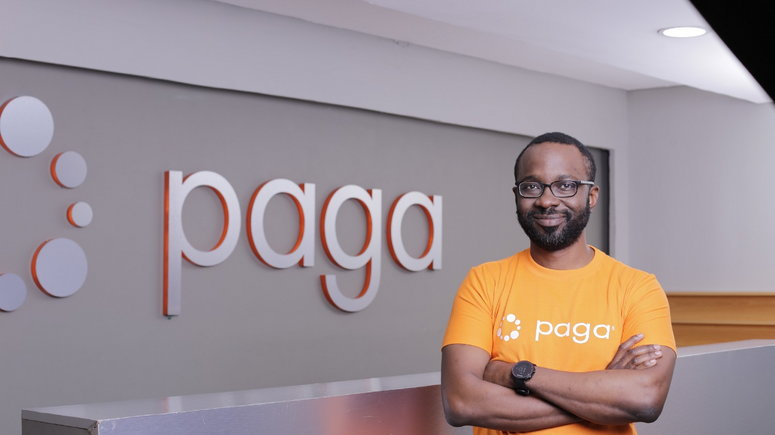
Paga, a Nigerian financial technology company offering a multicurrency payments ecosystem for individuals and businesses, has partnered with Sui, the blockchain network built by US-based Mysten Labs, to advance the development of next-generation financial infrastructure for Africa.

The partnership between Paga and Sui is about building a new blockchain-powered financial infrastructure that expands what Paga can offer beyond traditional payments into crypto, stablecoins, and tokenised assets.

In simple terms, it is aimed at making money movement and access to financial products in Africa faster, cheaper, and more global using blockchain technology.

Announcing the partnership, Sui wrote via a post on LinkedIn,

“Breaking from Sui Live: one of Africa’s largest payments networks is coming to Sui. Paga Group Ltd, which processed $11B in payments and 169M transactions in 2025, is integrating Sui Dollar (USDsui) for instant and direct dollar-denominated settlement. This is stablecoins at scale.”

Paga CEO Tayo Oviosu, commenting on the partnership, wrote,

“Fourteen years ago in Lagos, a traumatic hospital experience revealed a harsh reality: access to urgent medical care was delayed not by lack of treatment, but by the absence of cash. That moment reflected a broader systemic issue across Africa, where financial friction often determines access to essential services and opportunities. Since then, Paga has pursued a clear mission: to make it simple for one billion people to access and use money.

“Over seventeen years, the company has built a financial infrastructure that now processes over $1.5 billion monthly, with hundreds of millions of transactions facilitating everyday life across payments, transfers, and commerce. Despite this progress, significant challenges remain across the continent, including currency instability, high-cost cross-border payments, and fragmented financial systems that limit economic participation and wealth preservation. In response to these challenges, Paga is announcing a strategic partnership with Sui to advance the development of next-generation financial infrastructure for Africa.”

Paga and Sui’s collaboration will focus on four core areas:

  • High-yield USD-denominated savings solutions designed to help protect value from local currency volatility
  • Expanded on- and off-ramp infrastructure to improve liquidity and access across African markets
  • Tokenization of real-world assets to broaden investment opportunities with lower entry barriers
  • Development of global financial rails that enable faster, more efficient cross-border transactions

Paga users could soon hold a dollar account that earns interest automatically, convert between local currency and crypto without friction, invest in assets like property or green energy projects that were previously out of reach, and send or receive money across borders as easily and cheaply as sending an email.

Paga’s move reflects a broader trend among African fintech companies increasingly exploring crypto and digital currency infrastructure for payments, settlement, and treasury operations. Recall that in October 2025, Nigerian fintech unicorn Flutterwave partnered with blockchain firm Polygon to expand its stablecoin payment infrastructure.

Looking ahead, Africa’s projected population growth to 2.5 billion by 2050, alongside a rapidly expanding youth demographic, underscores the urgency of building scalable and inclusive financial infrastructure.

Paga’s partnership with Sui reflects a shared commitment to reducing financial friction and expanding access to global economic systems for Africans. This initiative is not simply about technology or products; it is about building the foundational rails for the future of money in Africa and beyond.


“Buy More Bitcoin Than You Sell” – Michael Saylor Says to Investors

0

As Bitcoin continues to cement its position in global finance, Michael Saylor, the Executive Chairman of Strategy, has once again doubled down on his bullish stance toward the crypto asset.

Saylor, in a recent post on X, has urged investors to adopt a long-term accumulation mindset, saying, “Buy more Bitcoin than you sell.”

Known for leading one of the most aggressive corporate Bitcoin acquisition strategies in history, Saylor believes the digital asset remains the ultimate hedge against inflation and economic uncertainty.

This comes as Bitcoin this week, surged past the $82,000 mark on Wednesday, hitting its highest level in over three months as improving global risk sentiment and reports of a potential U.S.–Iran peace framework boosted broader markets. However, the crypto asset saw a price retracement, after its price dropped to $79,800 on Thursday following rejection at a key dynamic resistance level.

Notably, Saylor’s statement comes just days after his company’s Q1 2026 earnings call, during which Saylor and the leadership team discussed the possibility of selling small amounts of Bitcoin to cover dividend obligations on its preferred stock instrument, STRC.

“Our ability to sell Bitcoin either to buy U.S. dollars or sell Bitcoin to buy debt if it’s accretive to Bitcoin per share is something that we would consider doing going forward,” Saylor said during the call.

On May 5, 2026, Strategy reported a significant $12.54 billion net loss for the first quarter, driven almost entirely by a $14.46 billion unrealized loss on its Bitcoin holdings amid a period of price volatility. Despite the accounting hit, the company’s operational software business showed resilience, with revenues rising 11.9% year-over-year to $124.3 million.

Strategy has been one of the market’s most closely watched Bitcoin proxy stocks, with its share price often amplifying moves in the cryptocurrency itself. In an interview with CNBC just three months prior in February, Saylor stated that Strategy would “never sell” Bitcoin.

So far, the company has sold Bitcoin only once, in December 2022. It sold 704 BTC for around $11.8 million at an average price of $16,775 per Bitcoin. At the time, the company said the sale was for tax-loss harvesting purposes amid low Bitcoin prices. It marks the first, and only, divestment by MSTR since its 2020 pivot to a digital asset treasury (DAT).

Strategy currently holds over 818,000 BTC, despite hitting pause on new Bitcoin purchases in the past week. For a company long celebrated for its “never sell” Bitcoin treasury policy, the CEO’s comment marked a notable evolution in tone, though Saylor’s follow-up post makes it clear that the core philosophy remains unchanged in relentless Bitcoin accumulation.

From “Never Sell” to “Net Buyer,” Saylor’s “buy more than you sell” philosophy represents a pragmatic refinement of Strategy’s Bitcoin treasury strategy rather than a reversal. The company has transformed from a traditional software firm into a Bitcoin development company, using equity, debt, and now digital credit instruments like STRC to acquire more BTC.

This approach has delivered extraordinary results for long-term shareholders. Since adopting Bitcoin as its primary reserve asset in 2020, Strategy’s stock has significantly outperformed Bitcoin itself and major indices on an annualized basis. Analysts remain largely bullish.

Outlook

Saylor’s message resonates because it addresses a common concern among Bitcoin maximalists, whether any sale undermines the thesis. His response is clear, net accumulation is what counts.

As long as inflows via capital raises and operations exceed any outflows, the Bitcoin-per-share metric, a key focus for the company, continues to rise. This balanced yet aggressive stance positions Strategy as both a steward of Bitcoin’s long-term value and a sophisticated financial operator capable of navigating real-world obligations without compromising its core conviction.