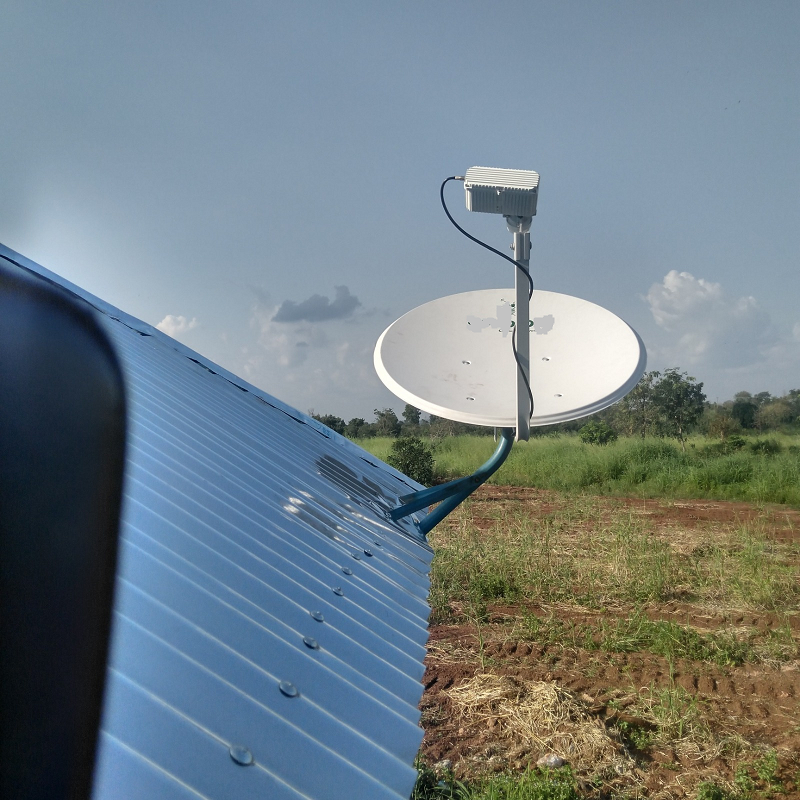
In a landmark development for Uganda’s digital infrastructure, Elon Musk owned satellite internet service, Starlink, has secured its operational license in Uganda.
The milestone comes after Uganda’s President Yoweri Museveni presided over the signing of a Memorandum of Understanding (MoU) and operational license agreement between the Uganda Communications Commission (UCC) and Starlink.
The ceremony which held at State House Entebbe, marks the formal entry of Starlink into Uganda’s telecommunications sector.
UCC Executive Director handed over the operational certificate to Starlink representatives during the event, signaling the company’s commitment to comply with Ugandan laws, regulatory requirements, data protection standards, and national security obligations.
From Rift to Resolution
Starlink approval comes after several months of regulatory tensions in the East African country.
Recall that Earlier in 2026, Ugandan authorities had restricted unauthorized Starlink terminals, seized equipment, and temporarily disabled services amid concerns over unregulated imports and security implications ahead of sensitive periods.
In a letter dated January 2, Director of Market Access at Space Exploration Technologies Corp, Ben MacWilliams, said that UCC raised concerns about the illegal use of Starlink satellite internet services in Uganda.
Following the letter, Starlink implemented a new service restriction tool for Uganda, and promised to cooperate with the UCC’s regulatory requirements as it works to complete the licensing process in Uganda.
After a rigorous process to get its license approved, it was finally granted. The new regulated framework resolves these issues through a formal licensing process, allowing Starlink to operate as a licensed Internet Service Provider (ISP).
President Museveni emphasized the importance of accountability, revenue assurance, and adherence to local laws, describing the partnership as a strategic step toward expanding reliable internet access across the country.
Boosting Connectivity in Underserved Areas
For years, internet connectivity in Uganda has been defined by a sharp contrast between urban progress and rural isolation. In the bustling commercial centers of Kampala, Entebbe, and Jinja, the digital economy is thriving.
Dominant telecom giants MTN Uganda and Airtel Uganda have aggressively rolled out robust 4G and 5G mobile networks, providing city dwellers with seamless streaming and rapid data access.
According to recent market data, the country’s median fixed broadband download speed has climbed steadily to approximately 28.8 Mbps. Yet, step outside these major metropolitan zones, and the digital landscape changes drastically.
Despite expansive mobile tower coverage, Uganda’s overall internet penetration rate hovers at just over 22%. This leaves a vast majority of the country’s population—roughly 40 million people, largely concentrated in deep agrarian and rural communities effectively cut off from the global digital economy.
The entry of Starlink is expected to drastically alter Uganda’s competitive telecommunications landscape, directly challenging dominant terrestrial providers like MTN and Airtel while driving the government’s broader digital transformation agenda.
Starlink’s low-Earth orbit satellite technology is expected to significantly bridge Uganda’s digital divide. Many rural and remote communities currently lack reliable terrestrial broadband due to challenging geography and high infrastructure costs.
With Starlink, high-speed, low-latency internet could soon reach schools, health centers, agricultural cooperatives, and small businesses in hard-to-reach districts.
This development brings Uganda’s Starlink status in line with over 20 other African countries already benefiting from the service, including neighbors like Kenya, Nigeria, and Rwanda.
Economic and Social Implications
• Education: Remote schools can access digital resources, online learning platforms, and virtual classrooms.
• Agriculture: Farmers gain real-time market information, weather forecasts, and supply chain tools.
• Business: Enhanced opportunities for e-commerce, digital payments, and remote work.
The deal is also expected to generate tax revenue for the government and create jobs in installation, technical support, and related services.
Looking Ahead
Starlink’s entry into Uganda, introduces a powerful new variable into East Africa’s tech ecosystem.
The satellite internet will focus on rapid but compliant rollout, device affordability, and local partnerships. The UCC will oversee operations to ensure quality of service and adherence to data sovereignty rules.
As Uganda moves forward with its digital transformation agenda, Starlink’s activation could accelerate economic growth and position the country as a more competitive player in the regional digital economy.