

Based on recent reporting from credible sources, the actual project involves a total commitment of around 50 billion Brazilian reais (BRL), equivalent to approximately $9.1–9.25 billion USD at current exchange rates.
This figure has been consistently reported since the project’s early stages in April 2025, with no announcements or updates today matching the inflated claim.
ByteDance— TikTok’s Chinese parent company has been in advanced talks for this data center since April 2025, with construction slated to begin in April 2026 six months from October 2025 statements by Brazil’s Mines and Energy Minister Alexandre Silveira. Operations are expected to start in 2027.
Register for Tekedia Mini-MBA edition 20 (June 8 – Sept 5, 2026).
Register for Tekedia AI in Business Masterclass.
Join Tekedia Capital Syndicate and co-invest in great global startups.
Register for Tekedia AI Lab.
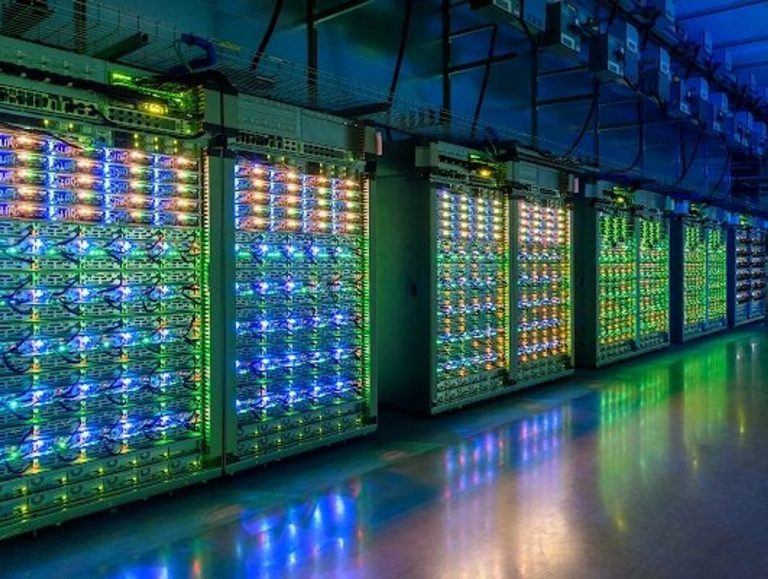
The facility will be built at the Pecém port complex in Ceará state, powered by 300 megawatts (MW) of renewable wind energy, with potential expansion to 900 MW or 1 gigawatt. It will be Brazil’s largest single-client data center, focused on TikTok’s operations in the Western Hemisphere to handle data storage, processing, and export services.
50 billion BRL ~$9.25 billion USD, split between infrastructure ~12 billion BRL by partner Omnia and IT equipment like servers funded primarily by ByteDance/TikTok. 3.5 billion BRL ~$640 million USD from wind farm developer Casa dos Ventos for dedicated renewable energy infrastructure.
Casa dos Ventos a Brazilian renewable energy firm for power supply and initial development. Omnia backed by investment firm Patria joined in November 2025 for infrastructure build-out, confirming TikTok as the sole client.

Brazil’s administration under President Luiz Inácio Lula da Silva has incentivized the project with federal tax exemptions on energy imports for data centers via an October 2025 executive order and approval for data export services.
This aligns with Brazil’s push to become a renewable-energy hub for tech investments, leveraging its wind resources in the northeast. ByteDance has declined to comment officially, but Brazilian officials have publicly confirmed TikTok’s involvement.
This seems to stem from a possible mistranslation, currency confusion, or deliberate hype—perhaps mistaking the 50 billion BRL for USD or inflating it for clicks 50 BRL × ~4.15 exchange rate doesn’t hit $37.6B; that would require ~207 billion BRL.
Earlier rumors in September 2025 mentioned a $10 billion pitch, but nothing close to $37.6B has appeared in verified news. No official TikTok or ByteDance statement today supports the higher number.

This project fits ByteDance’s global expansion strategy, similar to its $8.8 billion commitment to data centers in Thailand announced February 2025. For Brazil, it’s a boon for job creation in Ceará and bolsters its tech ecosystem amid growing demand for AI and cloud services.
However, it also raises questions about data privacy and U.S.-China tech tensions, given TikTok’s scrutiny elsewhere—though Brazil’s focus here is economic. Major economic boost for Northeast Brazil, thousands of direct jobs during construction and hundreds of permanent high-skill jobs afterward.
Ceará becomes a new tech hub; Pecém port already has logistics advantages and free-trade zone status, hotels, housing, schools, suppliers, and ancillary tech companies will follow.
Brazil emerges as a serious player in global cloud infrastructure Joins Chile, São Paulo, and Querétaro as one of the few places in Latin America with true hyperscale capacity. Cheap, abundant renewable energy gives Brazil a structural cost advantage over the U.S. Northeast, Northern Europe, or Singapore.
Green credentialing for TikTok 300–900 MW of dedicated wind power ? one of the world’s greenest large-scale data centers. Helps ByteDance counter criticism about its carbon footprint and Chinese coal-powered servers.
Data sovereignty and regulatory shield for ByteDance Latin America user data Brazil = 180+ million users, plus Argentina, Mexico, Colombia can stay in the future be legally stored in Brazil under LGPD compliance. Makes it much harder for the U.S. to force a TikTok sale or ban — the app’s Western Hemisphere backbone will no longer depend on U.S. soil.