

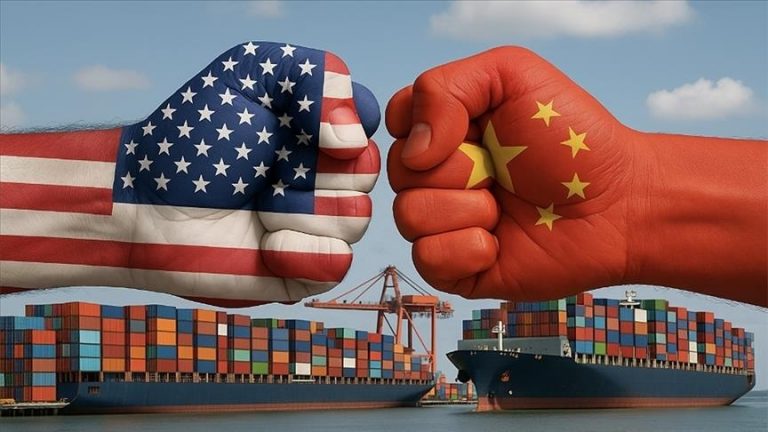
Senior U.S. and Chinese officials met in London June 9, 2025, to address ongoing trade disputes. The U.S. delegation includes Treasury Secretary Scott Bessent, Commerce Secretary Howard Lutnick, and Trade Representative Jamieson Greer, while China is represented by Vice Premier He Lifeng. The talks, held at Lancaster House, aim to build on a fragile truce from Geneva in May, focusing on issues like tariffs and China’s restrictions on rare earth mineral exports. Both sides are under pressure to ease tensions, as China’s exports to the U.S. dropped 34.5% in May, and global supply chains face disruptions. However, analysts expect only limited progress due to deep structural issues.
The U.S.-China trade talks in London on June 9, 2025, carry significant implications for global markets, geopolitics, and economic stability, but the deep divide between the two nations makes substantial progress challenging. If the talks yield even modest agreements, such as tariff reductions or commitments to stabilize supply chains, global markets could see a boost. Reduced uncertainty may stabilize commodity prices, particularly for rare earth minerals, semiconductors, and energy.
Failure to reach any agreement could escalate tensions, leading to further tariff hikes or export restrictions. This risks disrupting global trade flows, with China’s 34.5% drop in U.S. exports in May 2025 already signaling strain. Progress could ease bottlenecks in critical industries like technology and automotive, but continued restrictions (e.g., China’s rare earth export curbs) may exacerbate shortages, raising costs for manufacturers and consumers.
Register for Tekedia Mini-MBA edition 20 (June 8 – Sept 5, 2026).
Register for Tekedia AI in Business Masterclass.
Join Tekedia Capital Syndicate and co-invest in great global startups.
Register for Tekedia AI Lab.
The U.S., under the Trump administration, is pushing a hardline stance with tariffs as leverage to address trade imbalances and national security concerns (e.g., tech transfers). A successful negotiation could strengthen U.S. influence in global trade but risks alienating allies if perceived as overly aggressive. China seeks to protect its economic interests and maintain access to Western markets while countering U.S. dominance. Concessions could signal weakness domestically, so Beijing may prioritize symbolic wins or retaliatory measures.
The talks could influence U.S. and Chinese relations with third parties. For instance, Europe, hosting the talks, may push for multilateral frameworks, while countries reliant on Chinese rare earths or U.S. tech may face pressure to align with one side. U.S.: Progress could lower consumer prices by reducing tariffs but risks backlash from domestic industries (e.g., steel, agriculture) reliant on protectionism. Failure could fuel inflation and harm U.S. businesses dependent on Chinese imports.
Stabilizing trade could support China’s economy amid slowing growth, but concessions on issues like state subsidies or tech restrictions may face resistance from hardliners in Beijing. A successful outcome could lay the groundwork for future negotiations, potentially addressing structural issues like intellectual property theft or market access. However, entrenched mistrust suggests any deal will be narrow, focusing on immediate pain points rather than systemic reform.

The U.S.-China trade relationship is marked by deep structural and ideological differences, which complicate negotiations: The U.S. views its trade deficit with China ($279 billion in 2024, per recent estimates) as unsustainable, accusing China of unfair practices like currency manipulation and dumping. The Trump administration’s 25-50% tariffs on Chinese goods aim to force concessions. China sees tariffs as economic coercion, arguing they harm global trade and violate WTO rules. Beijing’s retaliatory measures, like rare earth export restrictions, target U.S. vulnerabilities in tech and defense supply chains.
The U.S. prioritizes restricting China’s access to advanced technologies (e.g., AI, semiconductors) due to national security fears, citing risks of tech transfers to the Chinese military. Export controls and sanctions on firms like Huawei remain contentious. China views these restrictions as attempts to suppress its technological rise. It demands equal access to global markets and resists U.S. pressure to open its tech sector, citing sovereignty.
The U.S. criticizes China’s state-driven economy, including subsidies for industries like solar and electric vehicles, which it claims distort markets. It seeks reforms to level the playing field for private firms. China defends its economic model, arguing it has lifted millions out of poverty. It accuses the U.S. of hypocrisy, pointing to American subsidies (e.g., CHIPS Act) and protectionist policies. Beyond trade, the talks reflect broader U.S.-China competition for global influence. Issues like Taiwan, the South China Sea, and China’s Belt and Road Initiative loom large, making trust scarce.

The U.S. sees China’s growing ties with Russia and Iran as a threat, while China views U.S. alliances (e.g., AUKUS, Quad) as containment efforts. Domestic politics, especially in an election cycle, limit flexibility. The Trump administration faces pressure to appear tough on China while addressing voter concerns about inflation and job losses. Xi Jinping’s leadership prioritizes stability amid economic slowdown and domestic unrest. Concessions could be seen as weakness, especially after recent protests over economic policies.
The London talks are unlikely to resolve these divides due to entrenched positions and domestic constraints. At best, they may produce limited agreements, such as tariff pauses or commitments to resume rare earth exports, to prevent further escalation. However, the structural nature of the U.S.-China rivalry—spanning trade, technology, and ideology—suggests ongoing tensions. Global markets will closely watch for signals, but analysts remain skeptical of a breakthrough.