

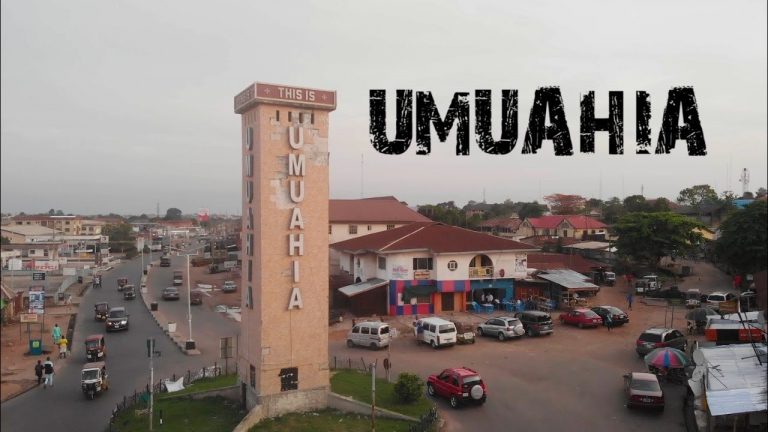
Abia State has secured a landmark $263.8 million financing deal from the African Development Bank (AfDB), the Islamic Development Bank (IsDB), and the Federal Government of Nigeria to tackle decades-old urban infrastructure decay in Aba and Umuahia, the state’s two largest cities.
The funding, which was formally announced by AfDB on Wednesday, follows the official launch of the Abia State Integrated Infrastructure Development Project held on July 11, 2025.
Described by Governor Alex Otti as a “defining moment” in the state’s development trajectory, the project aims to deliver modern, climate-resilient infrastructure that will transform urban mobility, improve public health, and stimulate inclusive economic growth.
Register for Tekedia Mini-MBA edition 20 (June 8 – Sept 5, 2026).
Register for Tekedia AI in Business Masterclass.
Join Tekedia Capital Syndicate and co-invest in great global startups.
Register for Tekedia AI Lab.
According to the AfDB’s statement, the total financing package includes $115 million from the Bank itself, split between $100 million from its ADB sovereign window and $15 million from the Canada-AfDB Climate Fund. The Islamic Development Bank is contributing $125 million, while Nigeria’s Federal Government is backing the project with $23.8 million in counterpart funding.
A Comprehensive Overhaul of Urban Infrastructure
The initiative marks one of the largest multilaterally backed urban renewal projects in the state’s history. It will see the rehabilitation of more than 248 kilometers of roads in Aba and Umuahia—two cities whose deteriorating road networks have long undermined commerce, mobility, and quality of life. Additionally, the project will address critical erosion sites, including restoration work at two major locations that have threatened residential areas and road infrastructure.
Solid waste management, another longstanding problem in both cities, is also central to the project. Authorities plan to attract private sector investment through public-private partnerships (PPPs) to overhaul how waste is collected, processed, and disposed of, reducing public health risks and environmental degradation.

AfDB emphasized that the project goes beyond hard infrastructure to include institutional reforms, capacity-building, and community-level engagement, especially for women and young people. The social development component includes:
- Over 3,000 temporary jobs during the construction phase
- 1,000 permanent jobs, half reserved for youth
- Training programs and skills development for entrepreneurs
- Support for women-led businesses
- HIV/AIDS awareness campaigns
- Resettlement support for affected residents
- Stronger financial oversight systems to prevent misuse of funds
- Addressing Decades of Neglect
The development comes as both Aba and Umuahia continue to grapple with the consequences of chronic infrastructure neglect and underinvestment. In Aba, poor road networks, unmanaged flooding, and waste overflow have crippled the city’s long-standing reputation as an industrial and commercial hub. Umuahia, despite serving as the state capital, has faced similar challenges, with limited urban infrastructure failing to meet the needs of a growing population.
According to AfDB, the project is strategically designed to reverse these trends by modernizing infrastructure “in a way that boosts economic productivity, strengthens climate resilience, and improves living standards for all residents.”

The Bank’s Nigeria Country Department and sector teams will offer technical support and strict implementation oversight, ensuring compliance with environmental, social, and procurement standards throughout the lifecycle of the project.
Otti, who came into office pledging to rebuild Abia from the ground up, said the project aligns with his administration’s commitment to transparency, accountability, and results-driven governance.
The deal is also significant in the context of Nigeria’s broader infrastructure financing outlook. With state governments often constrained by mounting debt and limited internally generated revenue, multilateral development financing—especially with concessional terms and climate funds attached—is seen as a critical pathway to closing infrastructure gaps without plunging states into unsustainable borrowing.
Experts say the Abia model could become a reference point for other subnational governments seeking to mobilize external funding through transparent planning, demonstrable political will, and credible partnerships.
Project implementation is expected to begin in phases before the end of 2025, with procurement already underway for roadworks and erosion control. A project delivery team made up of representatives from the state government, AfDB, IsDB, and the Federal Ministry of Finance will coordinate execution and monitor key milestones.
In the months ahead, the project is also expected to roll out community engagement forums to sensitize residents on environmental safety, waste disposal practices, and upcoming construction timelines.
If successfully delivered, the Abia State Integrated Infrastructure Development Project is projected to become a cornerstone of the state’s economic revival, unlocking long-stalled potential in manufacturing, trade, and services, especially in Aba, a city with deep roots in industrial production and informal enterprise.
For a state long overshadowed by stories of neglect, this $263.8 million lifeline is expected to boost Abia’s ongoing new narrative.