

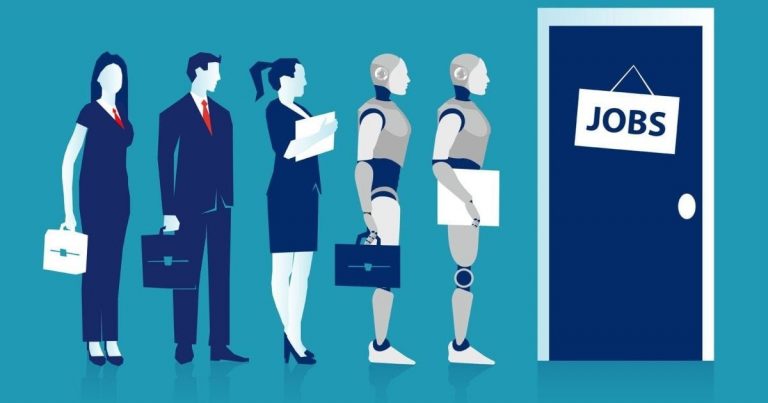
A new study from Stanford University researchers has revealed that generative Artificial Intelligence (AI) is already reshaping the U.S. labor market with young workers bearing the brunt of the disruption.
The research, based on millions of payroll records from ADP, the nation’s largest payroll software provider, found that workers between the ages of 22 and 25 in occupations highly exposed to AI such as customer service, accounting, and software development, have experienced a 13% decline in employment since 2022.
By contrast, older and more experienced workers in the same AI-exposed fields have not seen the same drop. In some cases, jobs in less AI-affected roles, such as nursing aides and production supervisors, even grew for younger employees. Health aide positions for younger workers rose faster than those for older peers, while supervisory roles saw modest but positive growth.
Register for Tekedia Mini-MBA edition 20 (June 8 – Sept 5, 2026).
Register for Tekedia AI in Business Masterclass.
Join Tekedia Capital Syndicate and co-invest in great global startups.
Register for Tekedia AI Lab.
The research noted that this disparity helps explain why overall employment in the U.S. remains strong, even as job growth for younger workers has stalled.
Why Young Workers Are Vulnerable
According to the study, younger employees are particularly at risk because AI can easily replicate “codified knowledge” gained from formal education. In contrast, experience-based skills which take years to develop remain harder for AI to replace.
Meanwhile, not all AI use is associated with job loss, in fields where AI is applied to complement human work and improve efficiency, employment levels have shown little change.

The Standford study corresponds with analysis by Goldman Sachs that AI is reshaping labor market with young tech workers hit the hardest. Reports reveal that unemployment among tech professionals aged 20 to 30 has jumped by 3 percentage points in 2025, a sharper increase than in the broader tech industry or among young workers in other fields.
Entry-level tasks like form-filling and basic coding, once considered stepping stones into the industry, are now easily automated, reducing opportunities for new graduates. Despite most companies not yet integrating AI at scale, the technology is already replacing tasks previously assigned to junior-level employees.
This is particularly visible in coding, content generation, and data processing areas where AI has proven capable of matching or exceeding human performance. Major tech firms such as Alphabet, Microsoft, and Salesforce have openly acknowledged that AI now contributes to 30–50% of work in some projects.

A study by the McKinsey Global Institute reports that by 2030, at least 14% of employees globally could need to change their careers due to digitization, robotics, and AI advancements.
However, despite the job replacement, experts say that AI will help workers by creating more occupations than it replaces. That said, in order to ride the wave and build a new career, individuals have to procure the skills necessary to get the job done.
Growing Concern Over AI’s Role in the Labor Market
The Standford report offers what the researchers call “early, large-scale evidence” that the AI revolution is disproportionately affecting entry-level workers. The findings add weight to warnings that AI’s long-term impact on employment will be uneven across industries, age groups, and skill levels.
Still, since most companies have yet to fully deploy AI in day-to-day operations, experts caution that the true scale of its impact on jobs is only beginning to unfold.