

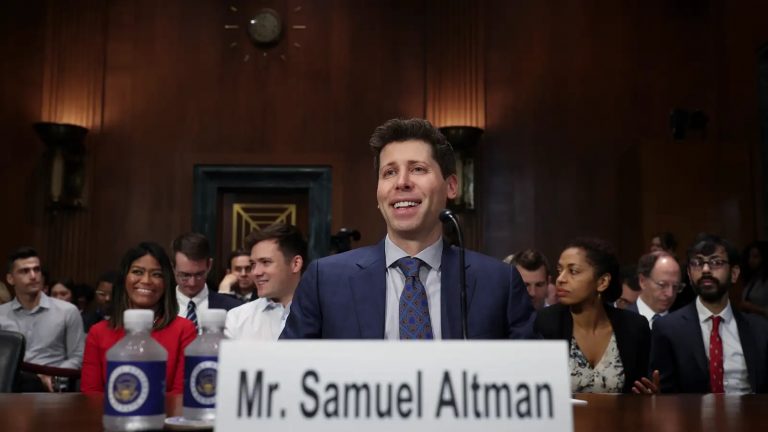
OpenAI CEO Sam Altman has painted a strikingly optimistic picture for Generation Z, telling the Huge If True podcast that if he were graduating college now, “I would feel like the luckiest kid in all of history.”
His upbeat view comes despite acknowledging the disruptive force of artificial intelligence, with “some classes of jobs” set to “totally go away.”
Altman, whose company is building advanced AI systems that could “far exceed humans in almost every field,” told host Cleo Abram that the real challenge lies not with 22-year-olds—who can adapt—but with “the 62-year-old that doesn’t want to go retrain or reskill or whatever the politicians call it.”
Register for Tekedia Mini-MBA edition 20 (June 8 – Sept 5, 2026).
Register for Tekedia AI in Business Masterclass.
Join Tekedia Capital Syndicate and co-invest in great global startups.
Register for Tekedia AI Lab.
His optimism rests on the unprecedented power of AI tools like OpenAI’s newly released GPT-5. Altman envisions individuals being able to launch billion-dollar companies and create world-class products without the large teams once needed.
“You can do things that used to take hundreds of people,” he said, predicting a surge in “completely new, exciting, super well-paid, super interesting jobs.”
He even imagined a future where a college graduate could join a mission to explore the solar system.

Yet, Altman acknowledged that AI’s rapid adoption could upend the labor market, citing forecasts that “half of the entry-level white-collar workforce will be replaced by AI” within five years. Data backs this up: Goldman Sachs chief economist Jan Hatzius has found the traditional “college degree safety premium” largely gone, while participation rates among young non-degree workers have fallen sharply since 1997. Layoffs in July 2025 surged—nearly half due to AI and “technological updates,” according to Challenger, Gray & Christmas.
A historical pattern of upheaval
Altman’s perspective echoes historical cycles of technological transformation. In the 1980s, the rise of the personal computer reshaped office work, eliminating swathes of clerical jobs but creating a new wave of tech-driven careers. The internet boom of the 1990s fueled e-commerce and digital media, but also left many workers from pre-digital industries displaced. Similar anxieties accompanied the Industrial Revolution and the early automation era, where gains in productivity often came at the expense of stable employment for certain groups.
Bill Gates, Elon Musk, and other high-profile tech leaders have also warned that AI poses a significant threat to jobs. Gates has likened the moment to the invention of the microprocessor, predicting a fundamental shift in the workforce and warning governments to prepare for widespread displacement. Musk has repeatedly called AI the “biggest existential threat” to humanity, stressing its economic and social risks.

However, Altman’s concerns extend beyond employment. Speaking recently at the Federal Reserve in Washington, he warned of an impending “fraud crisis” driven by voice-mimicking AI software, arguing that the threat may already be unfolding, according to cybersecurity experts. He described AI’s trajectory toward “intelligence too cheap to meter” as both promising and alarming.
When asked about distinguishing real from fake in a future saturated with AI-generated content, Altman suggested society will keep adjusting its definition of “real,” much as it has accepted AI-enhanced photography. But he also predicted that these shifts may demand “fundamental changes to the social contract,” urging people to integrate AI tools into daily life to stay ahead.
Altman’s core advice is for people to adopt AI: “Just using the tools really helps.” For him, the opportunity AI offers outweighs the risks, at least for the adaptable. But as history has shown, from the PC revolution to the internet era, not everyone will find the transition painless.