

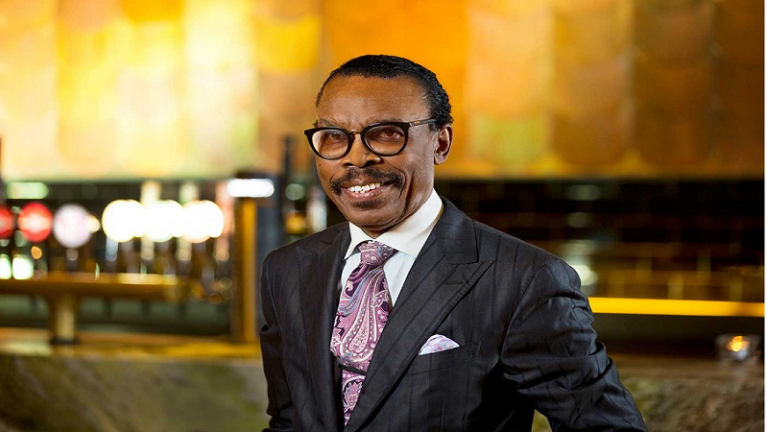
The Managing Director of Financial Derivatives Company Limited, Bismarck Rewane, has projected that Nigeria’s plan to concession major highways in deplorable condition and introduce tolls will significantly lower inflation, boost productivity, and strengthen the naira.
Speaking on Channels Television’s Business Morning show on Monday, Rewane explained that the initiative, which follows a Public-Private Partnership (PPP) model, is designed to ease transportation costs, improve market access for goods, and curb the growing insecurity on highways.
Rewane, a member of the Federal Government’s Highway Development and Management Initiative (HDMI), emphasized that the concession model is the government’s attempt to step aside and allow private sector investment in road development.
Register for Tekedia Mini-MBA edition 20 (June 8 – Sept 5, 2026).
Register for Tekedia AI in Business Masterclass.
Join Tekedia Capital Syndicate and co-invest in great global startups.
Register for Tekedia AI Lab.
“This initiative is the government’s way of getting out of the way so that the private sector can put money into road development,” he said.
Nigeria’s Economic Struggles and Inflation Woes
The proposal comes at a time when Nigerians are grappling with severe economic challenges. Inflation remains at record highs, food prices have skyrocketed, and the cost of living has become unbearable for millions. The removal of fuel subsidies, the sharp depreciation of the naira, and a struggling job market have left citizens with little financial relief.
Rewane linked Nigeria’s persistent inflation to poor road infrastructure, stating that inefficiencies in transportation lead to higher costs for goods, widespread post-harvest losses, and ultimately, price hikes.

“Inflation is defined as the persistent increase in prices due to low productivity and an increase in money supply. While the money supply can be controlled using the Monetary Policy Rate (MPR) and the Central Bank, the real issue is productivity. When goods are produced but cannot reach the market due to bad roads, we experience high transportation costs, food wastage, and price hikes,” he said.
He further explained that rural inflation is currently higher than urban inflation in Nigeria, a situation largely attributed to transportation inefficiencies.
“So, we have these three major factors—bad roads, post-harvest losses, and high petrol prices—all contributing to inflation. But when inflation reduces, the exchange rate begins to strengthen. There is a strong correlation between inflation and currency volatility—the higher your inflation rate, the weaker your currency,” he explained.

The Road Concession Model
Under the concession model, private investors will be granted 25-year agreements to build and maintain specific highways while collecting tolls. A percentage of the toll revenue will be remitted to the Federal Government and, in some cases, state governments.
“When you concession the road to an investor who spends maybe N100 billion or N200 billion, guards it with drone technology, installs central reservations, and secures it with high barriers, the risk of kidnapping will drop significantly,” Rewane said.
He added that well-maintained roads will enhance efficiency, reduce transportation costs, and ultimately lower the price of goods.
“The cost of transportation reduces sharply, and this is coinciding with the reduction in petrol prices. Goods will get to their destinations faster. The records are there, and the evidence is clear—because I can get to my location faster, I would rather pay N1,000 or N500 for tolls if it saves me time,” he said.
Providing an example, he noted that the travel time between Benin and Asaba, which currently takes three to four hours due to poor road conditions, would be reduced to just 45 minutes under the concession model.
Nigerians Push Back Against Additional Burdens
However, his optimism has not been received lightly by Nigerians, many of whom argue that the proposed road tolls and potential additional levies will only worsen their already dire economic situation.
Many have taken to social media and public forums to criticize the plan, arguing that any initiative that requires them to pay more while the government fails to cut its extravagant spending is unacceptable.
For years, Nigerians have called for a reduction in the cost of governance, pointing out the massive salaries and allowances paid to political officeholders, as well as the continued wastefulness in government expenditures. The response to the proposed tolls has reinforced the growing frustration that the government continues to take from the people without making sacrifices of its own.
“The government wants to collect more money from people to reduce inflation. Will it work? I doubt it. This method will impact lower-income households more heavily,” a social commenter said.
Others have noted that introducing tolls on highways could further increase transportation costs rather than reduce them, as private investors will prioritize profit.
Government’s Financial Struggles and the Need for Private Investment
The federal government has long struggled with a funding shortfall for infrastructure projects, with Nigeria’s debt burden and budget deficits limiting its ability to maintain critical road networks. The highway concession plan is seen as a way to shift this financial burden to the private sector.
Rewane argued that the initiative will ultimately benefit the government and the economy.
“The government won’t have to spend billions annually on road repairs. When a road is well-built and well-maintained, you will enjoy greater efficiency and lower costs,” he stated.
However, analysts warn that without proper oversight, the concession model could lead to excessive toll charges, poor road maintenance in the long run, and further disenfranchisement of ordinary Nigerians who already struggle with high costs.
The Larger Debate: Economic Reforms vs. Public Welfare
The backlash against the road concession plan reflects a broader discontent with the government’s approach to economic management. Nigerians have watched as multiple reforms—ranging from subsidy removal to currency devaluation—have placed more financial strain on them, with little relief. Many now believe that any policy that involves taking more from the people without addressing government excesses is unjustifiable.
Popular opinion now holds that while Nigeria needs better infrastructure, the government must first prove its commitment to fiscal responsibility by cutting the high cost of governance before asking citizens to bear additional financial burdens.