

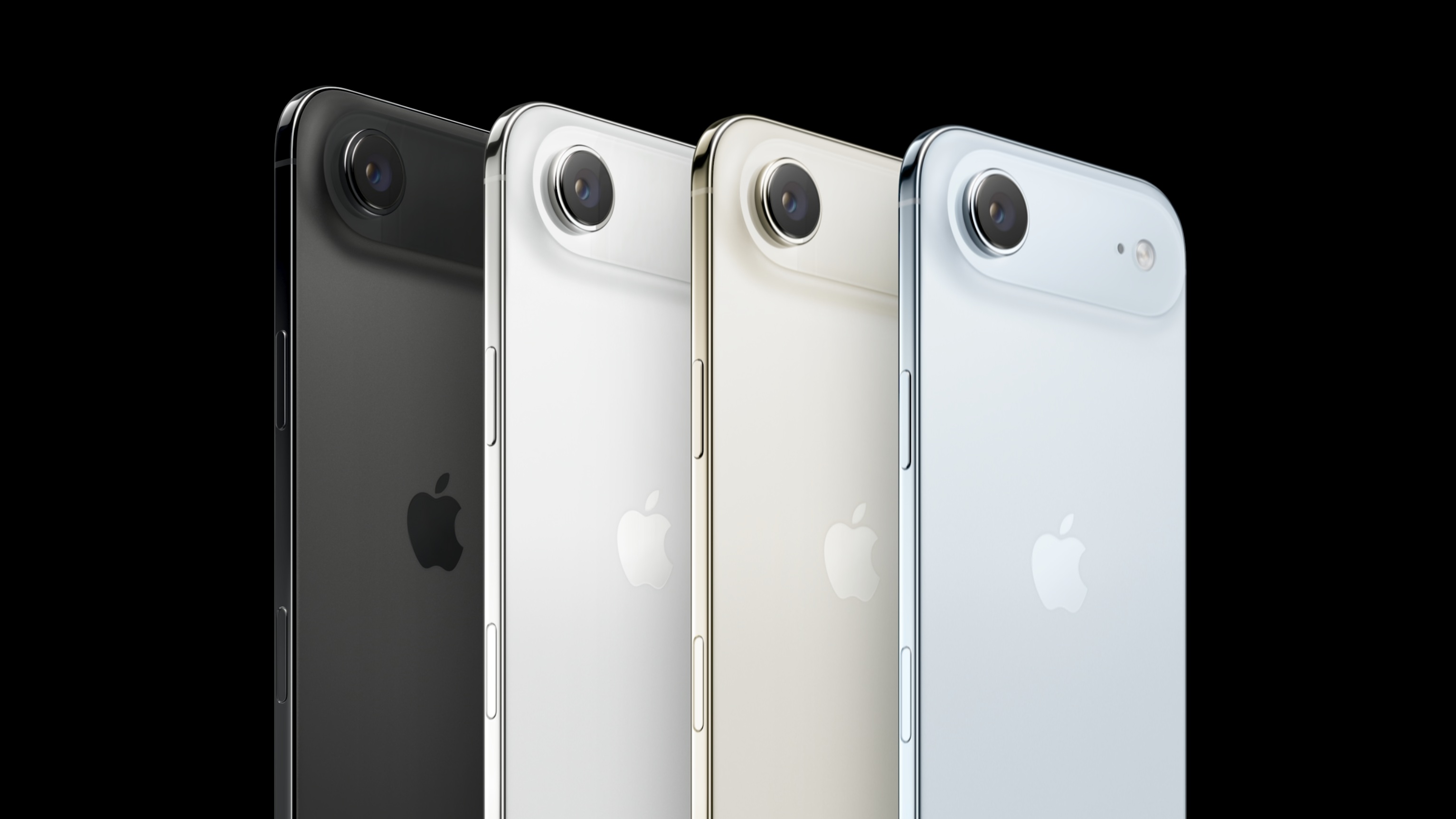
Apple today took the wraps off its iPhone 17 lineup at its “awe-dropping” event, marking one of the most significant updates in recent years for its mainstream model.
The company pushed the boundaries of design and in-house engineering, while continuing its move away from legacy features like physical SIM cards.
The base iPhone 17 now ships with a 6.3-inch display, a step up from the iPhone 16’s 6.1-inch screen. For the first time, Apple’s ProMotion display—previously exclusive to premium models—has made its way into the standard iPhone. The panel supports a 120Hz refresh rate, powered by LTPO technology that dynamically adjusts refresh speeds depending on use, helping balance smooth visuals with power efficiency.
Register for Tekedia Mini-MBA edition 20 (June 8 – Sept 5, 2026).
Register for Tekedia AI in Business Masterclass.
Join Tekedia Capital Syndicate and co-invest in great global startups.
Register for Tekedia AI Lab.
Brightness has also been boosted, with peak levels hitting 3,000 nits, giving users improved legibility outdoors. These upgrades come in a redesigned chassis that is just 5.5mm thick, though the ultra-slim build left no room for a physical SIM tray.
Apple defended its eSIM-only approach during the keynote: “We pioneered eSIM years ago, and now it’s an industry standard. Compared to that decades-old piece of plastic, eSIM is so much easier to use, has better security, and saves precious space inside the iPhone. eSIM is also great for travel.”
Apple’s removal of the physical SIM tray follows its earlier U.S. shift and is consistent with Apple’s pitch that eSIM is more secure, space-saving and travel-friendly. But global eSIM adoption is uneven.

In some markets eSIM is mainstream and carriers support provisioning smoothly; in others, carriers remain slow to enable full eSIM workflows, limiting consumer options. Analysts and telecom writers note that many carriers have been cautious—restricting eSIM to secondary devices, delaying full launches, or making the experience harder than it needs to be.
India is a growth market for eSIM, but still shows friction: adoption and carrier support are improving, yet regulatory and operator readiness vary by region. Europe broadly supports eSIM, but operator policies and roaming/business models mean rollout speed differs across countries and carriers. These frictions mean an eSIM-only phone can be seamless in some countries and more awkward in others.
Apple Goes In-House On Chip
Perhaps the most pivotal reveal was the debut of the N1 wireless networking chip, Apple’s first homegrown Wi-Fi, Bluetooth, and smart home silicon. Replacing Broadcom components, the N1 chip enables support for Wi-Fi 7, Bluetooth 6, and the Thread protocol, with Apple promising stronger AirDrop reliability and faster Personal Hotspot connections.

Joining the N1 is Apple’s C1X 5G modem, a successor to last year’s C1, delivering double the speeds of the previous generation. Together, the N1 and C1X deepen Apple’s strategy of bringing more chipmaking in-house, a playbook it has already applied to the A-series iPhone processors, Mac’s M-series, Apple Watch silicon, and AirPods chips.
The iPhone 17 itself is powered by the new 3nm A19 Bionic chip, complete with a redesigned display engine to support the upgraded ProMotion panel.
This approach has parallels across big smartphone makers:
- Google has been building its own Tensor family (most recently the Tensor G5), designed to run on-device AI and power Pixel-specific features. Google’s in-house SoC work has accelerated in recent years to embed Gemini/AI features tightly into Pixel phones.
- Samsung develops Exynos chips for some markets and continues to invest in its own silicon capabilities (even while using Qualcomm chips in other regions). Samsung’s Exynos program and recent rumours about future generations show the same strategic impulse: control core IP and optimize devices end-to-end.
Camera Upgrades
Photography sees its own leap forward. The rear setup now includes a 48MP ultrawide sensor with improved macro performance and 2x optical telephoto support. Up front, Apple introduced an 18MP “square” sensor, designed to capture selfies in multiple aspect ratios without rotating the device. It also supports Center Stage for calls, ensuring users stay in frame during video chats.
Pricing, Colors, and Availability
The iPhone 17 will be available in lavender, mist blue, black, white, and sage. Apple raised the base storage to 256GB, eliminating the 128GB entry point. With the change, the starting price is $799—identical to a comparably specced iPhone 16, though slightly higher than last year’s 128GB base model, which began at $699.
Pre-orders open this Friday, with general availability starting September 19.
Apple’s latest release arrives amid intensifying competition in the premium smartphone market, where rivals like Samsung and Google have been pushing AI-driven features and foldable designs. Apple’s emphasis this year on display technology, camera innovation, and in-house silicon illustrates its focus on tighter ecosystem control and efficiency, even as it phases out traditional features like physical SIM cards.