

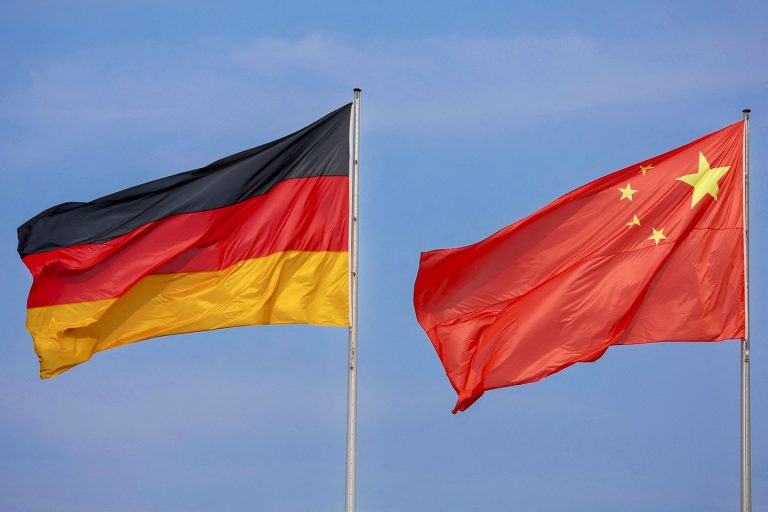
German money is flowing back into China at a pace not seen in four years, a shift that speaks less about renewed enthusiasm for Beijing and more about growing unease with Washington.
Data compiled for Reuters by the IW German Economic Institute show that German companies invested more than 7 billion euros in China between January and November 2025, a jump of more than 55% from the roughly 4.5 billion euros recorded in each of the previous two years. The figure also sits well above the long-term average for the past decade, marking a decisive change in corporate behavior.
At the heart of the move is President Donald Trump’s trade agenda. In his first year back in office, Trump reintroduced far-reaching tariffs on European imports and revived a confrontational approach to trade that many German executives thought belonged to an earlier era. For companies whose business models rely on predictable access to global markets, that uncertainty has become costly.
Register for Tekedia Mini-MBA edition 20 (June 8 – Sept 5, 2026).
Register for Tekedia AI in Business Masterclass.
Join Tekedia Capital Syndicate and co-invest in great global startups.
Register for Tekedia AI Lab.
Rather than doubling down on transatlantic exposure, many firms are spreading their risk. China, already embedded in German industrial supply chains, has once again become central to that strategy.
“German companies are continuing to expand their activities in China – and at an accelerated pace,” said Juergen Matthes, head of international economic policy at the IW institute.
The motivation, he said, goes beyond growth. It is about insulation.

The logic is straightforward. By producing in China for Chinese customers, companies reduce their vulnerability to tariffs, export controls, and sudden policy shifts elsewhere. The aim is to make local operations viable even if global trade routes are disrupted.
This thinking is now widespread across boardrooms in Europe’s largest economy. Reuters reported last week that German companies nearly halved their investments in the United States during the first year of Trump’s second term. In parallel, China has reclaimed its position as Germany’s top trading partner, overtaking the U.S. after a brief reversal in 2024. Rising imports from China helped drive that change.
The German government finds itself navigating a narrow path. Berlin has hardened its language on China over issues ranging from market access to security risks, yet it remains wary of undermining a relationship that underpins large parts of its industrial base. Cars, chemicals, and advanced manufacturing still depend heavily on Chinese demand.

That dependence is evident in corporate spending patterns. Volkswagen, BASF, Infineon, and Mercedes-Benz all continue to channel significant resources into China, a market that absorbs a substantial share of global vehicle and chemical sales.
Volkswagen says its investments in China and the United States are being pursued independently, guided by local market strategies. What has changed is how China fits into its global footprint. Technologies and products developed there are increasingly deployed in other regions, including Southeast Asia, the Middle East, South America, and Africa.
“China is thus helping to further strengthen the Group’s global presence and competitiveness,” a company spokesperson said.
That shift points to a deeper transformation. China is no longer just a sales destination for German firms. It is becoming a development hub and a base for exporting know-how to other fast-growing markets, a role that insulates companies from political risk in any single country.
Geopolitics looms large in these decisions. Matthes said fears of major trade disruptions or conflicts are encouraging companies to build operations that can stand on their own.
“Many companies say: ‘If I’m only producing in China for China, I’m reducing my risk of being affected by possible tariffs and export restrictions,’” he said.
Mid-sized manufacturers are following the same path. Fan and motor maker ebm-papst invested 30 million euros last year to expand its Chinese operations, more than a fifth of its total capital spending. The company framed the move as a way to stay close to customers and shield itself from tariff shocks.
“This model has proven to be an important anchor of stability, especially in times of tariffs and geopolitical tensions,” ebm-papst said, while noting it also plans to grow its U.S. business this year.
Politically, the corporate pivot is echoed by diplomatic maneuvering across Europe and beyond. Britain is heading to China this week with a business delegation seeking deals in sectors from automobiles to pharmaceuticals. The European Union is edging closer to a trade agreement with South America. Canada is exploring expanded trade ties with China and India. Each move signals a quiet recalibration as allies look for alternatives in a more fragmented global economy.
German Economy Minister Katherina Reiche captured the mood this week when she spoke of the need to seek new alliances as established relationships grow more fragile. Her remarks underline a reality facing Europe’s export-driven economies: trade policy is no longer just an economic tool, but a source of strategic risk.
However, for German companies, the renewed surge in China investment is seen as less about choosing sides and more about survival in an era of unpredictable trade rules. Trump’s tariffs were designed to pull investment back toward the United States. Instead, they are accelerating a broader diversification, one that is redrawing the map of global capital flows and pushing U.S. allies to look elsewhere for stability.