

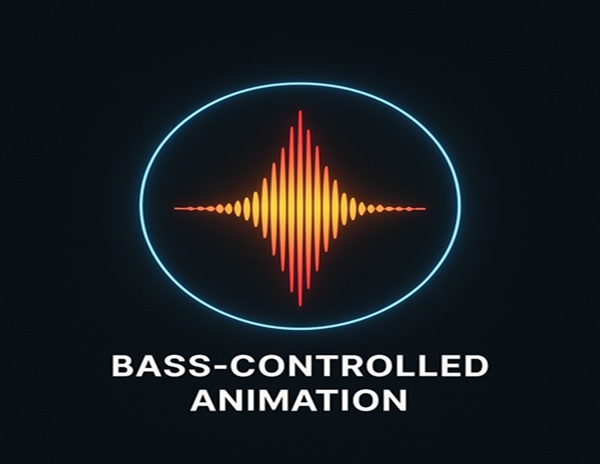
Music and motion have always been inseparable—but in the age of digital art, bass-controlled animation has taken that connection to the next level. This technique lets deep frequencies literally shape the visuals, transforming low-end sound into a visual heartbeat that makes every drop hit harder. From YouTube music visualisers to live performance setups, bass-reactive effects have become a cornerstone of audio-visual design.
What Is Bass-Controlled Animation?
Bass-controlled animation is a visualisation technique where animation parameters—like scale, brightness, or movement—respond dynamically to the bass frequencies in a track. These frequencies are extracted using tools like Fast Fourier Transform (FFT) analysis, which breaks the audio into its component frequencies. In programs such as After Effects, TouchDesigner, Resolume, or Processing, designers map those bass values to specific visual properties. The result? Every thump, kick, and sub-bass rumble physically moves the visuals in real time. A good bass visualizer ties all of this together seamlessly.
This approach creates a visceral experience. Viewers don’t just hear the music—they feel it through motion. When done right, bass-driven visuals capture the primal pulse of the sound, giving audiences a deep sense of immersion.
The Styles That Shine With Bass-Reactive Design
Not every animation style benefits equally from bass control. Some visual approaches are naturally more responsive, more dramatic, and more satisfying when synced with low-end energy. Here are some of the best:
- Particle Explosions: Perfect for EDM or cinematic bass drops. The particles burst outward with each kick, creating a physical representation of sound pressure.
- Waveform Distortion: Real-time deformations of circular or radial spectrums react beautifully to bass frequencies, giving a breathing, rhythmic pulse.
- Camera Shake and Zoom Effects: When tied to bass, these effects replicate the feel of a subwoofer—like the screen itself is vibrating with the beat.
- Pulsing Light and Glow: LED-inspired glow or bloom effects synced to bass frequencies enhance immersion, especially in dark visual environments.
- 3D Geometry Morphing: Bass can drive extrusion, scale, or rotation in 3D models—ideal for experimental visuals and live stage projection mapping.
Each of these effects transforms sound energy into visual intensity, creating a seamless sensory loop between what you hear and what you see.
Tools of the Trade
Software has made bass-reactive animation easier than ever. In After Effects, the Audio Spectrum and Trapcode Sound Keys plugins can drive any property—from scale to opacity—based on frequency bands. TouchDesigner and Resolume Arena excel in real-time performance contexts, letting VJs and visual artists trigger animations directly from live audio feeds. For coders, Processing and p5.js provide open-source environments for crafting fully custom, frequency-responsive visuals with just a few lines of code.
Modern AI tools are even starting to predict rhythm patterns, automatically generating reactive motion curves that sync perfectly with the beat. This means smoother visuals, less manual keyframing, and more creative freedom for designers.
The Aesthetic Sweet Spot: Visualising Bass
Bass doesn’t just move—it dominates. That’s why the most effective bass-controlled animations are minimalist in structure but dynamic in response. Clean geometric shapes, neon outlines, and subtle motion work best when paired with heavy low-end frequencies. Overly complex visuals can distract or clash with the rhythm.
Many creators now combine bass-reactive layers with higher-frequency visual elements—like treble-synced sparkles or midrange distortions—to create multi-frequency ecosystems. This layered approach mirrors the natural spectrum of sound, creating a visual symphony that evolves with the track.
Final Drop: Let the Bass Lead
Bass-controlled animation isn’t just a technical trick—it’s a storytelling device. It gives motion to rhythm and turns every drop into a spectacle. Whether you’re crafting an ambient loop, a YouTube music visualiser, or a live VJ performance, letting the bass guide your animation ensures your visuals don’t just match the music—they become it.