

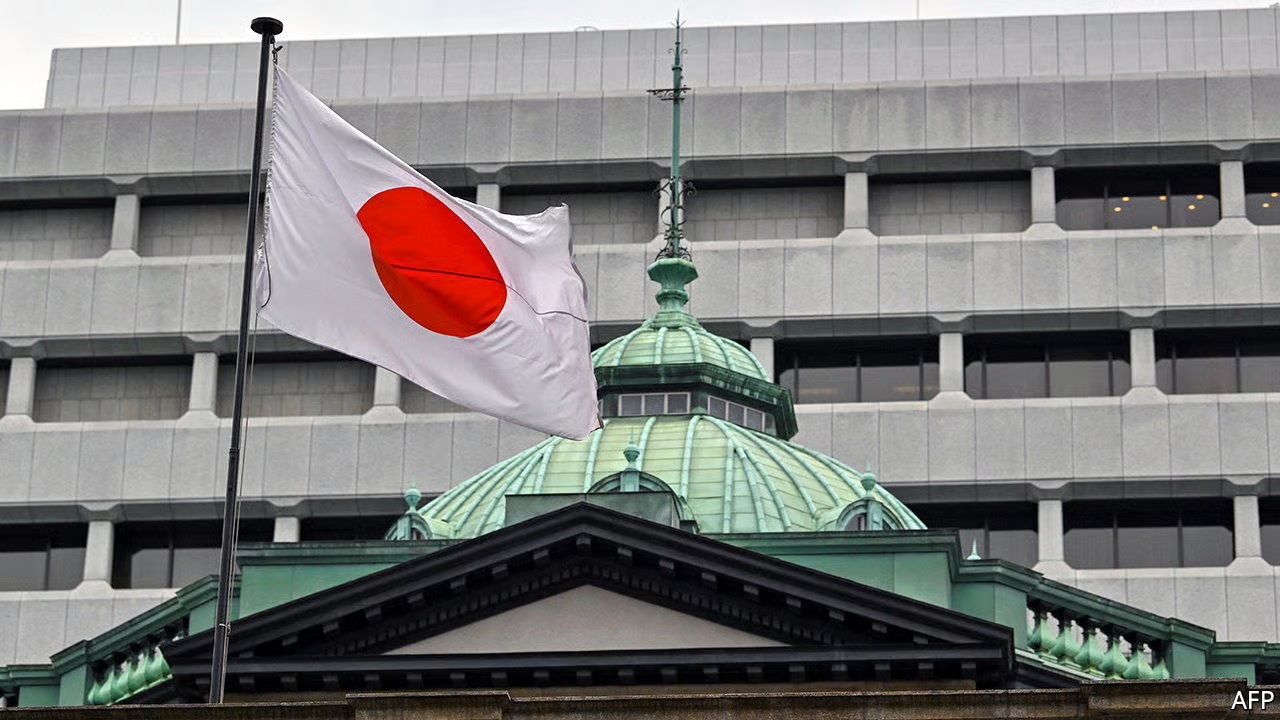
The Bank of Japan is expected to raise interest rates by 25 basis points next week and could signal a faster pace of tightening if persistent price pressures increase the risk that inflation will overshoot its target, according to four people familiar with the central bank’s thinking cited by Reuters.
A move to 1.25% would take the BOJ’s policy rate to its highest level in 31 years, marking another significant step in Japan’s gradual departure from decades of ultra-loose monetary policy.
The central bank last raised rates in June, meaning another increase just three months later would point to a potentially quicker tightening cycle. A further hike before the end of the year would strengthen that signal, particularly if inflation and wage trends continue to support the BOJ’s view that Japan is moving toward a more durable normalization of prices.
Register for the next Tekedia Mini-MBA.
Register for Tekedia AI in Business Masterclass.
Join Tekedia Capital Syndicate and co-invest in great global startups.
The sources, who spoke on condition of anonymity because they were not authorized to speak publicly, said many BOJ officials increasingly see the conditions for another rate increase falling into place. The economy is on track for a moderate recovery, while underlying price pressures are strengthening.
Even with a move to 1.25%, the BOJ expects financial conditions to remain sufficiently loose to support economic activity, the sources said.
“With underlying inflation so close to 2%, the BOJ needs to be extra mindful of upside price risks,” one source said, a view echoed by the other sources.

The BOJ raised its policy rate to 1% in June and indicated that borrowing costs would continue to rise if economic and price developments evolved broadly in line with its forecasts. It left rates unchanged in July but warned that inflation risks could intensify as a result of pressures linked to the Middle East conflict, a weak yen and strong demand associated with the artificial intelligence sector.
That combination has complicated the central bank’s policy calculations. The yen’s recent appreciation should reduce imported inflation by lowering the local-currency cost of overseas goods and commodities. But the currency’s earlier weakness continues to feed through to prices, while a renewed surge in energy costs threatens to offset some of the relief from the stronger yen.
Markets Look Beyond The September Hike
A September increase is already fully priced into financial markets, shifting attention toward what BOJ Governor Kazuo Ueda says about the path that follows.

Some investors had considered the possibility of a surprise 50-basis-point increase, particularly given the extent to which markets have already anticipated the 25-basis-point move. But the absence of an abrupt acceleration in wages and consumer prices makes a larger increase unlikely, according to the sources.
The more probable outcome is therefore a conventional 25-basis-point increase followed by a period in which policymakers assess incoming data before deciding whether another hike is warranted.
Recent comments from BOJ board member Kazuyuki Masu also point away from an aggressive move.
“Underlying inflation is about to reach 2%, but we don’t see it sharply overshooting that level,” Masu said Thursday, suggesting there is no immediate inflation shock that would require the central bank to deliver a larger increase.
A Reuters poll of analysts shows expectations for the policy rate to reach 1.25% at the September 17-18 meeting, 1.5% by the end of March next year and 1.75% in the second quarter of 2027. Most analysts expect the eventual terminal rate to be at least 1.75%.
But the BOJ itself is not thought to have settled on a specific terminal rate.
The sources said policymakers are likely to judge how far rates should rise based on the delayed effects of previous increases on economic activity and the extent to which companies pass higher input costs through to households. That leaves Ueda with limited incentive to provide markets with a precise timetable for future increases. Instead, he could repeat the message delivered in July that the BOJ could accelerate tightening if it concluded that financial conditions remained excessively loose.
The absence of a predetermined terminal rate also reflects divisions within the BOJ over the strength and persistence of inflation. Some policymakers believe underlying inflation has already reached the bank’s 2% target, while others remain more cautious.
Board member Toichiro Asada dissented from the June rate increase.
The next policy meetings after September are scheduled for October, December and January, giving the BOJ several opportunities to adjust its pace if economic and price data change materially.
Oil Shock Complicates Yen-Driven Disinflation
The latest inflation data are reinforcing the BOJ’s concern about upside risks. Wholesale inflation rose 7.6% year-on-year in August, pointing to mounting cost pressures that could eventually feed into consumer prices. The BOJ expects those pressures to push consumer inflation back above its 2% target in the coming months.
In its July quarterly projections, the central bank forecast core consumer inflation at 2.5% for the fiscal year ending March 2027 and 2.4% for the following fiscal year, before returning to 2% in the subsequent year.
The yen has provided some relief. It has gained more than 6% since Japan and the United States intervened jointly in late July, raising expectations that a stronger currency will reduce import costs.
But that benefit is now being challenged by energy markets. Brent crude has risen above $100 a barrel, threatening to raise fuel and transportation costs across the Japanese economy and potentially complicate the BOJ’s effort to distinguish temporary supply shocks from sustained domestic inflation.
That is likely to be one of the central questions surrounding next week’s decision. A 25-basis-point hike is largely expected, but the more consequential signal may come from Ueda’s assessment of whether rising energy prices are temporary, whether companies are increasingly passing costs on to consumers, and whether underlying inflation is becoming sufficiently persistent to justify a faster tightening cycle.
Currently, the challenge for the BOJ is to normalize monetary policy without tightening so aggressively that it undermines the recovery it is counting on to make inflation durable. The September meeting is thus expected to mark less a debate over whether rates should rise than the beginning of a more consequential debate over how quickly Japan can move toward a higher-rate economy.