

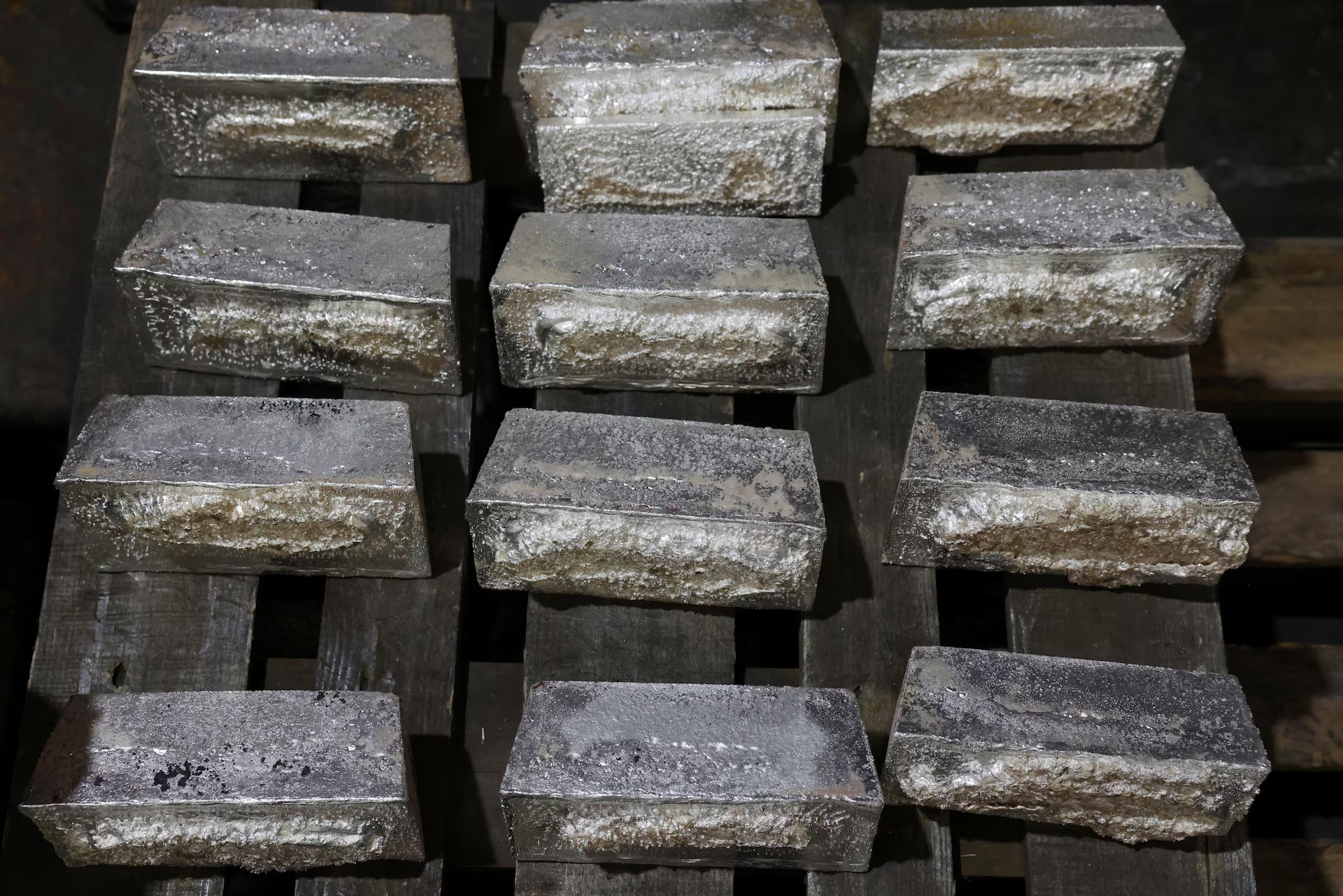
Britain is launching a new £50 million ($66 million) investment programme to strengthen domestic critical minerals production, deepen supply chain security, and reduce dependence on overseas suppliers, particularly China, as competition for strategic resources intensifies globally.
The funding package, announced on Monday, marks the latest step in the government’s broader effort to secure access to minerals that underpin modern industries ranging from consumer electronics and renewable energy to defense systems and artificial intelligence infrastructure.
The investment builds on more than £200 million already committed to the sector and reflects growing concern among Western governments about the concentration of global mineral supply chains in a handful of countries.
Register for the next Tekedia Mini-MBA.
Register for Tekedia AI in Business Masterclass.
Join Tekedia Capital Syndicate and co-invest in great global startups.
Industry Minister Chris McDonald is expected to formally launch the initiative during a visit to a leading industrial research hub in northeast England, where companies are developing advanced technologies for mineral extraction, metal recovery, refining, and recycling.
“Critical minerals are vital for our national security,” McDonald said.
A Race for Critical Minerals
The announcement comes at a time when governments worldwide are scrambling to secure access to materials increasingly viewed as strategic assets rather than ordinary commodities.

Critical minerals are essential inputs for electric vehicle batteries, semiconductors, renewable energy systems, smartphones, defense technologies, data centers, and advanced manufacturing. Demand is expected to accelerate sharply over the next decade as countries invest heavily in electrification, artificial intelligence infrastructure, robotics, and clean energy technologies.
The challenge for Britain, like many Western economies, is that supply chains remain heavily concentrated.
China currently accounts for roughly 70% of global rare earth mining and about 90% of rare earth refining capacity, giving Beijing significant influence over materials used in everything from fighter jets and wind turbines to AI servers and electric vehicles. That dominance has become a growing concern for policymakers following a series of export controls and trade restrictions introduced by China in recent years on strategically important minerals.

Three-Pillar Investment Strategy
The new £50 million package will be distributed across three strategic areas designed to strengthen Britain’s position across the entire critical minerals value chain. The largest portion, £25 million, will be allocated to an accelerator programme aimed at helping promising projects move from research and development into commercial-scale production.
A further £20 million will be directed toward establishing a rare earth magnet hub, an increasingly important segment of the supply chain given magnets’ central role in electric motors, renewable energy systems, defense applications, and advanced electronics. The remaining £5 million will support the creation of a demand-aggregation platform designed to coordinate industrial purchasing requirements, provide greater visibility for investors, and unlock private-sector capital for critical-mineral projects.
The approach suggests the government is seeking not only to support extraction but also to build processing and manufacturing capabilities that have historically been concentrated overseas.
One notable feature of Britain’s strategy is its focus on processing and recycling rather than relying solely on domestic mining. Industry experts believe that refining and processing represent the most strategically important segments of the critical minerals supply chain because they determine where raw materials ultimately become usable industrial products.
The government said the programme will support projects spanning extraction, processing, and recycling. This emphasis reflects Britain’s relatively limited domestic mineral reserves compared with countries such as Australia, Canada, and Chile, while leveraging the country’s strengths in advanced manufacturing, engineering, and research.
Recycling is becoming particularly important as governments seek alternative sources of rare earths and battery materials without depending entirely on new mining projects.
Rare Earth Magnets Emerging as a Key Battleground
The decision to allocate £20 million specifically toward rare earth magnets highlights an area increasingly viewed as a strategic vulnerability across Western economies. Rare earth magnets are crucial components in electric vehicles, offshore wind turbines, industrial robotics, military equipment, and numerous consumer electronics products.
Britain recently achieved a milestone in this area with the opening of its first commercial rare earth magnet facility in 25 years.
The Birmingham-based plant, operated by Mkango Resources’ HyProMag unit, produces magnets from recycled rare earth materials for electric motors and other advanced technologies. The facility is seen as an early example of how Britain hopes to rebuild parts of a supply chain that migrated to Asia over previous decades.
The move forms part of a broader shift in industrial policy among Western nations. What was once viewed primarily as an economic issue is increasingly framed as a matter of national security. Supply disruptions involving rare earths, lithium, cobalt, graphite, and other strategic materials could affect industries ranging from defense manufacturing to energy infrastructure and digital technologies.
The growing importance of artificial intelligence has added another dimension to the challenge. AI data centers, advanced chips, and high-performance computing systems require significant quantities of critical minerals, further intensifying competition for supplies.
Britain’s investment programme, therefore, sits at the intersection of several policy priorities: industrial competitiveness, energy transition, technological leadership, and national security.
Alongside domestic investment, Britain has been pursuing international partnerships aimed at diversifying mineral supply chains. The government has strengthened cooperation with allies, including the United States and South Korea, focusing on supply chain resilience, processing capabilities, investment opportunities, and technology sharing.
These partnerships are part of a wider Western effort to create alternative supply networks that reduce exposure to geopolitical risks. The strategy mirrors similar initiatives in the United States, European Union, Canada, Australia, and Japan, all of which have introduced policies to secure critical mineral supplies and expand domestic processing capacity.