

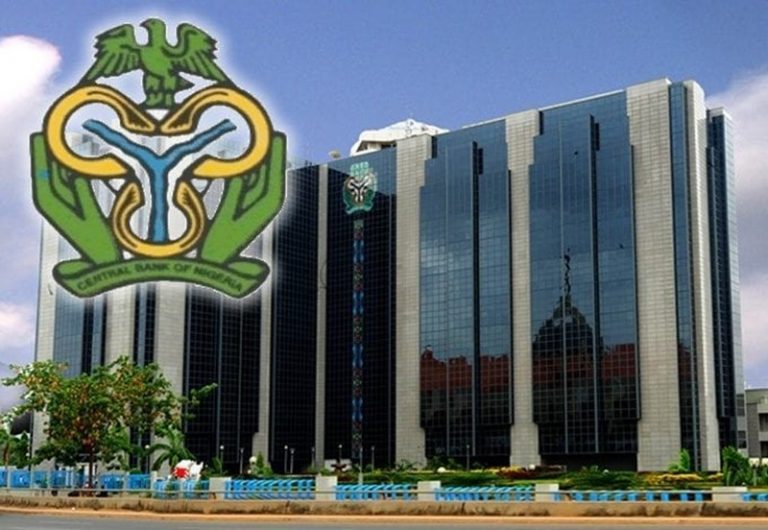
A member of the Central Bank of Nigeria’s Monetary Policy Committee (MPC), Murtala Sabo Sagagi, has expressed concern over the ballooning country’s debt stock despite key reforms such as fuel subsidy removal and foreign exchange liberalization, deepening concern over Nigeria’s fiscal health.
In his personal statement released after the MPC’s 301st meeting and published on the CBN’s website on Sunday, Sagagi lamented that the Federal Government has maintained a “path of unfettered spending” even as revenues from the reforms were expected to ease fiscal pressure.
“Even with the removal of fuel subsidy and liberalization of the exchange rates, the appetite for unfettered spending by the government has grown even stronger,” Sagagi wrote.
Register for Tekedia Mini-MBA edition 20 (June 8 – Sept 5, 2026).
Register for Tekedia AI in Business Masterclass.
Join Tekedia Capital Syndicate and co-invest in great global startups.
Register for Tekedia AI Lab.
Data from the Debt Management Office (DMO) underscores the point. Nigeria’s public debt climbed from N144.67 trillion as of December 31, 2024, to N149.39 trillion by March 31, 2025 — an increase of more than N4.7 trillion in just three months.
Currency Outlook
Sagagi, however, struck a more optimistic tone on the foreign exchange market. He projected that the naira, which closed at N1,503.5/$1 in the official market on Friday, would appreciate to N1400/$1 by December 2025.
“The recent increase in daily crude oil production, new inflows of capital and improved balance of payment, the naira is likely to keep appreciating to reach the projected N1400/US$1 before the end of the year,” he said.

Notably, this is a revision of his earlier forecast. After the 300th MPC meeting, Sagagi had projected the naira would firm to N1,450/$1 by year-end. In that statement, he stressed the currency’s undervaluation but expected a gradual rebound.
Call for Sustained Monetary Tightening
Another MPC member quoted by Naira Metrics, Lamido Abubakar Yuguda, cautioned that while growth indicators show resilience, the CBN must not ease its stance prematurely.
“MPC should sustain its focus on fighting inflation by maintaining the current tight monetary policy stance until inflation declines to a more reasonable level,” Yuguda stated.

He pointed to rebased GDP data showing 3.38 percent growth in 2024 and a steady rise in the composite Purchasing Managers’ Index (PMI), which reached 52.3 in June 2025 from 52.1 in May. According to him, sectors such as agriculture, industry, and services are all recording increased activity.
“This is further evidence that despite the tight monetary conditions, the Nigerian economy is growing modestly, and domestic investment is responding positively to the increasing certainty engendered by a declining inflation rate and a more stable exchange rate,” Yuguda added.
Debt Projections Signal Fiscal Strain
Still, the fiscal outlook remains concerning. A report by CSL Stockbrokers Limited, a subsidiary of FCMB Group Plc, warned that Nigeria’s debt could hit N160.6 trillion by year-end. The projection assumes the Federal Government may borrow an additional N9.3 trillion or more in the second half of 2025 to plug its fiscal deficit, potentially lifting the debt-to-GDP ratio to around 50.2 percent of the pre-rebased GDP.
This deepening reliance on borrowing has amplified fears that reforms hailed as game-changers — subsidy removal and FX liberalization — have not been matched with the fiscal discipline needed to rein in debt growth.
Echoes of Past Debt Cycles
Nigeria’s current debt dilemma is not without precedent. In the late 1980s and early 1990s, successive governments adopted structural adjustment reforms under pressure from international lenders, promising fiscal restraint and liberalized markets. Yet, a pattern of rising oil revenues fueling government spending without adequate savings led to ballooning debts that later required external restructuring.
The early 2000s offered another lesson: despite the landmark $18 billion Paris Club debt relief in 2005, which was supposed to reset Nigeria’s fiscal trajectory, public debt began climbing again within a decade. Analysts often describe this as a “boom-borrow-bust” cycle where windfalls from oil or reforms are quickly overshadowed by unchecked government spending.
Today’s scenario bears resemblance. Even after subsidy removal — a politically difficult reform — and exchange rate unification, borrowing has accelerated, raising fears that gains may again be squandered. Economists have argued that without strict fiscal discipline, Nigeria risks repeating its history of reform without consolidation, where temporary relief is overwhelmed by long-term debt accumulation.
Analysts have repeatedly warned that a stronger naira projection does little to mask Nigeria’s fiscal vulnerabilities. While the exchange rate has shown signs of stability, the debt trajectory signals the government is leaning heavily on borrowing rather than fiscal consolidation. This creates a policy contradiction: monetary authorities are tightening to fight inflation and stabilize the naira, while fiscal authorities continue aggressive deficit spending.
The coming months are expected to test whether currency appreciation and modest output growth can offset the drag from rising debt service costs.