

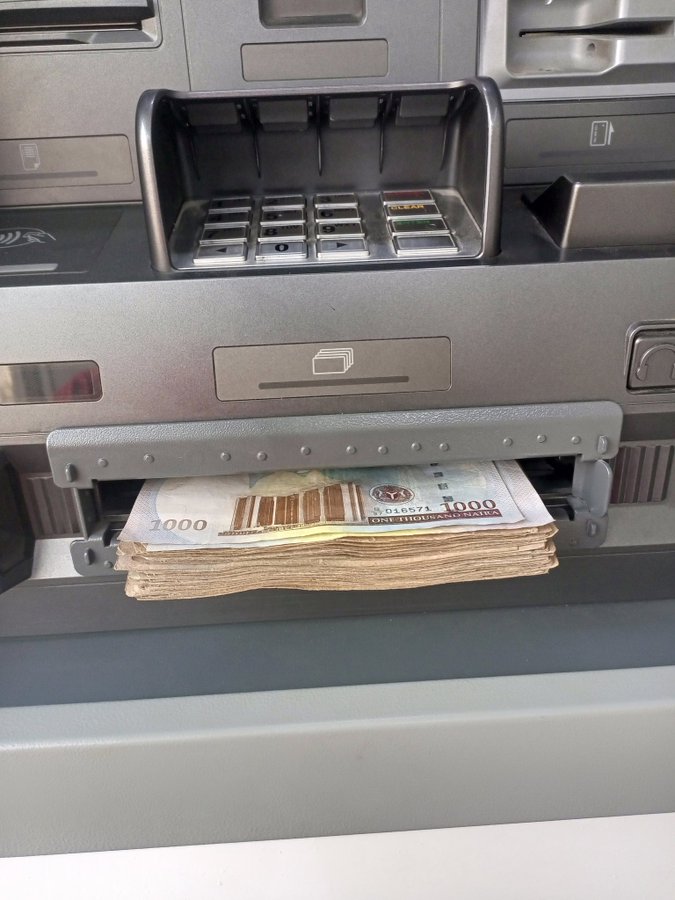
The Central Bank of Nigeria (CBN) has issued new draft guidelines mandating banks to provide instant refunds for failed Automated Teller Machine (ATM) transactions, in what analysts see as one of the boldest steps yet to protect consumers and strengthen accountability in the financial sector.
The new rules, released on October 9, 2025, are part of broader efforts by the apex bank to restore public confidence in digital banking amid rising complaints over delayed reversals and unresponsive customer service. The circular, signed by Musa I. Jimoh, Director of the Payments System Policy Department, was addressed to banks, payment service providers, card schemes, and independent ATM deployers. Stakeholders have until October 31, 2025, to submit feedback before final adoption.
Under the draft framework, the CBN is compelling banks to automatically refund customers for any failed transactions. For on-us transactions—where customers use their own bank’s ATM—the reversal must happen instantly. However, in cases where a technical issue prevents this, the refund must be processed manually within 24 hours.
Register for Tekedia Mini-MBA edition 20 (June 8 – Sept 5, 2026).
Register for Tekedia AI in Business Masterclass.
Join Tekedia Capital Syndicate and co-invest in great global startups.
Register for Tekedia AI Lab.
For not-on-us transactions—where customers withdraw from other banks’ ATMs—the refund window must not exceed 48 hours. The CBN also directed ATM acquirers to automatically initiate reversals without waiting for customer complaints, marking a shift toward proactive consumer protection.
This directive addresses one of the most persistent pain points in Nigeria’s financial system: customers being debited without receiving cash. Many consumers have long complained that banks take days, sometimes weeks, to refund failed ATM transactions despite electronic traceability.
The apex bank said the measure aims to “improve consumer confidence in the banking system, reduce frustration, and enhance trust in e-payment channels.”

Beyond protecting customers, analysts say the new directive could boost revenue for the government. ATM acquirers and banks have often been accused of underreporting or delaying refunds from failed transactions, shortchanging both customers and regulatory agencies in the process.
By mandating automatic reversals and closer monitoring, the CBN expects a more transparent flow of funds that will also improve data accuracy in financial reporting—thereby increasing remittances into the government purse.
The refund directive forms part of a sweeping reform of Nigeria’s ATM regulatory framework, replacing the 2020 electronic payments guidelines. The CBN said the review became necessary due to rapid technological evolution, growing cyber threats, and Nigeria’s goal of deepening financial inclusion.

Under the new policy, banks and card issuers are required to deploy one ATM for every 5,000 cards issued. The rollout will occur in phases—30% compliance by 2026, 60% by 2027, and full compliance by 2028. Any new deployment, redeployment, or decommissioning of machines will require CBN approval.
ATMs are also required to meet higher operational and security standards. They must comply with global Payment Card Industry Data Security Standards, maintain audit logs for dispute resolution, and feature clear card orientation signs. To promote inclusion, at least 2% of each bank’s ATMs must be fitted with tactile symbols for visually impaired users.
The CBN also made clear that customer convenience will be a key performance benchmark. ATMs must dispense cash before releasing cards, provide receipts when requested, allow free PIN changes, and ensure that only fit banknotes are dispensed. Operators must also provide backup power, functional helpdesk lines, and screen prompts giving users ample time to complete transactions.
To curb fraud, all ATMs must be sited in secure, well-lit locations with anti-skimming devices and surveillance cameras that capture activity without recording keystrokes.
The apex bank said it will enforce compliance through regular audits, on-site inspections, and mandatory monthly reports from all ATM operators, listing new deployments and their locations. Financial institutions that violate the new guidelines will face penalties, though specific sanctions are yet to be disclosed.
These measures come barely eight months after the CBN scrapped the three free monthly withdrawals allowed for customers using other banks’ ATMs—a policy shift that drew mixed reactions from consumers and advocacy groups.
The new draft guidelines, however, appear designed to balance regulation with consumer protection. If fully implemented, they could mark a turning point in Nigeria’s banking ecosystem—where reliability, speed, and trust have often been undermined by inefficiency and opacity.