

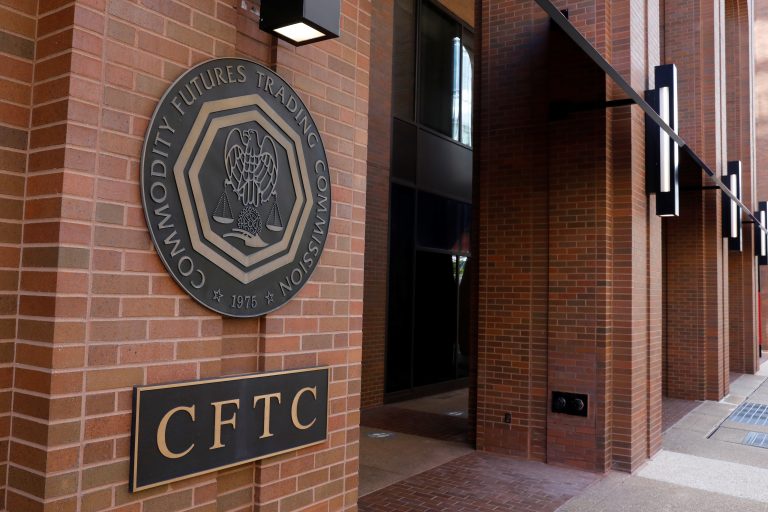
U.S. Commodity Futures Trading Commission (CFTC) has announced an initiative to enable the use of tokenized collateral, explicitly including stablecoins, in derivatives markets such as futures and swaps.
This move aims to enhance capital efficiency, reduce costs, and integrate blockchain-based assets into traditional finance while maintaining regulatory safeguards. Acting Chairman Caroline D. Pham described collateral management as the “killer app” for stablecoins, emphasizing that it could revolutionize how margin requirements are met in the $20 trillion U.S. derivatives market.
Building on the CFTC’s February 2025 Crypto CEO Forum and recommendations from the President’s Working Group on Digital Asset Markets report. It follows the GENIUS Act, the first U.S. law specifically regulating stablecoins, passed earlier in 2025.
Stablecoins like USDC and USDT could be treated similarly to traditional collateral for satisfying margin needs in regulated derivatives trading. This would allow for instant, 24/7 settlement via blockchain, potentially freeing up billions in tied-up capital and reducing default risks through programmable smart contracts.
Register for Tekedia Mini-MBA edition 20 (June 8 – Sept 5, 2026).
Register for Tekedia AI in Business Masterclass.
Join Tekedia Capital Syndicate and co-invest in great global startups.
Register for Tekedia AI Lab.
The CFTC is seeking public feedback from stakeholders on pilots, regulatory amendments, valuation, custody, and security until October 20, 2025. A pilot program could launch as early as 2026, involving firms like Circle, Coinbase, and Ripple.
Major crypto players have endorsed the plan, viewing it as a step toward U.S. leadership in tokenized finance: The GENIUS Act enables licensed U.S. stablecoins as collateral in derivatives and traditional markets, lowering costs and unlocking 24/7 liquidity.
Tokenized collateral and stablecoins will modernize U.S. derivatives, boosting efficiency and global competitiveness. Ripple SVP Jack McDonald: This integrates stablecoins into the “heart of regulated financial markets,” improving transparency and efficiency.

Tether and Crypto.com both expressed support for the initiative’s potential to drive innovation in clearing and risk management. This isn’t full approval yet—it’s an exploratory push—but it signals accelerating U.S. regulatory embrace of crypto.
Analysts see it as groundwork for a potential “Treasury Dollar” a U.S. government-issued digital dollar and could unlock trillions in DeFi-like efficiencies for institutions. However, risks like valuation volatility and custody challenges remain, which the feedback period will address.
Stablecoins enable instant, 24/7 settlement on blockchain networks, reducing the time and capital locked in traditional collateral processes T+1 or T+2 settlement for cash or Treasurys. This could free up billions in liquidity for market participants.

A futures trader could use USDC to meet margin requirements instantly, avoiding delays and costs associated with moving fiat or securities. Blockchain-based collateral management via stablecoins cuts intermediaries, manual processes, and operational overhead.
Smart contracts can automate margin calls and collateral transfers, lowering transaction fees. Reduced costs could attract more participants to derivatives markets, increasing trading volumes and liquidity.
Allowing stablecoins as collateral legitimizes crypto assets in regulated markets, bridging DeFi and TradFi. This could accelerate institutional adoption of tokenized assets. The initiative aligns with the GENIUS Act (2025), which regulates stablecoins, signaling a U.S. push to lead in tokenized finance and counter global competitors like Singapore or the EU.
Programmable stablecoins and smart contracts could enhance risk management by automating collateral valuation, transfers, and default mitigation. This reduces counterparty risk in the $20 trillion U.S. derivatives market.
Real-time collateral adjustments via blockchain could prevent defaults seen in past market crises. The initiative lays groundwork for a tokenized “Treasury Dollar” or central bank digital currency (CBDC). Stablecoins as collateral could serve as a testing ground for a government-backed digital asset.
A U.S. CBDC could compete with private stablecoins like USDT or USDC, reshaping global reserve currency dynamics. Clear CFTC guidelines and the GENIUS Act provide a regulatory framework for stablecoins, reducing uncertainty for issuers and users. This could position the U.S. as a leader in digital asset regulation.
Stablecoins, while pegged to assets like the USD, can face de-pegging risks like the USDC’s brief dip in 2023. The CFTC must ensure robust valuation mechanisms. Blockchain-based collateral requires secure custody solutions to prevent hacks or loss of funds.
The pilot phase potentially 2026 and feedback period due October 20, 2025 must address how stablecoins fit within existing margin rules and systemic risk frameworks. Firms like Circle (USDC) and Tether (USDT) could see massive growth as their stablecoins become integral to derivatives markets.
Licensed U.S. stablecoins may gain an edge over non-U.S. issuers, reshaping the stablecoin landscape. Tokenized collateral mimics DeFi’s efficiency (e.g., instant settlement, transparency) but within regulated markets. This could inspire broader tokenization of assets like bonds or equities.
Trillions in locked capital could shift to blockchain-based systems, transforming clearinghouses and financial infrastructure. By integrating stablecoins, the U.S. strengthens its financial innovation edge, potentially countering China’s digital yuan or other global CBDCs. However, it must balance innovation with systemic stability to avoid market disruptions.
The CFTC’s move could redefine derivatives markets by blending blockchain efficiency with regulatory oversight. It promises lower costs, faster settlements, and greater institutional crypto adoption but hinges on addressing risks like volatility and custody.