

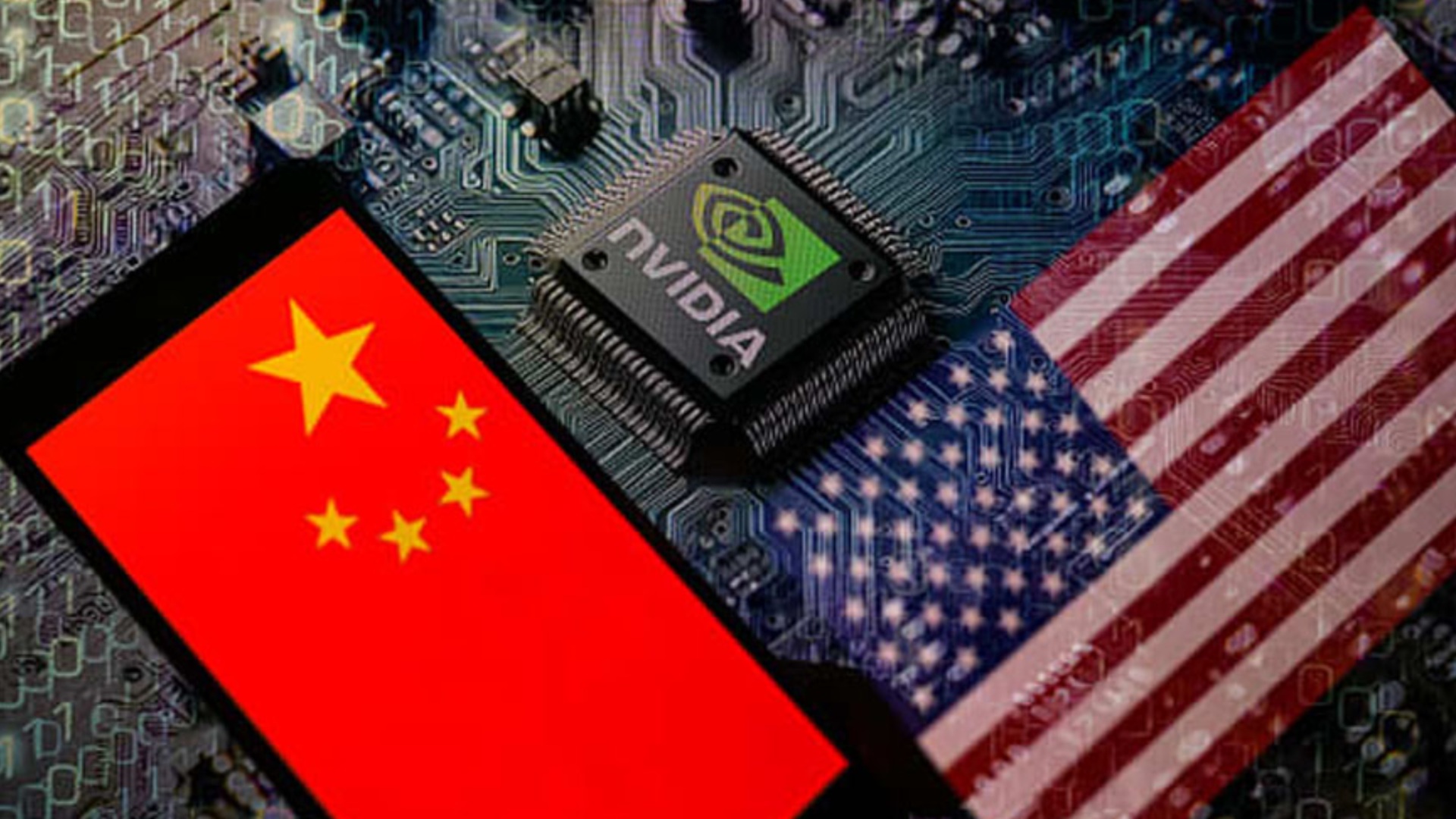
China has authorized three of its largest technology firms—ByteDance, Alibaba, and Tencent—to purchase Nvidia’s high-performance H200 AI chips, signaling a careful balancing act between meeting domestic AI demand and promoting homegrown semiconductor development.
According to sources familiar with the matter, who spoke to Reuters, the approvals cover more than 400,000 units, though the licenses are conditional, and exact terms are still being finalized. The news follows Nvidia CEO Jensen Huang’s recent visit to China, during which he engaged with regulators and company executives.
While the U.S. had already cleared Nvidia to export the H200 to China, Beijing’s approval remained the key barrier. Chinese regulators appear intent on limiting the amount of foreign technology entering the country without undermining domestic innovation, highlighting the strategic importance of the H200 in global AI development.
Register for Tekedia Mini-MBA edition 20 (June 8 – Sept 5, 2026).
Register for Tekedia AI in Business Masterclass.
Join Tekedia Capital Syndicate and co-invest in great global startups.
Register for Tekedia AI Lab.
The approvals come with significant caveats. Chinese firms have yet to convert them into purchase orders, and sources said the licenses may include requirements to purchase domestic chips alongside imported H200 units. Previous reports suggested Beijing could enforce quotas to ensure foreign semiconductors complement, rather than replace, domestic production.
This is a clear signal that China intends to nurture its own semiconductor ecosystem even as it accelerates AI capabilities among its top internet companies.
Other firms remain in a queue for future approvals, suggesting a phased approach designed to prioritize the largest players while maintaining regulatory oversight. Chinese customs recently blocked H200 chips from entering the country pending approval, emphasizing the government’s careful control of the supply chain. Meanwhile, domestic companies have collectively placed orders exceeding two million H200 chips, far beyond Nvidia’s inventory, underscoring the intense demand for high-performance AI hardware.

The H200 represents a major leap in AI computing power. Delivering roughly six times the performance of Nvidia’s H20 chip, it allows firms to train and deploy large-scale generative AI models, process massive datasets, and run AI services at speeds previously unattainable.
While Chinese firms such as Huawei now produce chips that can rival the H20, they remain significantly behind the H200 in raw computational throughput. This gap has made controlled access to Nvidia chips both a practical necessity and a policy tool for Beijing.
From a strategic standpoint, the H200 approvals are a rare instance where U.S. and Chinese policy goals temporarily align. U.S. export controls were designed to restrict China’s access to leading-edge AI hardware, but the conditional approvals indicate a recognition by Beijing that top domestic AI players require state-of-the-art chips to remain competitive internationally.

Analysts suggest that selective imports for major companies will accelerate AI innovation while maintaining pressure on domestic semiconductor firms to close the technology gap.
China’s Domestic AI Chip Drive
Beijing’s cautious approach is part of a broader push to strengthen domestic semiconductor capabilities. Over the past decade, Chinese authorities have invested heavily in AI chip startups and state-owned ventures, seeking to reduce reliance on foreign suppliers. Even so, domestic chips remain behind in performance at the cutting edge of AI workloads, especially for large generative models and high-throughput inference tasks.
The approvals also incentivize domestic companies to accelerate innovation. Conditional purchases of foreign chips effectively create a hybrid ecosystem, where high-performance imported hardware supports immediate AI growth, while domestic chips are developed and deployed in parallel. Over time, this strategy could reduce China’s dependency on U.S.-made components, aligning with the country’s long-term industrial policy goals.
Implications for Global AI Competition
The Nvidia H200 approvals have significant ripple effects for the global AI and semiconductor landscape. China’s top firms, with access to these chips, can compete more effectively with U.S. rivals like OpenAI, Microsoft, and Google. At the same time, U.S. companies supplying cutting-edge hardware gain a lucrative market, albeit one constrained by Beijing’s regulatory conditions.
The approvals represent both an opportunity and a challenge for Nvidia. This is because Chinese demand for the H200 underscores the company’s dominant position in high-end AI chips. Also, the conditional nature of the approvals and potential bundling requirements introduces uncertainty in forecasting sales and supply chain management. With over two million units ordered by domestic firms, demand far exceeds supply, highlighting the tightness of the AI memory and compute market.
The approvals also underpin how semiconductor supply chains have become a central geopolitical issue. The U.S. aims to maintain technological leadership while limiting China’s access to top-tier chips, while China balances the need for competitiveness with the desire to grow its domestic industry. The result is a controlled, highly strategic flow of technology that could reshape AI development timelines, commercial competition, and cross-border technology cooperation.
The unfolding situation sets the stage for a new phase in the U.S.-China AI competition. Conditional imports of H200 chips enable immediate growth for top Chinese AI firms while reinforcing the government’s emphasis on domestic semiconductor development.
But China’s hybrid strategy—allowing conditional foreign imports while fostering domestic innovation—is likely to continue as both a safeguard and an accelerant for AI growth.