

Wall Street narrowly avoided a much deeper sell-off Monday as three of the market’s biggest sources of anxiety, surging oil prices, rising Treasury yields and fears over a slowdown in artificial intelligence spending, all eased as the session progressed.
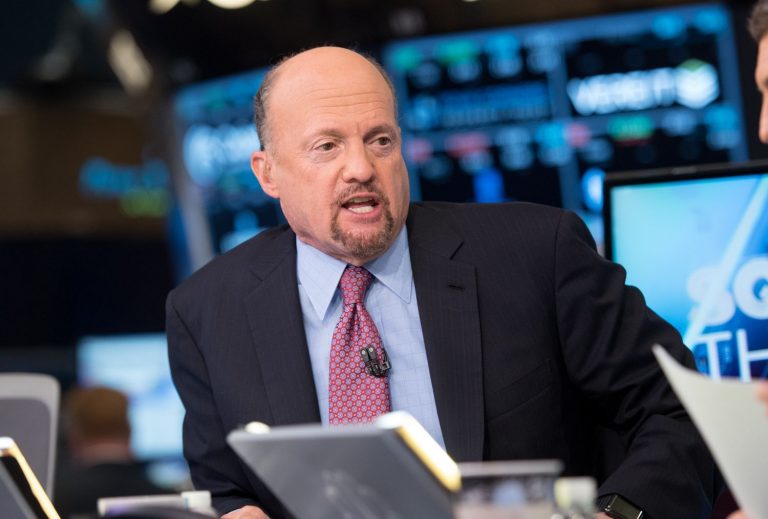
CNBC’s Jim Cramer said the market initially appeared headed for a far more severe decline before developments in energy and bond markets, along with a reassessment of the implications of AI safety concerns, helped major indexes recover from their lows.
“At one point this morning, it looked like we were just going to crash,” Cramer said on “Mad Money.”
Register for the next Tekedia Mini-MBA.
Register for Tekedia AI in Business Masterclass.
Join Tekedia Capital Syndicate and co-invest in great global startups.
The S&P 500 ended down 0.48% after falling as much as 0.8% during the session. The Nasdaq Composite lost 0.56% after dropping as much as 1.3%, while the Dow Jones Industrial Average fell 152 points, or 0.29%, after being down nearly 300 points at its low.
The relatively modest index losses, however, masked considerably greater damage in parts of the market most exposed to the AI data-center investment cycle.
Intel and Micron each fell about 5%, while GE Vernova dropped nearly 9% and Eaton declined roughly 8%. All four companies are held by Cramer’s Charitable Trust, the portfolio associated with CNBC’s Investing Club.

The selling highlighted how quickly concerns about AI development can spread beyond software companies and into the industrial and semiconductor businesses that have become major beneficiaries of the data-center boom.
Oil Backs Away From The $100 Threshold
The first source of relief came from crude oil.
West Texas Intermediate briefly surged about 4% to touch $102 a barrel after Saudi Arabia closed a critical pipeline that bypasses the Strait of Hormuz. The move threatened to intensify an already difficult inflation and energy backdrop for investors.

Oil subsequently surrendered much of that gain, however, and settled just over 1% higher.
The reversal was widely welcomed because crude prices above $100 a barrel can have consequences far beyond energy stocks. Higher fuel costs can raise transportation and production expenses, squeeze consumers and complicate the outlook for central banks already struggling with persistent inflation.
With markets simultaneously dealing with elevated Treasury yields, a sustained oil shock could have created a particularly difficult combination of higher inflation and tighter financial conditions.
As a result, the retreat from the session high gave investors room to reassess the broader risk picture.
A 5% Treasury Yield Finally Attracts Buyers
The bond market provided another source of stability. The yield on the 10-year U.S. Treasury rose to 5%, its highest level since October 2023, before buyers emerged.
Cramer viewed the buying at that level as significant because Treasury yields had been climbing for weeks without generating enough demand to halt the increase.
“Something happened that’s been missing the whole time bonds have been on a rampage: buyers, actual buyers, came in and decided that 5% was a good yield,” Cramer said.
“That’s right, not everyone hates bonds at any price.”
The significance of the move goes beyond the Treasury market itself. Rising long-term yields increase the discount rate applied to future corporate earnings, potentially putting pressure on high-growth stocks whose valuations depend heavily on profits expected years into the future.
A 10-year yield at 5% represents a substantial hurdle for equities, particularly technology companies trading at elevated multiples.
But the emergence of buyers suggests that investors may view yields around that level as sufficiently attractive to absorb additional Treasury supply and provide some resistance to further increases. That helped remove one source of pressure from stocks during Monday’s session.
AI Safety Fears Fail To Derail Data-Center Spending
The third and potentially most important development involved artificial intelligence.
Anthropic CEO Dario Amodei’s weekend essay calling for the industry to slow the pace of AI model development initially rattled investors because of what a slowdown could mean for the enormous infrastructure buildout supporting the technology.
If frontier AI laboratories reduce the speed or scale of model development, investors could reasonably question whether demand for advanced chips, servers, power equipment, networking infrastructure and data centers will continue expanding at the pace embedded in current valuations. That concern was visible in Monday’s sharp declines among companies tied to the infrastructure cycle.
Cramer described the initial reaction as a threat to one of the most powerful investment themes in the market.
“Most important, the biggest theme of our era, artificial intelligence, looked like it was going on the ropes because of a self-induced slowdown mode,” he said.
“That could snap shut the biggest spigot of cash in history.”
But as the session progressed, investors appeared to distinguish between slowing the development of frontier AI systems and stopping the physical expansion of AI infrastructure.
OpenAI and Anthropic may favor more deliberate development of increasingly capable models, but that does not necessarily mean companies will abandon the massive data-center projects already under construction or cancel the need for computing capacity, electricity and supporting equipment.
By the close, Cramer had reached a similar conclusion.
“As we got our arms around the forced AI slowdown that the big guns, Open AI and Anthropic, now seem to favor, we decided it wasn’t the end of the world,” he said.
“In fact, we left this session convinced that not much in the data center world would change at all.”
The belief is crucial for investors because the AI infrastructure trade has become much broader than the companies developing models. Chipmakers such as Intel and Micron are exposed to semiconductor demand, while companies such as GE Vernova and Eaton benefit from the enormous power-generation, grid and electrical-equipment requirements associated with new data centers.
A moderation in the pace of frontier model development could affect future demand, but it does not automatically erase the infrastructure investment already required to support existing AI workloads.
Monday’s market action therefore offered a useful test of how investors are beginning to parse AI risk.
The initial reaction treated Amodei’s call for greater caution as a potential threat to the entire spending cycle. By the end of the session, the market appeared to settle on a more limited interpretation: AI safety measures could change the trajectory of model development without necessarily bringing the data-center expansion to an abrupt halt.
That left Wall Street with three pressure points partially contained.
Oil pulled back from $102, Treasury buyers emerged at a 5% 10-year yield, and AI safety concerns appeared less likely to immediately derail infrastructure spending.
The recovery does not eliminate the risks. Oil remains elevated, long-term borrowing costs are high, and the AI investment cycle still depends on companies continuing to spend at an extraordinary pace.
But Monday’s session showed why the market can swing so sharply when several of those assumptions are questioned at once. However, it appears that investors are currently still willing to believe that the AI buildout can continue even if the companies developing the most advanced models become more cautious about how quickly they push the technological frontier.