

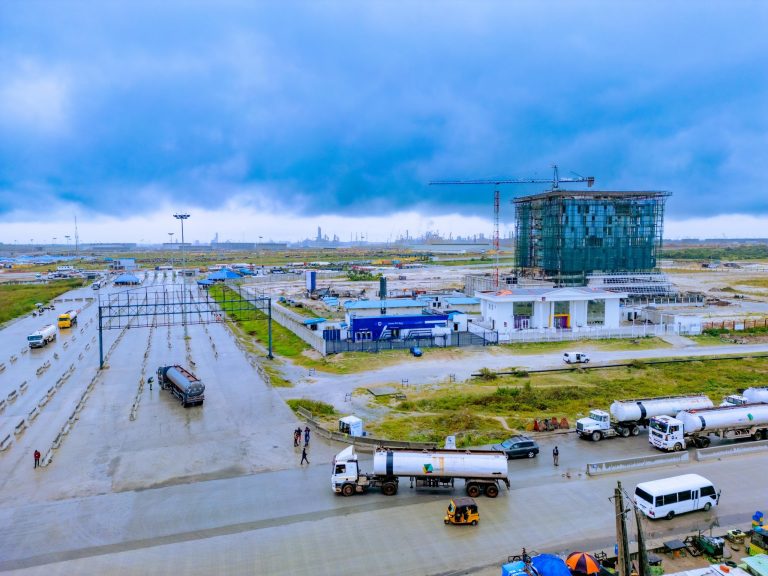
Nigeria’s Dangote Refinery has acquired its first cargo of Algeria’s light sweet Saharan Blend crude, according to market sources cited by Argus Media, a global energy market intelligence provider.
The refinery, Africa’s largest, secured 1 million barrels from trading firm Glencore, expected to be delivered between March 15 and 20. While neither party confirmed the deal or disclosed its price, this purchase marks a significant step for the 650,000 barrels-per-day refinery, which has been grappling with local crude supply shortages.
Despite the Nigerian government’s earlier assurances to supply the refinery with sufficient domestic crude, Dangote has struggled to secure the requested 550,000 barrels per day (bpd) from local producers. So far, only 420,000 bpd of crude oil has been delivered to the refinery’s Lekki site this year, with 87% of this volume sourced from Nigeria, according to Vortexa data.
Register for Tekedia Mini-MBA edition 20 (June 8 – Sept 5, 2026).
Register for Tekedia AI in Business Masterclass.
Join Tekedia Capital Syndicate and co-invest in great global startups.
Register for Tekedia AI Lab.
The refinery, which cost about $20 billion to build, aims to reduce Nigeria’s reliance on imported fuel and meet local demand. However, the persistent local crude supply challenges have forced it to look beyond Nigeria’s borders. The imported Saharan Blend crude, known for its light sweet quality, is competitively priced compared to Nigerian grades, aligning well with the refinery’s processing requirements.
Market analysts suggest that sluggish demand for Saharan Blend in Europe, driven by seasonal refinery maintenance and ample light crude supply, may have encouraged the Algerian sellers to explore alternative markets such as Nigeria. The report indicates that Saharan Blend prices have dropped by $1 per barrel in March, at a 20¢ per barrel discount to the North Sea Dated benchmark on a free-on-board (fob) Algeria basis.
According to Devakumar Edwin, Head of the Dangote Oil Refinery, the facility has been operating at 85% capacity, with plans to reach 100% within 30 days. Initially, the refinery began processing diesel, naphtha, and jet fuel in January 2024 and added petrol processing in September of the same year. When fully operational, it aims to compete with European refineries.

Fuel Price Reduction Amid Importation
Amid the backdrop of importing crude, Dangote Refinery has announced a significant reduction in fuel prices. In a statement issued over the weekend, Dangote Petroleum Refinery & Petrochemicals disclosed it would absorb a N16 billion loss by refunding N65 per liter to marketers, ensuring Nigerians benefit from cheaper fuel.
The refinery has reduced its gantry price from N890 per liter to N825 per liter. It has pledged to refund marketers who bought Premium Motor Spirit (PMS) at higher rates before the price drop.
“The step, effective February 27, 2025, guarantees that none of our valued business partners will experience a loss due to the price change. More importantly, it ensures that the new, lower rate takes immediate effect nationwide for the benefit of the Nigerian people,” the statement read.

Dangote Refinery has urged marketers to pass on the benefits of the new pricing to consumers, warning against profiteering. It condemned practices where fuel purchased at N825 per liter is sold to consumers at N945 or more, describing this as “unpatriotic and detrimental to the welfare of Nigerians.”
To enforce this, the refinery encouraged consumers who purchase fuel above the advertised rates at key partners—AP (Ardova Plc), Heyden, or MRS—to report with receipts for a full refund of the excess amount. The refinery’s approved rates per liter vary by region, ensuring no Nigerian pays more than N900 per liter for PMS, regardless of location or petrol station.
The refinery emphasized that its price reduction initiative aligns with President Bola Tinubu’s Renewed Hope Agenda, which aims to stimulate Nigeria’s economy and promote self-sufficiency in critical sectors like energy. The company reaffirmed its commitment to providing eco-friendly, high-quality fuel that enhances vehicle performance and supports public health.
A Complex Energy Industry
Dangote Refinery’s crude importation underscores the challenges Nigeria faces in its quest for energy independence. While the government had promised sufficient local crude oil supply, the reality on the ground appears different, forcing the refinery to turn to international markets.
This development also raises questions about Nigeria’s broader oil production strategy, especially when a key domestic player must import crude to keep operations running. For consumers, however, the immediate benefit is the refinery’s initiative to lower fuel prices and absorb losses to ensure affordability.