

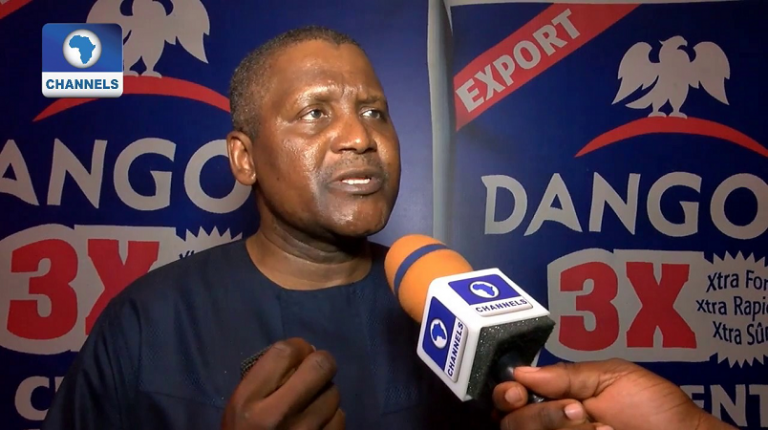
Nigerian businessman and philanthropist Aliko Dangote has officially stepped down as Chairman and Director of Dangote Cement Plc, marking a significant shift in the leadership structure of the company he built into Africa’s largest cement producer.
The decision, announced in a statement released Friday, takes immediate effect and signals what analysts describe as another bold move by the billionaire to sustain his legacy while sharpening the conglomerate’s focus on its most critical frontier — oil and gas.
Mr Emmanuel Ikazoboh, an Independent Non-Executive Director, has been named the new Chairman of the Board, succeeding Dangote. The company also announced board changes, including the retirement of Professor Dorothy Ufot and the appointment of Hajiya Mariya Aliko Dangote.
Register for Tekedia Mini-MBA edition 20 (June 8 – Sept 5, 2026).
Register for Tekedia AI in Business Masterclass.
Join Tekedia Capital Syndicate and co-invest in great global startups.
Register for Tekedia AI Lab.
According to the statement, Dangote’s exit from the cement board is intended to enable him to focus more deeply on the Dangote Group’s core strategic areas, particularly the multibillion-dollar Dangote Refinery, along with the group’s Petrochemicals, Fertiliser, and Government Relations operations. These segments are considered vital to the group’s five-year growth strategy.
Industry analysts believe that Dangote’s exit from the cement board is not a retreat but a calculated pivot toward the segment of his business that could redefine Nigeria’s industrial landscape — the oil sector. With the recently commissioned 650,000 barrels-per-day Dangote Refinery expected to dramatically reduce Nigeria’s dependence on imported fuel and transform the country’s downstream oil industry, Dangote’s move signals where he believes the future of his empire — and Nigeria’s economy — now lies.
Dangote has touted the refinery as having the potential to change the narrative on energy self-sufficiency for Nigeria and West Africa.

Legacy Cemented in Cement
Aliko Dangote exits Dangote Cement on a high note. Under his chairmanship, the company evolved from a local cement manufacturer into Africa’s largest cement producer, with an installed production capacity of 52.0 million metric tons per annum (Mta), including 35.25Mta in Nigeria alone. Expansion projects in Côte d’Ivoire and Itori, Ogun State, are expected to raise total capacity to 61.0Mta by year-end.
This transformation has not only reshaped construction and infrastructure across sub-Saharan Africa but also turned Dangote Cement into one of the most profitable corporations on the continent.
In the first half of 2025, the company posted its highest-ever financial results, with group revenue rising by 17.7% to N2.07 trillion and EBITDA growing 41.8% to N944.9 billion. Profit before tax surged 149% to N730 billion, while profit after tax climbed 174% to N520.5 billion. The company also reported an 18.2% rise in export volumes, with multiple clinker shipments to Ghana and Cameroon.

New Leadership, Continued Vision
Emmanuel Ikazoboh, the new board chairman, described his appointment as “an honor,” pledging to maintain “the highest standards of leadership and dedication.” He hailed Dangote Cement as “a beacon of African enterprise” and committed to upholding its reputation through operational efficiency, sustainability, and strategic expansion.
“We will continue to invest in innovation and alternative energy to reduce reliance on fossil fuels, while boosting employee capacity and community engagement,” Ikazoboh said.
His leadership is expected to usher in a new phase for the company as it targets regional market consolidation and explores decarbonization strategies amid rising ESG (Environmental, Social, and Governance) pressures globally.
For Dangote, who remains President/CEO of the Dangote Group, the move suggests an even deeper personal involvement in steering the refinery through its early years. The project, which has faced several delays, finally commenced production and is gradually beginning to ship products to Nigerian marketers, though price and distribution remain points of speculation.
Analysts believe his full attention on the refinery may help overcome lingering regulatory, logistical, and pricing hurdles that could affect its national and continental impact. With growing anticipation that refined products from the Dangote Refinery could dominate West African markets and significantly impact fuel pricing in Nigeria, the stakes are high — and so is the promise.