

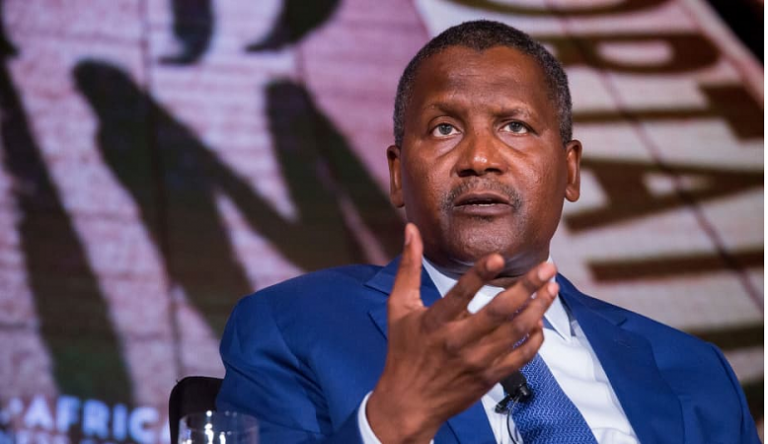
Africa’s richest person, Aliko Dangote, is pushing a plan to develop another oil refinery – this time, a 700,000-barrel-per-day refinery in Kenya, in East Africa. The move comes less than three years after bringing Africa’s largest oil refinery into operation in Nigeria.
The proposed Lamu refinery, expected to cost between $15 billion and $16 billion, represents one of Dangote Group’s most ambitious projects outside Nigeria. The company plans to hold a groundbreaking ceremony later this month and aims to complete the facility by 2030.
But the project faces a fundamentally different set of challenges from those encountered at Dangote’s Lagos refinery, particularly over crude supply, financing and supporting infrastructure, according to a Reuters report.
Register for the next Tekedia Mini-MBA.
Register for Tekedia AI in Business Masterclass.
Join Tekedia Capital Syndicate and co-invest in great global startups.
Nigeria has abundant oil reserves and an established crude-producing industry. Kenya, by contrast, currently has no commercial-scale oil production, meaning Dangote will need to secure reliable feedstock from neighboring producers or the international seaborne market.
The project’s location has also evolved rapidly.
Until April, discussions centered on Tanzania. In May, Dangote told the Financial Times that he was leaning toward Mombasa, before a company executive said in July that the refinery would instead be built in Lamu, a deep-water port whose maritime access is central to the project’s proposed logistics model.

The refinery is expected to be located within the Lamu Port-South Sudan-Ethiopia Transport, or LAPSSET, special economic zone, linking the facility to one of East Africa’s largest planned transport and energy corridors.
Dangote Industries Vice President Devakumar Edwin said the company did not see regulatory, financing or feedstock challenges as obstacles that could not be overcome. The company has said the refinery would strengthen regional fuel supply and energy security.
Yet the scale of the undertaking has prompted warnings about execution risk.

“If not successfully implemented, it runs the risk of becoming a very expensive white elephant,” said Brendon Verster, senior economist at Oxford Economics.
The central question is whether Dangote can create a reliable supply chain around a refinery whose capacity would be larger than Kenya’s domestic fuel market requires.
Financing A Second Mega-Project
Dangote Group plans to finance the Kenyan refinery through a combination of internal cash flow, bonds and an initial public offering, according to a company executive. The financing strategy could also include equity from Dangote, commercial bank loans and development finance institutions such as Afreximbank, following elements of the financing structure used for the Lagos refinery.
But Dangote is simultaneously committing more capital to its existing Nigerian operations.
The group said Monday that it would spend $14.3 billion to double the processing capacity of its Lagos refinery. The additional investment comes alongside other oil and energy projects being developed by the conglomerate.
That competition for capital could become one of the biggest constraints on the Lamu project.
“Given that the group is seeking some $40 billion (including Lamu) between 2025 and 2030 for announced energy projects, raising the capital for Lamu could become a formidable challenge,” said Kaase Gbakon, a petroleum economist and former employee of Nigeria’s state-owned oil company, NNPC.
Dangote has also suggested that Rwanda, South Sudan, Tanzania and Uganda could collectively take as much as a 30% equity stake in the refinery. Such participation could provide another source of funding while giving governments across the region a direct financial interest in the project.
No details of potential agreements have been disclosed, however.
The planned initial public offering of Dangote’s Lagos refinery is considered crucial to the broader financing strategy. If the listing raises substantial capital, it could provide Dangote with additional funding for expansion while bringing institutional investors into the refinery business.
The Crude Supply Problem
Financing may be difficult, but securing enough crude could prove even more fundamental.
A senior economic adviser to Kenyan President William Ruto has said the refinery could obtain up to 600,000 barrels of crude a day from East African sources, including Kenya, South Sudan and Uganda, according to Kenyan media reports.
The problem is that none of those supply routes is currently straightforward. Kenya has proven oil reserves but has struggled for years to establish commercial production. Small-scale output is expected later this year, but domestic production is nowhere near the volumes required to supply a 700,000-barrel-per-day refinery.
A proposed pipeline connecting oil fields in Kenya’s Lokichar Basin and South Sudan to Lamu could eventually provide a regional supply network, but that infrastructure remains a long-term prospect.
South Sudan also faces major logistical problems. Its crude exports depend on pipelines through Sudan, where conflict has repeatedly disrupted oil flows.
Uganda has oil resources, but its planned exports are being routed toward Tanzania through the East African Crude Oil Pipeline, or EACOP.
“That leaves the coastal facility dependent on a volatile international seaborne market,” said Maximillian Ezeude, an oil and gas lawyer in Lagos.
That dependence could expose the refinery to global freight costs, geopolitical disruptions and crude-price volatility. The issue is particularly significant given that the nearest major sources of seaborne crude are in the Middle East, where the continuing Iran war has disrupted regional energy flows.
For a refinery designed to process hundreds of thousands of barrels each day, supply interruptions could quickly translate into lower utilization and weaker economics.
Lamu Infrastructure Is Still Developing
The refinery also depends on infrastructure that is not yet fully in place. Lamu Port is a critical component of the LAPSSET corridor, but it currently lacks operational oil storage terminals capable of supporting a refinery of the proposed scale.
The LAPSSET plan includes oil storage facilities with capacity of between 1 million and 1.5 million barrels, along with marine-loading infrastructure designed to handle vessels up to Suezmax size.
Much of that supporting infrastructure remains unbuilt. And that creates a sequencing challenge. Dangote needs reliable port access, storage, pipelines and marine facilities to secure crude and distribute refined products, while the wider economic case for developing that infrastructure depends partly on the refinery itself.
The project therefore extends beyond construction of a processing plant as it requires the simultaneous development of an integrated energy logistics network.
Kenya sees the refinery as a potential solution to a major structural weakness in its energy economy. The country’s only refinery was closed by India’s Essar Energy in 2013, leaving Kenya heavily dependent on imported petroleum products.
Kenya spent roughly $4 billion, equivalent to 511.5 billion Kenyan shillings, on petroleum products last year, according to official data. Petroleum was the country’s largest import.
Ruto has argued that a new refinery could reduce that import dependence while supporting industrial development and economic growth.
“We have to make those decisions that will change our country, that will transform our country,” Ruto said of the Lamu project.
A large refinery could also position Kenya as a regional fuel supplier to landlocked markets including Uganda, Rwanda and South Sudan, potentially creating demand beyond the domestic market. That regional opportunity is essential to the economics of the project. A 700,000-barrel-per-day refinery would require access to a much larger market than Kenya alone can provide.
The business case is expected to hinge largely on Dangote’s chances to secure long-term customers across East and Central Africa while competing with imported refined products and other regional refineries.
Environmental And Execution Risks
The Lamu development also faces environmental and community concerns. Lamu Old Town, a UNESCO World Heritage site on Lamu Island, is about 10 kilometers from Lamu Port. Environmental groups have raised concerns about potential habitat destruction and marine degradation associated with industrial development in the area.
Greenpeace Africa has called for the project to be halted over environmental concerns.
Those issues could affect permitting, project timelines and access to some sources of international financing, particularly lenders with stringent environmental, social and governance requirements.
Benjamin Oluwatobi Ajayi, an energy analyst based in Lagos, said the project faces several overlapping execution risks.
“The size of the debt requirement, ESG-related financing constraints, competition for capital across multiple projects, and the need to coordinate numerous lenders and stakeholders within a compressed timeframe all increase execution risk,” he said.
For Dangote, the Lamu refinery is therefore a much broader test than simply building another large processing plant. The Lagos refinery demonstrated that the group could finance and complete a huge energy project in an oil-producing country after years of cost overruns, infrastructure problems and construction challenges. Lamu will test whether that model can work in a country where the crude supply chain, storage infrastructure and regional distribution network still need to be developed.
The proposed facility could reduce East Africa’s dependence on imported refined fuels and establish Kenya as a regional energy hub. But its success will depend on three conditions arriving together: sufficient capital, dependable crude supplies and infrastructure capable of moving hundreds of thousands of barrels a day.
If Dangote can solve those problems, Lamu could become the anchor of a new East African petroleum network. If it cannot, the refinery’s enormous scale could become its biggest vulnerability.