

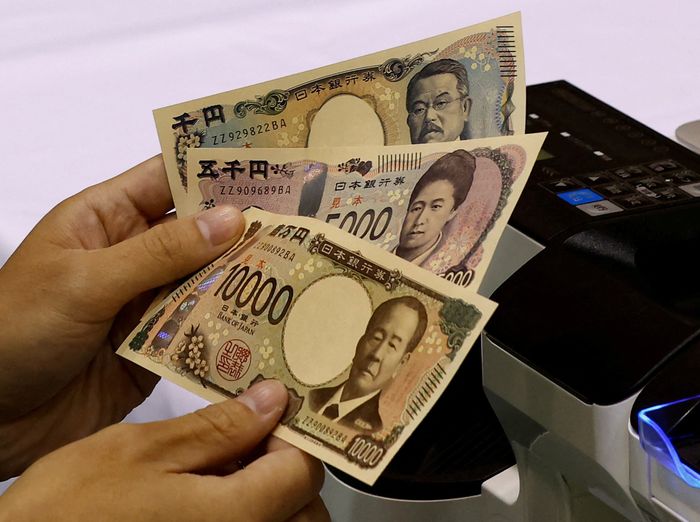
A weaker yen is boosting Japanese companies with substantial overseas earnings, but sharp swings in the currency are creating financial-market and planning risks, according to Takeshi Hashimoto, chairman of Mitsui O.S.K. Lines
Hashimoto said Mitsui O.S.K. Lines, whose revenue is primarily denominated in U.S. dollars, benefits when the yen depreciates. But he said the company would prefer a more stable foreign-exchange market rather than large movements in either direction.
“We had some concern that the [weak yen] would create a confused situation in the financial market,” Hashimoto told CNBC’s Lisa Kim.
Register for the next Tekedia Mini-MBA.
Register for Tekedia AI in Business Masterclass.
Join Tekedia Capital Syndicate and co-invest in great global startups.
Hashimoto said a yen-dollar exchange rate of between 150 and 155 yen to the U.S. dollar would be a “comfortable” range for the shipping company. The yen was recently trading at around 153 to the dollar.
The range reflects the balance Japanese exporters and globally oriented companies often seek: a currency weak enough to lift the yen value of overseas earnings, but not so unstable that it disrupts budgeting, hedging and investment decisions. For MOL, a weaker yen can increase the domestic-currency value of dollar revenue. However, the benefit depends on the company’s cost base, debt structure, hedging positions and the timing of currency conversions.
Mitsui O.S.K. Lines is one of Japan’s largest shipping companies and the world’s largest tanker owner and operator, giving its management significant exposure to global trade, energy markets, freight rates and currencies. Its international operations also mean that exchange-rate movements affect more than reported revenue. They can influence vessel purchases, charter contracts, fuel costs, financing expenses and the value of assets and liabilities held in different currencies.

The yen’s recent position near 153 to the dollar follows a prolonged period of weakness and sharp volatility. The currency had been under pressure as wide interest-rate differentials encouraged investors to hold dollar-denominated assets rather than yen. Expectations that U.S. interest rates would remain relatively high, combined with uncertainty over the pace of monetary-policy normalization in Japan, contributed to repeated declines in the yen.
The currency eventually fell to multi-decade lows, prompting Japanese authorities to intervene in the foreign-exchange market. The government and the Bank of Japan have used intervention to buy yen and sell dollars, seeking to slow disorderly moves rather than establish a permanent exchange-rate target. A joint intervention involving the United States added political and market weight to the effort and helped the yen recover from its weakest levels.
The interventions have not eliminated the forces weighing on the currency. Market participants continue to focus on the gap between U.S. and Japanese interest rates, the outlook for inflation, central-bank policy and the sustainability of Japan’s external earnings. As a result, the yen’s recovery has been uneven, with periods of renewed weakness followed by abrupt rebounds when authorities signal a willingness to act.

That trajectory has made the distinction between a weak yen and a volatile yen increasingly important for Japanese companies. A gradual depreciation can be incorporated into forecasts and hedging programs. Sudden moves, by contrast, can produce gains for some businesses and losses for others, while increasing the cost of protecting future cash flows.
For Japanese companies that earn a large portion of their revenue overseas, a weaker yen can increase the value of foreign earnings when they are converted into domestic currency. It can also improve the competitiveness of exporters and support the reported value of overseas subsidiaries. But the effect is not uniformly positive. Imported fuel, raw materials, machinery and food become more expensive, while companies with dollar-denominated costs or yen-denominated revenue may face margin pressure.
For MOL, the currency issue has become relevant because shipping is a capital-intensive and globally financed industry.
Hashimoto’s comments also come as shipping companies contend with severe disruption in one of the world’s most important energy corridors, the Strait of Hormuz.
He said he was pessimistic that normal shipping operations through the waterway would resume quickly.
“For the time being, it is almost impossible for us to resume the normal service [in the] Strait,” Hashimoto said.
The Strait of Hormuz is a critical route for global energy shipments, particularly crude oil and liquefied natural gas. Continued disruption has forced shipping operators to reassess routes, insurance, security arrangements and voyage economics, while adding pressure to already volatile energy markets.
Data from analytics firm Kpler released Monday showed that an average of just 10 commodity ships passed through the Strait each day over the preceding 10 days, the lowest level recorded since May.
Reduced traffic through the waterway can have effects well beyond individual shipping schedules. Longer alternative routes increase fuel consumption, transit times and crew requirements. ]
Hashimoto said he hoped negotiations involving Iran and Persian Gulf countries, including Oman and Qatar, would eventually produce a “reasonably good situation,” but warned that a resolution would take time.
“I think it will take some time,” he said.
The combination of currency volatility and disruption to major shipping routes highlights the broader uncertainty facing Japanese companies with significant international exposure. For MOL, the weak yen provides a direct revenue benefit, but instability in foreign-exchange markets and prolonged disruption in the Strait of Hormuz could complicate operations, financial planning and risk management.
The yen’s path to its current level also underscores the limits of intervention. Government action can slow a rapid decline and discourage speculative trading, but it cannot by itself reverse the underlying forces shaping the currency, including interest-rate differentials, capital flows and expectations for monetary policy. That leaves companies such as MOL managing an exchange rate that may remain vulnerable to sudden shifts even after official support.