

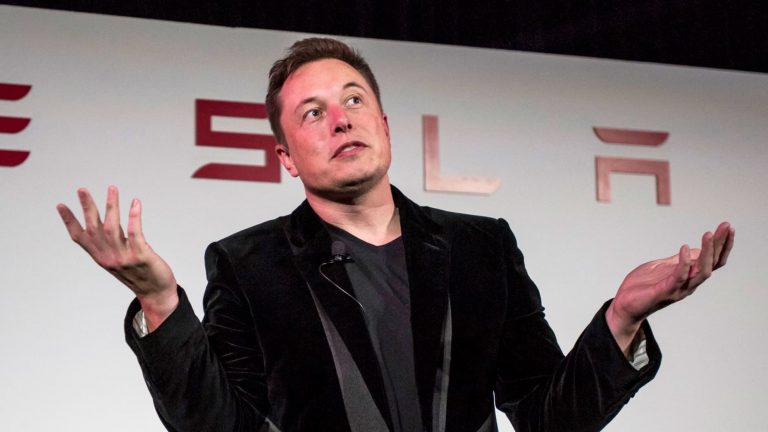
Elon Musk’s Tesla is finding itself in an increasingly precarious position. The automaker, once the undisputed leader of the electric vehicle (EV) revolution, has seen its sales spiral downward, a decline that began last year and is only expected to worsen in 2024.
Mounting competition from domestic and international rivals, geopolitical shifts, and Musk’s increasingly controversial political leanings are all playing a role in Tesla’s troubles.
Now, the company is facing a perfect storm: aggressive Chinese EV makers are tightening their grip on the market, European regulators are looking for ways to curb American tech dominance in retaliation for President Donald Trump’s protectionist threats, and in the United States—Tesla’s home turf—the company finds itself caught in a paradox. Musk has gained favor among conservatives, yet those who align with his politics are the least likely to embrace EVs in the first place.
Register for Tekedia Mini-MBA edition 20 (June 8 – Sept 5, 2026).
Register for Tekedia AI in Business Masterclass.
Join Tekedia Capital Syndicate and co-invest in great global startups.
Register for Tekedia AI Lab.
Tesla’s Competitive Struggles Deepen in China
The Chinese EV market has become a battlefield, and Tesla is struggling to hold its ground. In January, the company reported an 11.5% drop in sales in China compared to the same month last year, delivering 63,238 units, down from 71,447. Meanwhile, BYD, China’s dominant EV player, continues to soar, reporting a 47% year-over-year increase, with sales hitting 296,446 units last month.
China, the world’s largest EV market, was once a major growth driver for Tesla. But the company now faces an increasingly uphill battle. BYD and other domestic rivals, such as Nio and XPeng, have intensified competition by rolling out high-performance, budget-friendly EVs. While Tesla has resorted to price cuts to maintain demand, its strategy has only yielded diminishing returns, with each successive price reduction eating into its margins.
To make matters worse, Chinese consumer sentiment toward American brands is deteriorating amid ongoing U.S.-China trade tensions. Musk’s close ties to Washington, once an asset, may now be a liability as Tesla finds itself increasingly viewed as an outsider in China’s tightly controlled market.

In Europe, Tesla Faces Regulatory and Political Backlash
In Europe, Tesla’s struggles are no less severe. Sales across the continent fell 13% in 2024, with Germany—Europe’s largest auto market—seeing Tesla’s sales plummet more than 41%. France, the second-largest EV market in the EU, has also turned cold toward Tesla, where sales nosedived 63% in January.
But beyond competition, Tesla’s future in the European market faces an even bigger existential threat: geopolitics.
The European Union is gearing up for potential economic conflict with the United States following Trump’s tariffs threats. Trump has repeatedly threatened to impose tariffs on European goods, and the EU is crafting countermeasures. A key target? American tech companies.

Tesla, like other U.S. firms operating in Europe, is at risk of becoming collateral damage in the growing divide between Washington and Brussels. European regulators, already tightening emissions and production regulations, could introduce even stricter measures aimed at weakening American dominance in the EV sector.
Musk, for his part, hasn’t done himself any favors. His embrace of the far-right Alternative for Germany (AfD) party has sparked political backlash, with the French government openly condemning him for “attacking European regulations and values.” In a continent where sustainability and progressive policies remain at the heart of the EV movement, Musk’s alignment with hard-right politics is alienating both governments and consumers.
In the U.S., Musk Finds Political Favor—But at What Cost?
Back home, Tesla faces yet another paradox. Musk has become an increasingly celebrated figure among conservatives, who view him as a free speech champion and a critic of progressive policies. The problem? The same conservative base that cheers Musk’s defiance of “woke” culture is also the least likely demographic to embrace electric vehicles.
While Democrats and liberal-leaning voters were traditionally Tesla’s core customer base—drawn to the brand’s environmental appeal—Musk’s shift to the right has driven many of them away. In contrast, conservatives, who are now more supportive of Musk personally, are far more skeptical of EVs and climate policies in general.
The tension between Musk’s politics and Tesla’s product offering is perhaps best exemplified by the latest move from the Trump administration. On Thursday, the White House ordered U.S. states to suspend a $5 billion federal EV charging station program, marking yet another setback for the country’s EV infrastructure development. The decision is a significant blow to Tesla, which relies on a strong national charging network to support its vehicle sales.
The suspension of the EV charging initiative, coupled with the Biden administration’s previously stalled efforts to expand EV incentives, means that Tesla now finds itself at an inflection point. The market Tesla helped create is moving beyond it, while the political landscape it has become increasingly tied to is not conducive to EV growth.
Tesla’s problems are no longer just about competition or pricing. They are structural, political, and, to a large extent, self-inflicted.
The company’s dominance in the EV space is slipping, and for the first time, Tesla’s position as the industry leader is no longer guaranteed. While it remains a major force, it is facing an unprecedented convergence of challenges—stronger competition in China, regulatory and political backlash in Europe, and an increasingly complex landscape in the U.S., where Musk’s politics may be at odds with Tesla’s core product appeal.
Tesla’s 123% stock rally over the past year suggests that investors remain optimistic. But the cracks in the company’s foundation are widening. If Tesla cannot reverse its sales slump and navigate the geopolitical and ideological minefield that Musk has inserted it into, it may find itself facing not just a temporary slowdown, but an existential crisis.
The world Tesla once thrived in is changing. The real question is whether Tesla can change with it.