

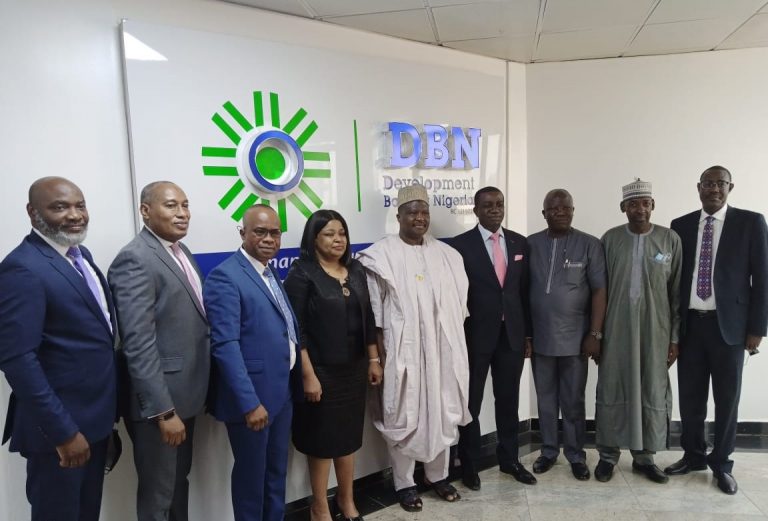
As Nigeria’s economy continues to lean heavily on its informal sector for resilience and recovery, the Development Bank of Nigeria (DBN) is unveiling an ambitious plan to inject renewed life into the country’s micro, small, and medium enterprises (MSMEs), the oft-hailed engine of job creation and grassroots economic development.
The bank is setting its sights on growing its outstanding loan portfolio to over N1.8 trillion within the next five years. It also plans to mobilize N3 trillion in fresh capital, a mix of debt and equity, to deepen access to finance for MSMEs, many of which remain unbanked or underbanked due to structural bottlenecks in Nigeria’s financial system.
Speaking in Lagos, DBN’s Managing Director, Tony Okpanachi, described the new five-year strategic plan as a scale-up of what the institution has achieved since its inception, with a more aggressive posture on financial inclusion, gender equity, and sustainability.
Register for Tekedia Mini-MBA edition 20 (June 8 – Sept 5, 2026).
Register for Tekedia AI in Business Masterclass.
Join Tekedia Capital Syndicate and co-invest in great global startups.
Register for Tekedia AI Lab.
“We want to scale up what we’ve done in the first five years. There’s still a lot to be done in Nigeria, and we are very aspirational in our approach,” Okpanachi said.
Women, Youth, and Disadvantaged Groups at the Centre
While DBN operates as a wholesale development finance institution, channeling funds through 79 participating financial institutions rather than dealing directly with individual businesses, its new strategy places inclusive growth at the core of its operations. The bank aims to allocate 20% of its loan portfolio to women-led businesses, while 40% will go to enterprises owned by economically disadvantaged Nigerians.
This is a notable pivot in a country where women-led businesses are often excluded from formal credit channels despite making up a significant portion of the informal economy. Similarly, many enterprises in Nigeria’s northern and rural regions have historically struggled to access capital due to insecurity, poor infrastructure, and financial illiteracy.

“We’re targeting sectors like manufacturing and agriculture—areas that are labour-intensive and hold the potential to absorb large segments of the workforce,” Okpanachi added.
A Focus on Green Financing and Regional Inclusion
In line with global climate goals and Nigeria’s own Energy Transition Plan, DBN is also tilting its strategy towards green financing. The bank intends to back businesses with environmentally sustainable operations, particularly those in underdeveloped states.
This is not a casual nod to climate targets. Green finance is rapidly emerging as a critical component of sustainable development financing, and Nigerian institutions are under pressure to align their portfolios with climate-resilient investment standards. DBN appears keen to ride this wave.

The Managing Director disclosed that the bank is aiming to create two million jobs, both directly and indirectly, over the next five years—nearly double the 1.2 million jobs it claims to have enabled between 2017 and 2022.
One of the bank’s distinct features is that it does not lend directly to MSMEs. Instead, it works through commercial banks, microfinance banks, and other financial institutions that meet its rigorous credit and impact criteria. This model allows it to multiply its reach while strengthening the broader financial ecosystem.
In a country with more than 40 million MSMEs, according to SMEDAN, this model of wholesale lending has helped bridge the risk perception gap that keeps many banks from lending to small businesses.
“Strategically, we’re working on three fronts—expanding our funding sources, deepening current partnerships, and leveraging existing resources to attract new ones,” Okpanachi said.
To meet its N3 trillion fundraising target, DBN is currently in talks with international development partners and is exploring the local capital markets, including plans for a domestic bond issuance, subject to stable macroeconomic conditions. This step, if realized, would signal a stronger shift toward self-sufficiency and long-term viability.
Despite Nigeria’s current fiscal headwinds, marked by high inflation, volatile exchange rates, and record debt servicing obligations, DBN’s capital-raising ambitions reflect a growing confidence among development finance institutions to navigate the turbulence through blended finance models and public-private partnerships.
A Record of Impact—But Challenges Remain
DBN recently disclosed that it had disbursed over N1 trillion in loans to MSMEs through participating institutions. It noted that 74% of its beneficiaries were women, and 25% were youths—a remarkable demographic tilt that is rarely achieved in mainstream commercial lending.
Also striking is its outreach to conflict-affected and economically excluded states such as Borno, Yobe, Katsina, Zamfara, and Adamawa, where small businesses face not just financial exclusion, but threats from insurgency and insecurity.
In terms of capacity building, the bank said it had trained more than 9,500 MSMEs across Nigeria—an often-overlooked component of development finance, as many small business owners in the country lack the financial literacy needed to scale or formalise operations.
However, DBN’s model has been criticized by some stakeholders, who have noted that because DBN does not lend directly, the intended impact may be diluted if partner banks maintain high interest rates or impose unfavorable conditions. Others have called for the bank to work more closely with informal cooperative groups and fintechs to deepen its reach.