

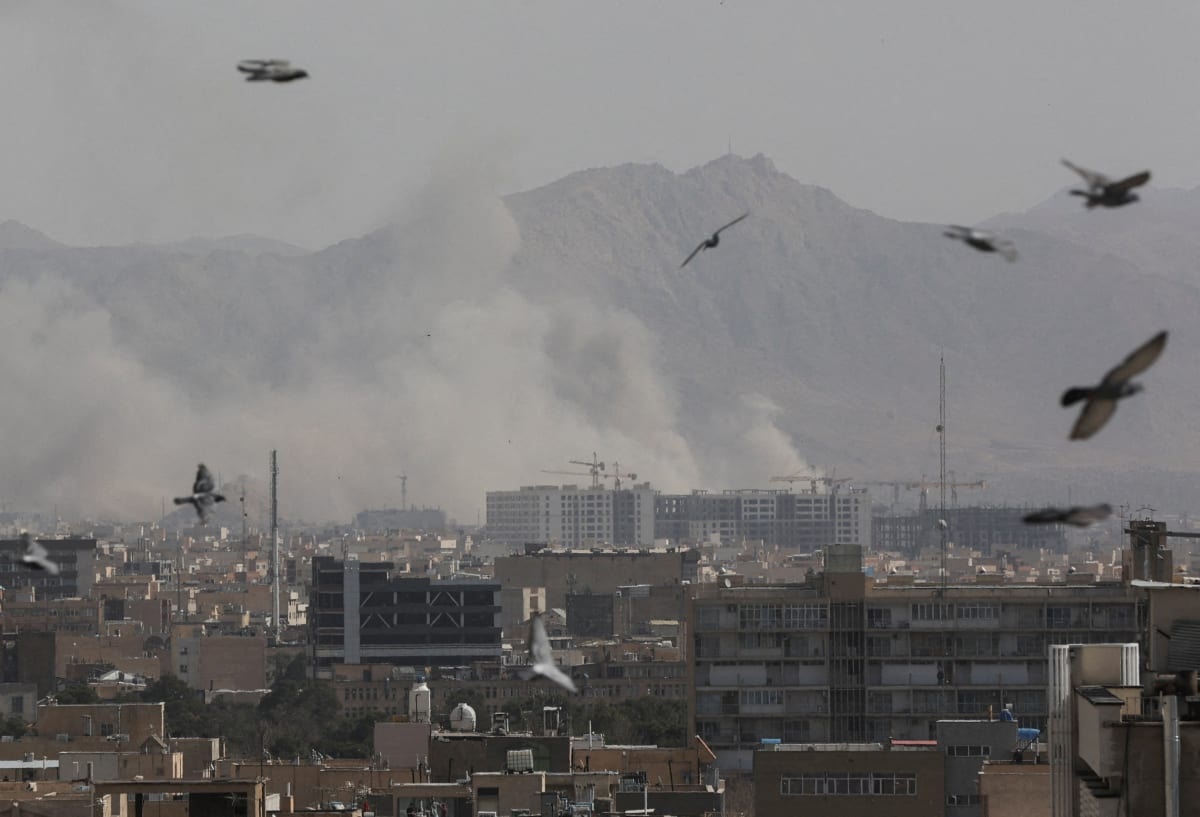
A report from the Scientific Services of the German Bundestag concludes that the ongoing US-Israeli military campaign against Iran violates international law, specifically the prohibition on the use of force under Article 2(4) of the UN Charter.
The analysis, commissioned by lawmakers from the opposition party Die Linke, states that the attacks are neither justified as self-defense under Article 51 of the UN Charter nor authorized by the UN Security Council. It describes this as the prevailing opinion among international legal experts.
The 12-page opinion also examines potential German complicity. It notes that the use of US military bases in Germany such as Ramstein Air Base for operations against Iran cannot be ruled out as constituting prohibited assistance to a violation of international law, depending on the specific circumstances. This could expose Germany to legal responsibility.
Register for Tekedia Mini-MBA edition 20 (June 8 – Sept 5, 2026).
Register for Tekedia AI in Business Masterclass.
Join Tekedia Capital Syndicate and co-invest in great global startups.
Register for Tekedia AI Lab.
The report was released or leaked in late March 2026, amid reports of US and Israeli strikes on Iranian targets; referred to in some coverage as operations like Epic Fury or Roaring Lion. It aligns with earlier comments by German President Frank-Walter Steinmeier, who called the war a disastrous mistake and a breach of international law, questioning the US justification of an imminent threat.
Chancellor Friedrich Merz has taken a more cautious or supportive stance toward US/Israeli goals, criticizing Iran’s leadership and avoiding a direct legal assessment in some parliamentary appearances, highlighting a rift within German politics. Under the UN Charter, the default rule is a strict prohibition on the threat or use of force against another state’s territorial integrity or political independence.
Exceptions are narrow: Individual or collective self-defense against an armed attack or, in contested interpretations, an imminent one under the Caroline doctrine criteria of necessity and proportionality. The Bundestag experts’ assessment hinges on whether the Iranian actions (or capabilities) met the threshold for lawful self-defense.
Critics of the strikes argue they resemble preventive or preemptive action, which most legal scholars view as unlawful absent an actual or genuinely imminent armed attack.

Proponents including US/Israeli officials typically invoke Iran’s nuclear program, proxy attacks, or long-term threats as creating an existential or imminent danger, plus broader arguments about state practice and the limits of the Charter in asymmetric or WMD contexts.
International law in this area is often debated and state-dependent; powerful actors have historically stretched interpretations; debates over the 2003 Iraq War, interventions against non-state actors, or responses to nuclear proliferation. The prevailing opinion cited is real among many academics and smaller states, but it is not universally binding—especially when major powers disagree and the Security Council is deadlocked.
Germany’s post-WWII legal culture emphasizes strict adherence to the UN Charter and multilateralism, which explains the sensitivity here and the focus on potential complicity via bases. However, this stance has been applied unevenly in practice across conflicts.
The report itself is advisory, not legally binding on the German government or courts. It reflects one institutional view commissioned by a specific political faction, though the underlying legal analysis draws on mainstream scholarship. Broader geopolitical realities— Iran’s nuclear ambitions, support for regional militias, and the failure of prior diplomatic efforts—drive the US/Israeli actions, even if they strain formal Charter rules.

This episode underscores ongoing tensions between strict textual interpretations of international law and the security imperatives cited by states facing perceived existential threats.