


In every society, the family is the smallest yet most foundational unit. It is within the family structure that values are first cultivated, behaviour modeled, and identities shaped. As a result, much of what individuals eventually achieve in broader society is often rooted in what was planted and nurtured at home. Yet, when it comes to business and economic collaboration, families are often overlooked as viable ecosystems of enterprise. Why is that?
Consider the paradox. While families are comfortable extending financial support to one another, through school fees, hospital bills, or even start-up funds, they often hesitate to collaborate in business. If we can give money freely, why is it so difficult to exchange value through commerce within the same circle?
These questions became a subject of personal curiosity, prompting me to conduct a brief informational interview with friends and colleagues via WhatsApp. The responses I received were striking. Many expressed concerns about protecting their wealth from family members who might misuse resources or feel entitled. There was a fear that doing business with family could lead to strained relationships, unmet expectations, and even financial losses.
Register for Tekedia Mini-MBA edition 20 (June 8 – Sept 5, 2026).
Register for Tekedia AI in Business Masterclass.
Join Tekedia Capital Syndicate and co-invest in great global startups.
Register for Tekedia AI Lab.
These concerns are valid and reflect broader cultural and emotional complexities around family economics. Many people are comfortable giving to family but not transacting with them. Generosity is seen as noble, while business interactions are viewed as risky. This mindset has significant consequences for the way wealth is created, managed, and transferred within families.
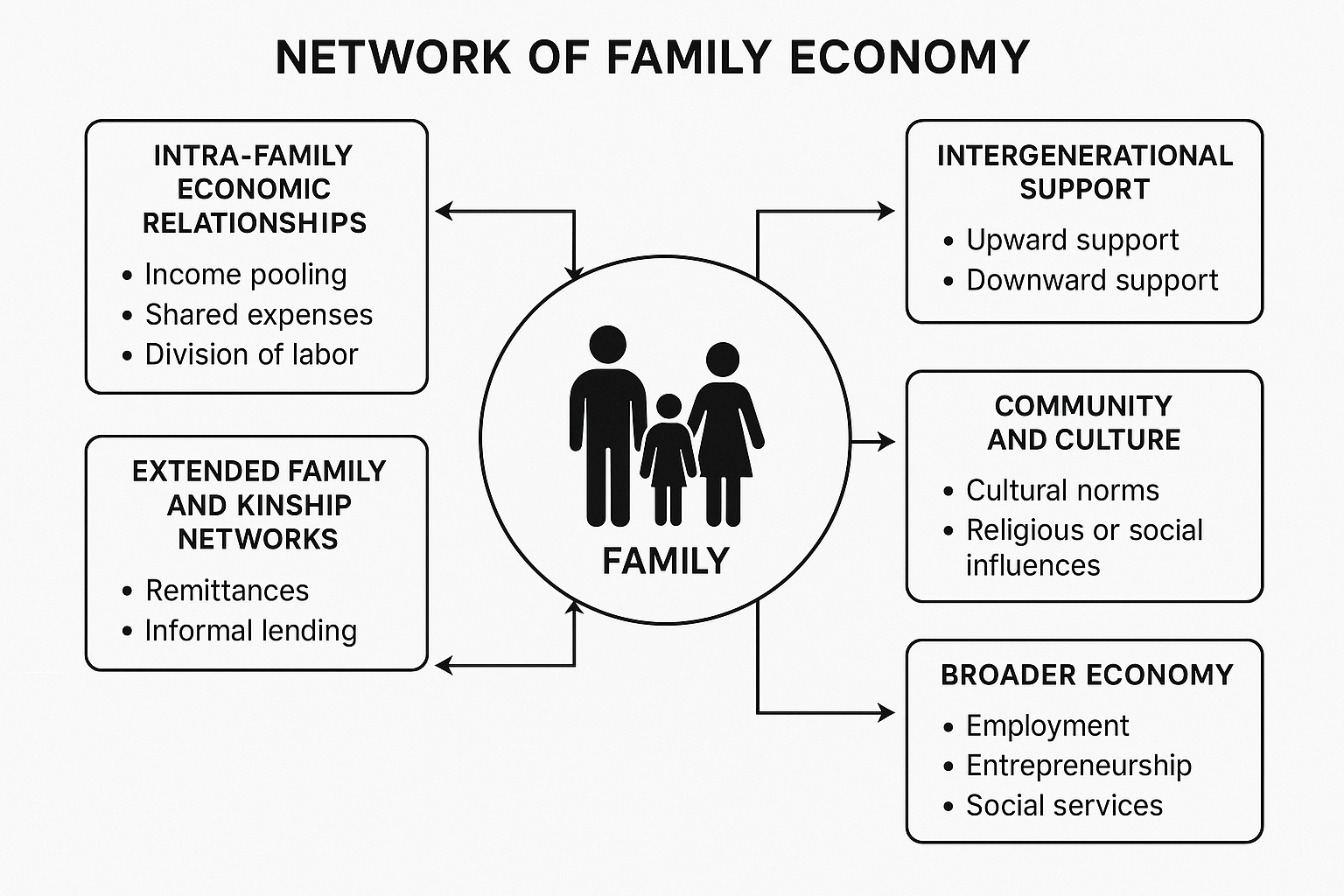
Now imagine a different scenario. Picture a family economy with a market size of N20 million in a quarter. Each family member possesses a unique, marketable skill such as tailoring, catering, consulting, photography, web design, carpentry, or event planning. Instead of seeking these services outside, family members choose to patronize one another and pay fair market value.
The impact of this internal economic circulation would be profound. First, it would boost liquidity within the family, giving each member more financial flexibility to reinvest, save, or spend in wider society. Second, it would promote mutual respect and professionalism. When services are delivered competently and compensated fairly, it strengthens trust and redefines family members as assets rather than dependents.

More importantly, this model reflects real-world business logic. If we cannot convince our own family members to support our services or buy our products, how ready are we to face the open market? Families can and should serve as both testing grounds and support systems for entrepreneurship.
However, this approach is not without its challenges. Doing business with family requires maturity, structure, and clear boundaries. It demands contracts, defined roles, and honest communication. Many family ventures fail because they rely too heavily on emotional bonds rather than sound business practices. When expectations are not clearly managed, the resulting disappointment can damage both relationships and reputations.
To overcome this, families must adopt a new mindset. They must begin to see themselves not just as units of support, but as strategic collaborators in wealth creation. Trust should be earned through professionalism, not assumed based on blood ties. Training and mentorship can be introduced within the family to raise standards and equip members for sustainable success. Conflict resolution mechanisms must also be part of the design, just as they are in any other serious business.

This idea of a family economy is not merely theoretical. In many cultures around the world, especially among immigrant communities and indigenous groups, family-based businesses are central to financial stability. These families pool resources, share knowledge, and build intergenerational wealth by working together intentionally. There is no reason why such a model cannot be embraced more widely in African and other emerging-market contexts, where entrepreneurship is often a path to survival and growth.
Ultimately, the family can become both a launchpad and a loyal customer base for entrepreneurs. This shift requires discipline and a willingness to professionalize relationships within the home. Not every venture will succeed, and not every family member will be a fit for collaboration. But with planning and mutual accountability, the potential is immense.
We need to reconsider the role of family in our economic aspirations. Rather than viewing our loved ones only as recipients of support, we can begin to see them as partners in value creation. We should not wait for outsiders to validate our ideas when we have capable minds and willing hands within our own homes. The family economy remains an untapped goldmine, and our first real investment might just need to begin at the family table.