

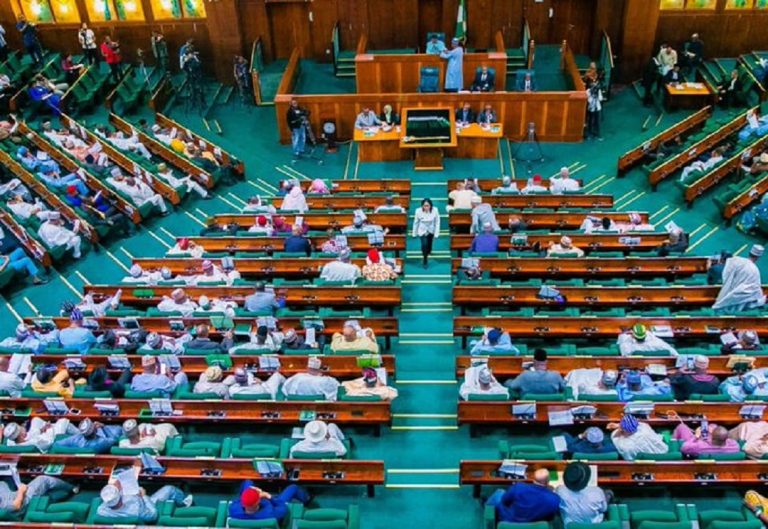
Nigeria’s House of Representatives has approved a major revision to the Electoral Act that would make the real-time electronic transmission of polling unit results compulsory, a response to widespread public demand for greater transparency following the controversial 2023 general elections.
The provision was adopted on Wednesday during clause-by-clause consideration of amendments to the Electoral Act 2022. Under the newly approved wording, the presiding officer at each polling unit must electronically transmit results to the Independent National Electoral Commission’s (INEC) Results Viewing Portal (IReV) in real time after completing, signing, and stamping the prescribed result form (EC8A). Where available, the form must also be countersigned by candidates’ agents before the upload.
Until now, the law did not explicitly require INEC to transmit results as they are recorded, and reliance on technology remained largely discretionary. During the last general election, INEC had promised that real-time uploads would occur — a pledge central to efforts to boost confidence in the electoral process. However, the IReV portal stalled for extended periods after polls closed in several areas, leaving many Nigerians unable to see results as they were announced at polling units, and feeding public suspicion about the integrity of the process.
Register for Tekedia Mini-MBA edition 20 (June 8 – Sept 5, 2026).
Register for Tekedia AI in Business Masterclass.
Join Tekedia Capital Syndicate and co-invest in great global startups.
Register for Tekedia AI Lab.
Advocates of the amendment have applauded the House’s adoption of real-time transmission as a legal requirement, saying it aligns the letter of the law with voters’ expectations for accountability and transparency. Civil society organizations had repeatedly called on the National Assembly to make electronic result transmission mandatory after the uneven performance of IReV and the Bimodal Voter Accreditation System (BVAS) in 2023 undermined public confidence.
Beyond real-time uploads, the House also approved a clause introducing a five-year jail term for presiding officers found guilty of declaring false results — a stringent measure aimed at deterring manipulation at the polling unit level. Another amendment elevates the BVAS or any other prescribed technological device as the primary tool for accrediting voters, replacing manual methods. If the BVAS or another device fails at a polling unit and no replacement is available, the election in that unit must be cancelled and rescheduled within 24 hours if INEC determines the unit’s result could substantially affect the overall outcome.
Concerns About Circumvention and Political Sabotage
While the changes have been welcomed as steps toward a more credible electoral framework, there are lingering concerns that politicians who have historically relied on malpractice and rigging may still find ways to circumvent the rules. The 2023 general elections are the most recent and widely cited example.

INEC had repeatedly assured Nigerians that BVAS and the IReV portal would enable real-time transmission of results nationwide during the presidential and National Assembly elections. That assurance helped generate optimism that technology could help curb longstanding electoral fraud.
But when voting ended on February 25, 2023, the portal did not immediately show results from many polling units. Technical challenges related to scaling up IReV for a nationwide election forced INEC to suspend uploads temporarily, even as results continued to be manually collated and announced at polling units. It was not until later that evening — in some cases hours after polls closed — that the first results began appearing on the portal.
Observers said the delay undermined confidence in the results management process. Some civil society groups and political actors questioned why the system did not perform as expected. International monitoring reports noted that while BVAS and IReV were innovative in theory, their performance under the enormous operational load of a general election was mixed, with many scanned results failing to upload promptly due to connectivity and infrastructure issues.

Opposition figures and commentators also raised allegations — disputed by INEC — that the absence of real-time uploads created openings for manipulation or strategic delays at critical moments, especially in closely contested states. Such assertions compounded public skepticism toward the technology and the broader electoral process.
However, the House’s decision marks a clear attempt to lock technological transparency into law rather than leave it to administrative discretion. Lawmakers appear intent on closing the gap between INEC’s deployment of tech tools and legal obligations, and on strengthening accountability through penalties for misconduct.
Yet the experience of 2023 underscores that mandates alone may not be enough. Experts note that real-time transmission depends not only on legal requirements but also on reliable infrastructure, training of election officials, adequate network connectivity across urban and rural areas, and robust safeguards against manipulation. INEC itself has acknowledged persistent network and infrastructure challenges as obstacles to seamless result uploads.