

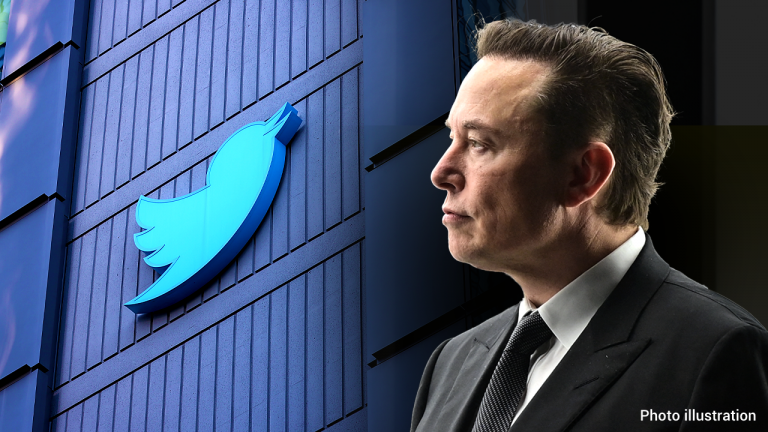
Elon Musk’s social media platform, X (formerly Twitter), is in talks with investors to raise funds at a $44 billion valuation, Bloomberg News reports.
The proposed valuation mirrors the amount Musk paid to acquire the platform in 2022, and also underlines the depth of X’s financial woes, as the company struggles to retain advertisers, service its massive debt, and reverse its declining revenue.
Since Musk’s controversial takeover, X has seen its financial stability deteriorate, with advertisers fleeing the platform due to concerns over content moderation and the billionaire’s outspoken political views. The company has also grappled with a mounting debt crisis, as banks that financed Musk’s leveraged buyout have struggled to offload the debt to secondary buyers.
Register for Tekedia Mini-MBA edition 20 (June 8 – Sept 5, 2026).
Register for Tekedia AI in Business Masterclass.
Join Tekedia Capital Syndicate and co-invest in great global startups.
Register for Tekedia AI Lab.
Despite X’s attempt to maintain its original purchase valuation, Fidelity Investments, one of the investors that helped finance Musk’s Twitter buyout, has been marking down its stake in the company. As of December 2024, Fidelity valued its Twitter shares at about 70% less than the $44 billion Musk paid, indicating a substantial devaluation of the platform. This markdown suggests that institutional investors view X’s current financial state as weak, with limited growth prospects.
While Bloomberg notes that discussions over the new funding round are ongoing and subject to change, it remains unclear whether X will successfully secure the investment. There is also the possibility that the company could abandon the talks altogether.
If successful, this would mark the first time Musk has sought external investment for X since taking it private. Unlike Tesla and SpaceX, which have continued to attract investors due to strong growth prospects, X has struggled to present a compelling case for financial backers.

Banks Struggling to Offload X’s Debt
One of the biggest financial burdens X faces stems from the $13 billion in debt that Musk took on to finance his acquisition of Twitter. Until recently, the banks that underwrote the deal—including Morgan Stanley, Bank of America, and Barclays—have been unable to sell off the debt to other investors, forcing them to hold onto what is now considered one of the worst merger-financing deals in recent history.
Typically, banks offload such debt to investors shortly after closing a deal, but X’s declining revenue, coupled with concerns over its long-term viability, has made it difficult to find buyers. At some point, some of the banks reportedly considered selling portions of the debt at steep discounts just to cut their losses, but even at a markdown, interest from buyers has remained weak.
X’s revenue has reportedly declined by over 50% due to advertiser pullbacks, making it difficult to generate enough cash flow to service its debt payments. With Musk now seeking outside investment, it raises further questions about X’s ability to return to profitability in the near future.

Musk’s “Free Speech” Policies Blamed for X’s Decline
Much of X’s financial struggles have been attributed to Musk’s sweeping changes to the platform in the name of “free speech.” After acquiring Twitter, Musk drastically reduced content moderation, reinstated previously banned accounts—including those of far-right figures—and disbanded the company’s Trust and Safety Council. These moves alienated major advertisers, many of whom feared that their brands would be associated with controversial or harmful content.
Musk’s decision to overhaul the verification system by introducing paid blue check marks further destabilized the platform, leading to a surge in impersonation and misinformation. Many brands saw their accounts mimicked by trolls, further eroding confidence in advertising on the platform. As a result, major corporations such as Apple, Disney, and IBM either paused or drastically reduced their ad spending on X, cutting off a critical revenue stream.
Compounding the problem, Musk has frequently engaged in public political debates, making inflammatory statements that have only served to alienate more advertisers. His open support for Republican politicians, including President Donald Trump, and his willingness to amplify conspiracy theories have added to the platform’s perception as a divisive and volatile space.
In response to these financial woes, X has attempted to pivot toward a subscription-based model to reduce reliance on advertising revenue. However, the uptake for paid features such as X Premium (formerly Twitter Blue) has been lukewarm, failing to generate the kind of revenue needed to replace lost ad dollars.
While Musk is seeking investment at the same $44 billion valuation he originally paid for Twitter, many analysts argue that this figure does not reflect the company’s current market reality. Fidelity Investments, one of the firms that helped finance Musk’s buyout, has repeatedly marked down the value of its stake in X.
Given this steep decline, analysts believe that securing investment at the $44 billion valuation could prove challenging. Musk’s ability to convince investors to buy into X at this price would likely depend on presenting a strong case for future growth, which remains uncertain given the platform’s struggles to stabilize revenue.
Musk’s Other Ventures Thrive While X Flounders
While X has been mired in financial difficulties, Musk’s other companies have continued to thrive.
Tesla’s stock has surged over 40% since Donald Trump’s election, as investors anticipate that a Republican-led administration could ease regulatory pressures on the electric vehicle industry. Meanwhile, SpaceX’s valuation skyrocketed to $350 billion as of December 2024, reflecting growing investor confidence in its dominance of the commercial space sector.
Additionally, Musk’s artificial intelligence startup, xAI, is in talks to raise $10 billion at a $75 billion valuation, highlighting the continued enthusiasm for AI-related investments.
This contrast between X’s struggles and Musk’s other successes underscores how the social media platform has become an outlier in his business empire. While Musk has a track record of turning ambitious ventures into success stories, X remains his most financially troubled acquisition to date.
Will Investors Bite?
The big question remains: will investors be willing to inject fresh capital into X at a $44 billion valuation? Given the platform’s declining revenue, advertiser exodus, and ongoing debt issues, many analysts believe that X is unlikely to fetch such a high valuation in its current state.
However, if Musk succeeds in securing investment at this price, they note, it could denote a renewed confidence in his long-term vision for the platform. On the other hand, if investors push back or demand a lower valuation, it would serve as further confirmation that X is now worth far lesser than what Musk initially paid for it.
Elon Musk’s social media platform X, formerly Twitter, is in talks to raise money at a $44 billion valuation, Bloomberg reports, citing anonymous sources. That’s the same as what Musk paid for the company back in 2022, in a “remarkable turn of fortunes” after the takeover and subsequent loss of advertisers caused its value to plummet. The talks, which mark the first known investment round since it was taken private, are ongoing and could change.