

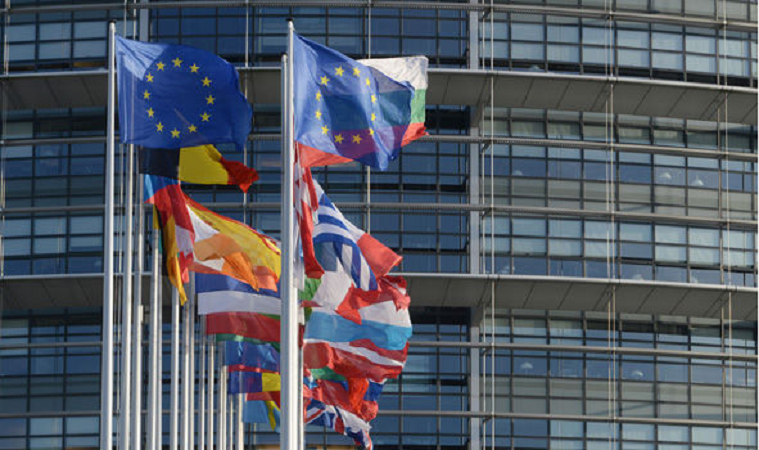
The European Union made a decision on Wednesday to phase out all Russian gas imports by late 2027, marking one of the bloc’s most decisive breaks from Moscow since the start of the Ukraine war.
But the move, celebrated in Brussels as a historic end to decades of energy dependency, landed on the same day that high-stakes peace talks between the United States and Russia failed to deliver a breakthrough — and just hours after Vladimir Putin warned Europe that Russia was “ready” for war if pushed.
Both developments are now intertwining in Europe’s strategic calculations, exposing an uncomfortable reality: even as the EU tries to shut off Russian gas, Moscow is signaling that it is prepared for a prolonged confrontation — both militarily and diplomatically.
Register for Tekedia Mini-MBA edition 20 (June 8 – Sept 5, 2026).
Register for Tekedia AI in Business Masterclass.
Join Tekedia Capital Syndicate and co-invest in great global startups.
Register for Tekedia AI Lab.
The energy agreement, reached in the early hours of Wednesday between representatives of EU governments and the European Parliament, locks in a phased halt to Russian liquefied natural gas imports by the end of 2026 and pipeline gas by the end of September 2027.
The bloc will also move toward a full phase-out of Russian oil. European Commission President Ursula von der Leyen hailed the deal as a definitive break.
“Today, we are stopping these imports permanently. By depleting Putin’s war chest, we stand in solidarity with Ukraine and set our sights on new energy partnerships and opportunities for the sector,” she said in a statement.

Yet even before the ink had dried, two EU members were already preparing to challenge the new legislation. Hungary, which remains heavily reliant on Moscow for energy, vowed to take the case to the EU’s Court of Justice. Its foreign minister, Peter Szijjarto, denounced the measure as a “Brussels order” disguised as a trade policy to dodge unanimity rules on sanctions.
“Accepting and implementing this Brussels order is impossible for Hungary,” he said. Slovakia is also weighing its legal options, warning that the phase-out risks damaging its economy.
From Moscow, the Kremlin dismissed the EU decision as self-destructive. Officials said the move would leave Europe less competitive and ultimately burden consumers with higher prices. As of October, Russia still accounted for 12% of EU gas imports, down from 45% before the 2022 invasion, with Hungary, France, and Belgium among the states still receiving supplies.

The phase-out mechanics are complex and staggered. For short-term contracts concluded before June 17 this year, the ban kicks in on April 25, 2026 for LNG and June 17, 2026, for pipeline gas. Longer-term contracts face cut-off dates at the start of 2027 and the start of October 2026, with a possible one-month cushion for countries struggling to meet storage requirements.
From now on, most Russian gas imports will require prior authorization, except in cases where the exporting country is a major gas producer that restricts Russian imports. Brussels will also move to phase out remaining Russian oil supplies by the end of 2027, with legislation expected early next year.
Member states must submit “national diversification” plans by March 1, outlining how they intend to replace Russian supplies. They will also be required to disclose any existing Russian contracts or national bans. The Commission will then issue recommendations.
While Europe was drawing red lines on energy, Washington was trying to draw its own on the geopolitical front — and so far without success. U.S. President Donald Trump’s special envoy, Steve Witkoff, and Trump’s son-in-law, Jared Kushner, spent five hours in Moscow on Tuesday trying to sell a draft peace plan to Putin.
According to Russian presidential aide Yuri Ushakov, the discussion was “useful, constructive, and highly informative,” but nowhere near complete.
“We agreed on some things … while others caused criticism,” he said, adding that Putin held a “critical, even negative” attitude toward a number of the proposals.
The document under discussion is shifting rapidly. A secret 28-point plan drafted by the U.S. and Russia was presented to Ukraine weeks ago, prompting Kyiv and European allies to scramble and revise it down to 19 points. Ukrainian officials arrived in Florida last weekend for another round of negotiations. Ushakov said Russia and the U.S. discussed a 27-point plan on Tuesday, and that additional documents were exchanged, though he did not reveal specifics. Both sides agreed not to disclose the details.
On Wednesday, Kremlin spokesperson Dmitry Peskov tried to tamp down speculation, saying it was wrong to claim Putin had rejected the U.S. proposals.
“A direct exchange of views took place yesterday for the first time,” he said. “Some things were accepted, some things were marked as unacceptable — this is a normal working process of finding a compromise.”
But Putin’s public comments earlier in the day struck a much harder tone. He lashed European leaders for presenting counter-proposals he described as “absolutely unacceptable” and accused the region of having “no peace agenda.” Then came the warning. “We’re not going to war with Europe; I’ve said that a hundred times. But if Europe suddenly wants to fight us and starts, we’re ready right now,” he said.
European officials were already uneasy that they and Kyiv were excluded from the earliest U.S.–Russia talks, which many feared tilted toward Moscow’s interests. EU foreign policy chief Kaja Kallas said this week could be “pivotal for diplomacy” but argued that “Russia does not want peace,” urging stronger support for Ukraine.
Trump’s diplomatic approach is being closely watched across Europe. His relationship with Putin has often appeared warmer than his ties with President Volodymyr Zelenskyy, and analysts worry he may eventually back a deal that demands major concessions from Kyiv.
Zelenskyy, for his part, tried to sound hopeful. Addressing Irish lawmakers on Tuesday, he said Ukraine was “closer to peace than ever before” and insisted there was a “real, real chance” of an agreement after recent talks with Washington.
But geopolitical analysts are blunt about the prospects. Russia believes it holds the advantage on the battlefield and has little incentive to rush toward compromise. Wellington Management investment director Paul Skinner told CNBC that the conflict is likely to “grind on, and on, and on,” adding: “While Putin is still making ground, he’s unlikely to sue for peace.”
Michael Froman, president of the Council on Foreign Relations, echoed the view, arguing it is in Putin’s interest “to keep the process going” and prolong diplomatic engagement.
Europe now finds itself facing an unusual convergence of risks. It is attempting to unwind its energy dependence on Russia at the exact moment when Moscow is signaling a willingness to stretch the war, stall peace talks, and ramp up pressure on the West.
The EU’s 2027 phase-out timeline sends a clear political message — but it also accelerates a race against time to secure new supplies, defend its economies from price spikes, and keep Ukraine at the negotiating table on terms it can accept.