

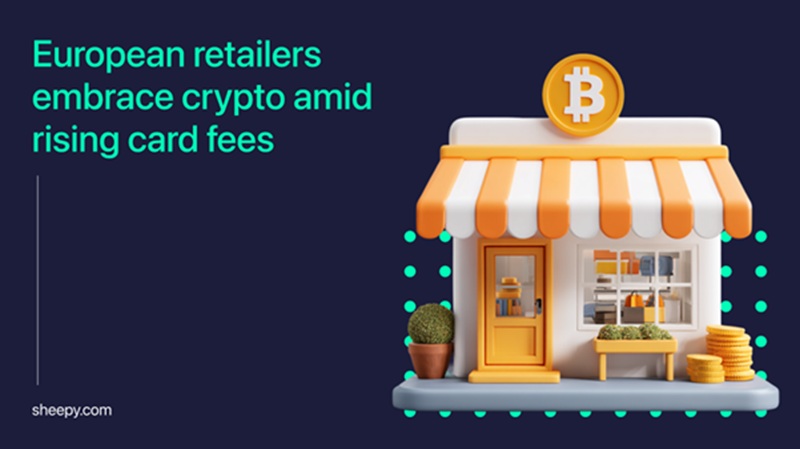
Faced with ever-increasing interchange fees from card giants like Visa and Mastercard, major merchants across the continent are demanding change. But instead of waiting for regulators to act, many are exploring a faster, borderless alternative: cryptocurrency. As stablecoins and digital assets gain traction in consumer payments, the shift toward blockchain-based infrastructure is no longer theoretical – it’s operational. This is where a crypto payment gateway becomes more than just a tech solution – it’s a strategy for independence.
How infrastructure is catching up
The promise of crypto payments was once limited by poor infrastructure. Even merchants willing to try new technologies struggled to find solutions that worked with their existing systems. That is changing fast. Today’s payment tools are easier to use, easier to integrate, and more reliable than ever before. Digital wallets now offer smooth interfaces. Point-of-sale devices are being upgraded to support more than just cards. Merchants no longer need to be technical experts to access alternative rails. The tools are becoming as intuitive as traditional platforms – but far more flexible.

A crypto payment gateway plays a central role in this evolution. It connects customers paying in digital currencies to merchants receiving stable value in their preferred format. This bridge removes the complexity that once held businesses back. It converts crypto into local currencies or stablecoins, making daily operations easier to manage. Some platforms now support payments in widely used stablecoins like USDC and USDT. For merchants, this means they can benefit from the crypto economy without exposing their revenue to price swings. As infrastructure grows, so does trust. More companies are realizing that adopting a crypto payment gateway is not a bet on the future – it’s a step into the present.
Among the services driving this shift is Sheepy crypto payment processor, which allows businesses to accept cryptocurrency directly from customers. The platform simplifies integration and supports both web-based and in-store payments. With built-in options for USDC and USDT, companies can provide a stable experience for both sides of the transaction. A crypto payment gateway like this reduces reliance on banks and opens new channels for growth. The barriers that once made crypto adoption difficult are being removed piece by piece. What emerges is a market that rewards agility – and one that is rapidly moving beyond the card.
The breaking point: Why card fees are triggering rebellion in Europe
Across Europe, frustration is building. For years, retailers have paid steep fees every time a customer used a card. These charges, called interchange fees, are set by powerful players like Visa and Mastercard. Since 2018, these fees have risen by nearly 34 percent. For many small and mid-sized businesses, that number is more than a statistic – it’s a growing threat to profit margins and long-term sustainability. Large companies can negotiate better rates, but most retailers are left with little choice but to absorb the costs or pass them to customers.
The pressure is mounting, and the reaction has reached Brussels. Leading retailer groups have joined forces, asking the European Commission to act. Their message is clear: card fees are out of control, and the system lacks transparency. Merchants don’t always understand what they’re paying for, and many feel powerless to challenge these charges. As a result, lobbying efforts have intensified, with calls for stronger regulations, pricing transparency, and even antitrust investigations into dominant card networks. The rising card fees Europe now faces are not just a financial issue – they represent a deeper power imbalance between global finance giants and local commerce.
While policy debates drag on, businesses are seeking alternatives. One solution gaining traction is the crypto payment gateway. These systems offer a way to process payments without relying on traditional banks or card schemes. Retailers see this not just as a form of protest, but as a strategy to regain control. A crypto payment gateway helps reduce fees, streamline operations, and protect businesses from future increases they cannot influence. As tensions between merchants and card providers escalate, the gateway model offers a digital path forward – flexible, borderless, and independent. For many, it’s no longer a matter of innovation. It’s a necessity.
Why crypto makes economic sense for merchants
For retailers facing high processing costs, every saved cent matters. Traditional card payments often come with a long chain of intermediaries – each taking a fee. From acquirers and banks to card networks and payment processors, the full stack of charges is rarely visible until the bill arrives. Crypto offers a cleaner, more direct path. With blockchain, the movement of funds can skip many of the layers that inflate fees. Merchants are beginning to realize that reducing friction in payments isn’t just about convenience – it’s about survival in a competitive market.
A crypto payment gateway gives merchants the tools to bypass expensive card networks altogether. Instead of paying fixed percentages on each transaction, many crypto solutions offer flat or lower fees, which don’t eat into thin margins. For high-volume businesses, the savings can be substantial over time. Settlements are also faster. While card payments may take days to clear, crypto transactions can be settled in minutes, depending on the network used. This speed offers cash flow benefits that are hard to ignore. A crypto payment gateway becomes a financial lever – not just a tech choice – helping businesses keep more of what they earn.
Chargebacks are another pain point for merchants. When customers dispute a card transaction, retailers often lose both the money and the product. With crypto payments, that risk almost disappears. Transactions are final, removing a major source of loss and stress. Stablecoins like USDC and USDT also play a critical role. These digital assets offer price stability, allowing merchants to accept crypto without the volatility of coins like Bitcoin. A crypto payment gateway that supports stablecoins gives businesses confidence in everyday operations.
What once felt like a niche solution now makes clear financial sense. For merchants doing the math, crypto isn’t just futuristic – it’s functional.
Real-world signals of adoption
Crypto is no longer just an idea. Across Europe, it’s showing up at the checkout. In Lisbon, people use stablecoins to pay for groceries. In Paris, small shops are quietly testing digital payments. These are not headlines. They’re habits. Local cafés, bookstores, and fashion stores are doing business in crypto. It’s happening in the real world, not just in tech blogs. And it’s growing. Slowly, but steadily.

The shift is being led by younger customers. Gen Z doesn’t think of crypto as something unusual. For them, it’s normal to move money from a phone. They want payments to be fast and direct. They don’t want to wait three days for funds to clear. And they don’t want to pay more just to use a card. When they see a store that accepts crypto, they notice. That’s how loyalty begins today – with speed, choice, and control.
On the business side, things are getting easier. Regulation in the EU is catching up. MiCA is creating rules that make crypto payments safer. PSD3 is also on the way. This gives shop owners confidence. They see that crypto is no longer the “wild west”. It’s becoming part of the financial system. And with the right tools, merchants don’t need to worry about price swings or technical headaches. A crypto payment gateway helps them plug in without starting from zero. Businesses that use a crypto payment gateway gain access to faster settlement, fewer fees, and a customer base that’s growing by the day. That’s how adoption spreads – one transaction at a time.
The strategic shift: Crypto as merchant leverage
Retailers in Europe are rethinking their place in the payments ecosystem. For years, they have depended on banks and card networks to move money. That relationship has not always been equal. With limited control over fees, chargebacks, and access, many businesses have operated within systems that don’t serve their interests. Crypto is changing this. It offers a new set of tools – ones that let merchants choose how they want to get paid, when, and in what form.
The shift is not only about saving money. It’s about gaining leverage in a landscape that has long been tilted in favor of large financial institutions.
By using a crypto payment gateway, businesses open the door to greater flexibility. They can accept funds from customers worldwide without dealing with traditional gatekeepers. They can avoid censorship or sudden service freezes that sometimes come with politically or financially sensitive transactions. They can operate on their own terms, not someone else’s. This is especially powerful for online stores, marketplaces, and service platforms. With the rise of borderless commerce, the ability to move money across currencies and regions is no longer optional. It’s essential.
The larger trend is clear. Businesses that diversify how they accept payments become more resilient. They are less exposed to changes in card fee policies or regulatory delays. They are better prepared for shifts in consumer behavior, especially as crypto becomes more common in digital wallets. A crypto payment gateway doesn’t just process transactions – it gives merchants a new kind of autonomy. It breaks the pattern of dependency and replaces it with choice. And in a world where payments shape experience, having choice is the difference between reacting and leading. For merchants with vision, crypto is no longer a gamble. It’s a strategy.
Rethinking the checkout
The way we pay is changing. For years, cards ruled the counter – now, their grip is loosening. Merchants are no longer waiting for permission to innovate. They are finding better tools, faster rails, and smarter ways to serve their customers. What started as a response to rising fees has become something bigger: a quiet reset of power in payments. Retailers are not just adapting – they are rewriting the rules. In this shift, control moves closer to the people who run the shops, build the systems, and carry the vision. The checkout is changing – and so is the balance of control.
Author: Peter Yung