

European equities opened in mixed territory on Thursday, February 26, 2026, with the pan-European StoXX 600 hovering just above the flatline by 9:20 a.m. London time (4:20 a.m. ET).
Regional bourses showed divergent performance, with the U.K.’s FTSE 100 down 0.2%, Germany’s DAX and France’s CAC 40 each off 0.3%, while Spain’s IBEX — heavily weighted toward banks — posted modest gains. The session marks another busy day for corporate earnings across the continent, with results from Deutsche Telekom, Schneider Electric, Allianz, AXA, Munich Re, Engie, Eni, Saint-Gobain, London Stock Exchange Group, Stellantis, and Covestro among the key releases.
Investors are parsing these updates for fresh signals on corporate health amid persistent macroeconomic uncertainty, including the fallout from U.S. President Donald Trump’s weekend imposition of a new 15% global import tariff following the Supreme Court’s invalidation of his earlier IEEPA-based duties.
Register for Tekedia Mini-MBA edition 20 (June 8 – Sept 5, 2026).
Register for Tekedia AI in Business Masterclass.
Join Tekedia Capital Syndicate and co-invest in great global startups.
Register for Tekedia AI Lab.
Key Earnings Highlights
- Puma reported a challenging 2025, with full-year sales declining 13.1%, attributed to its completed “strategy reset.” The German sportswear giant posted an operating loss of €357.2 million ($421.8 million), a sharp reversal from the prior year’s €548.7 million profit. The loss was narrower than the €374.3 million consensus forecast. Puma proposed canceling its 2025 dividend and guided for an operating loss of €50–150 million in 2026, framing the year as a transition period. Shares rose nearly 3.5% in early trade. Jefferies analysts noted progress “slightly ahead of the journey mapped out in the closing stages of 2025,” with “no major surprises from a tough end to 2025.”
- Rolls-Royce delivered a stronger-than-expected performance, forecasting profits exceeding £4 billion ($5.42 billion) in 2026 after reporting a 40% jump in 2025 profit. The aerospace and defense group’s shares climbed 6% in morning trading, reflecting renewed confidence in its turnaround under CEO Tufan Erginbilgic.
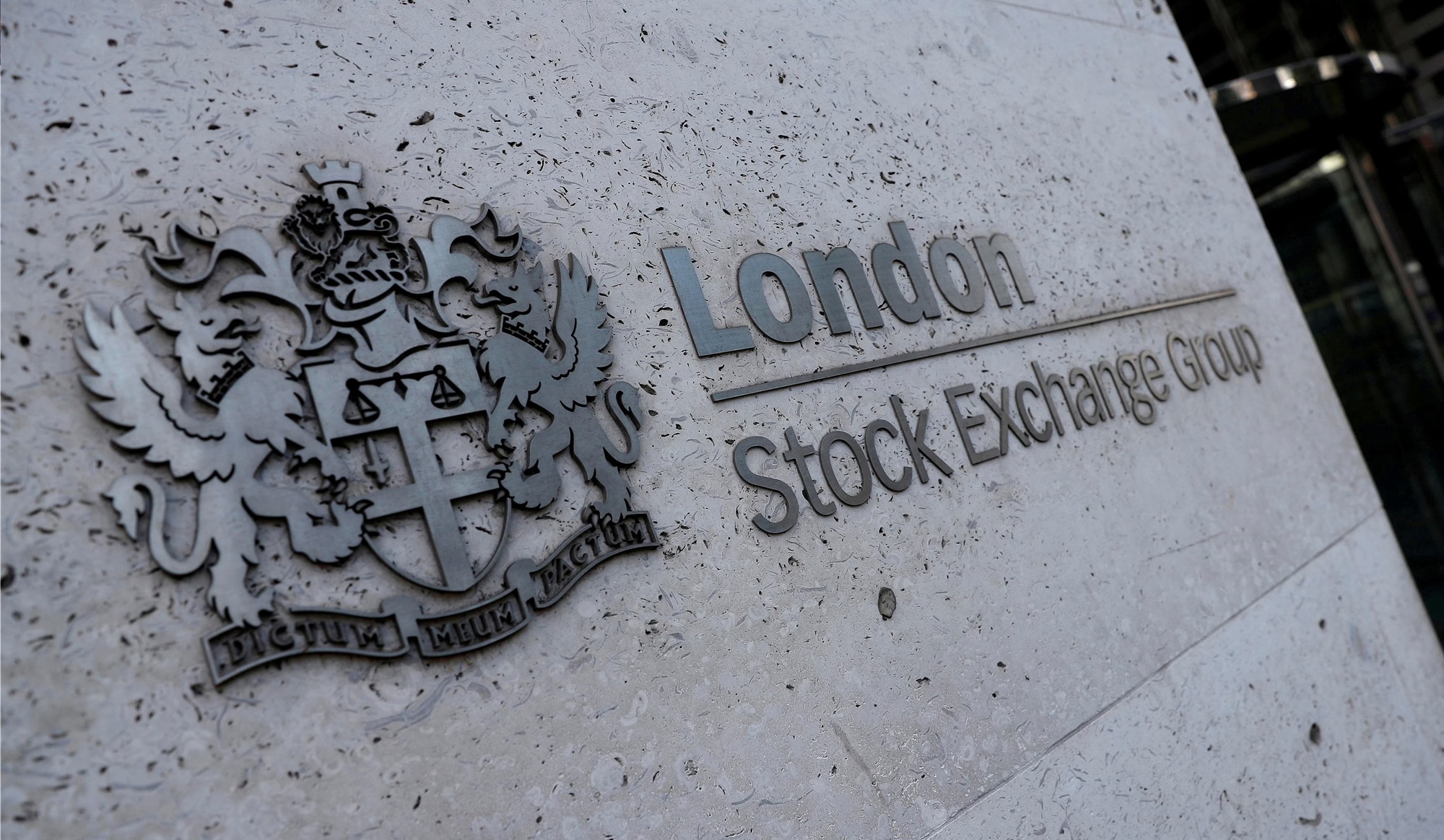
- London Stock Exchange Group (LSEG) announced a £3 billion share buyback program after reporting full-year pre-tax profits of £1.97 billion, up 56% year-on-year. Shares jumped nearly 6.5% in early trading.
- Allianz achieved its largest-ever full-year operating profit of €17.4 billion, up 8.4% year-on-year. Shares in the German insurance and financial services giant edged 0.6% lower.
- AXA posted underlying earnings of €8.4 billion for 2025, up 6% year-on-year. The French insurer’s shares rose 1.3% in morning trade.
European stocks have shown resilience in recent weeks despite earlier volatility from AI disruption fears. A better-than-feared earnings season — with 60% of companies beating expectations (above the typical 54% quarterly average) and earnings declines narrowing from 4% to 1.1% year-on-year — helped the STOXX 600 reach a record high last week and post its third consecutive weekly gain.
Financials have led the recovery after last week’s heavy selling on AI concerns. Banks and insurers rebounded strongly earlier in the week, suggesting investors increasingly view AI as a tool for efficiency gains rather than an existential threat to financial services. The week remains data- and earnings-heavy. Euro zone industrial production rose 1.2% year-on-year in December (down from November’s 2.5% increase), signaling underlying resilience amid expectations that fiscal stimulus will revive the sector. Upcoming U.S. data — particularly the delayed January nonfarm payrolls (Wednesday) and CPI (Friday) — will influence global risk appetite.
Geopolitical and trade developments continue to weigh on sentiment. Trump’s weekend imposition of a 15% global tariff (under Section 122 of the 1974 Trade Act) — a direct response to the Supreme Court’s invalidation of his IEEPA-based duties — has raised concerns about transatlantic trade stability. European officials, including European Parliament International Trade Committee Chair Bernd Lange and ECB President Christine Lagarde, have called for clarity and warned of potential disruptions to business and investment.

Sector and Thematic Drivers
- Financials remain a bright spot, with banks and insurers rebounding from AI-related selling pressure.
- Technology and luxury continue to lag, reflecting ongoing concerns about AI-driven competition and margin erosion.
- Basic materials pulled back slightly after recent strength, while energy sentiment benefits from geopolitical risk premiums.
- Aerospace and defense (e.g., Rolls-Royce) show strength in improved profitability outlooks.
Mixed earnings results and persistent macro uncertainty suggest European equities could remain range-bound in the near term. The week’s U.S. data releases — particularly payrolls and CPI — will likely set the tone for global risk appetite. Strong U.S. labor and inflation figures could reinforce higher-for-longer rate expectations, pressuring equities; softer data would revive rate-cut hopes and support risk assets.
While AI concerns have eased somewhat, they remain a key risk theme. Sectors with high exposure to routine knowledge work or legacy software maintenance continue to trade at discounted multiples. Conversely, companies demonstrating clear AI integration strategies and resilient end-market demand are seeing relative strength.
The STOXX 600’s recent record high and three-week winning streak indicate that fears of widespread AI-driven profit destruction may have been overdone — at least for now. However, with a busy earnings calendar, macro data ahead, and renewed trade uncertainty from the U.S., volatility is expected to remain elevated.

Investors are increasingly differentiating between companies that can leverage AI for efficiency gains and those vulnerable to disruption — trends that will likely dominate European equity performance through the first half of 2026. The week’s results will be critical in testing whether corporate Europe can sustain momentum amid external headwinds.