

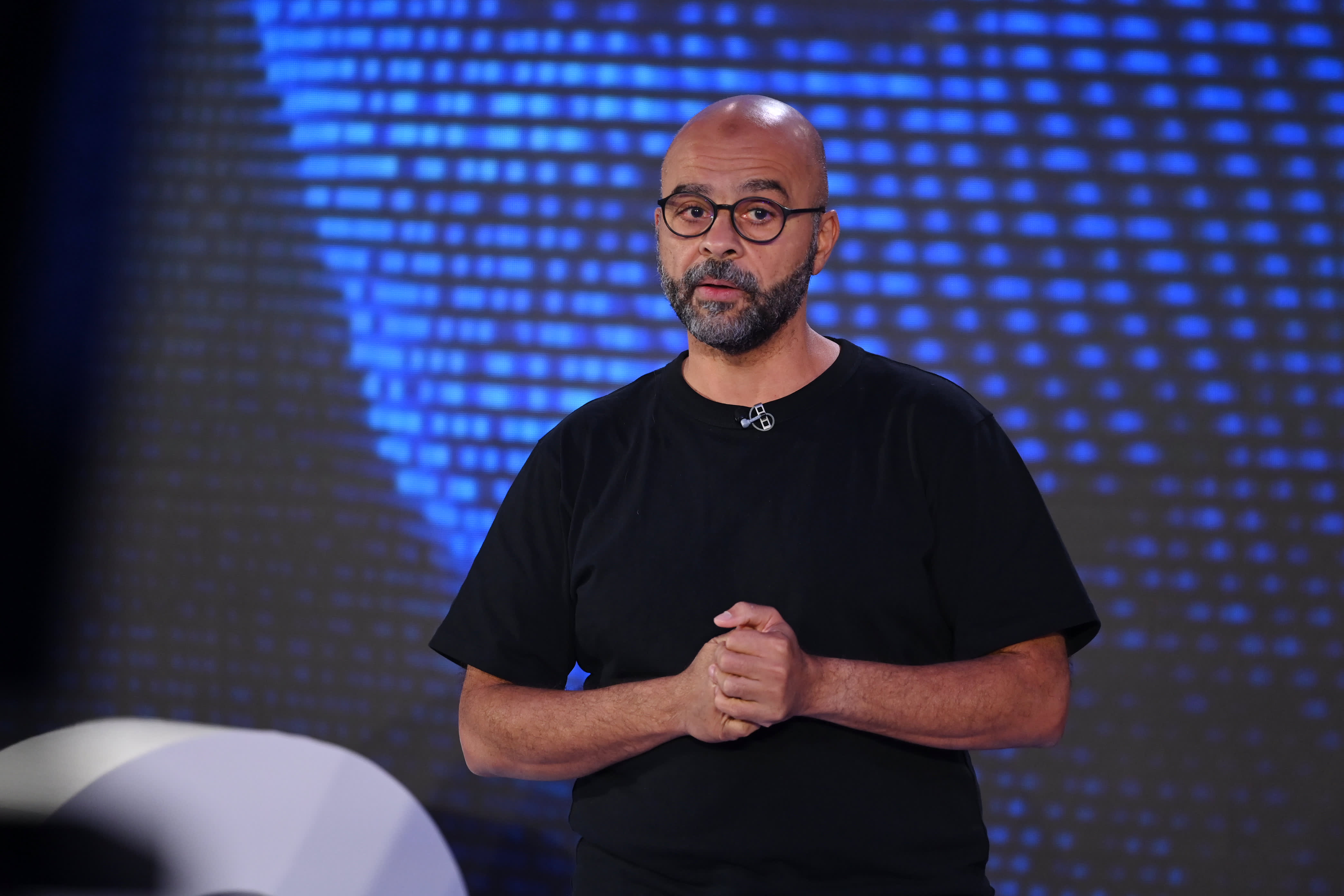
Artificial intelligence is no longer a futuristic abstraction but a force reshaping economies in real time — and opinions on where it will lead could not be more divided. Mo Gawdat, former chief business officer at Google X, believes that AI is poised to wipe out jobs across the spectrum, from entry-level to the C-suite.
But other tech figures, including Nvidia CEO Jensen Huang and entrepreneur Mark Cuban, insist that new opportunities will emerge for those willing to adapt.
Speaking on the Diary of a CEO podcast, Gawdat said bluntly: “The idea that artificial intelligence will create jobs is 100% crap.”
Register for Tekedia Mini-MBA edition 20 (June 8 – Sept 5, 2026).
Register for Tekedia AI in Business Masterclass.
Join Tekedia Capital Syndicate and co-invest in great global startups.
Register for Tekedia AI Lab.
He used his own AI startup, Emma.love, as proof. He and two software experts built the app with AI assistance, a task he said would have required “350 developers in the past.”
Even positions once thought secure from automation are vulnerable, he argued — from video editors and podcasters to senior executives.
“Artificial general intelligence is going to be better than humans at everything, including being a CEO,” Gawdat said. “There will be a time where most incompetent CEOs will be replaced.”

Bill Gates has echoed similar forecasts, predicting that even doctors and teachers could eventually be supplanted by AI systems.
A Tale of Two Futures
The debate splits into sharply contrasting visions with potentially different outcomes.
Some believe that if AI evolves as fast as Gawdat suggests, the coming decade could see wholesale job displacement. Entire sectors may be hollowed out as companies turn to machines for not only technical work but also leadership roles. Governments, unable to rely on traditional employment as the main economic anchor, may be forced to adopt a universal basic income (UBI) to keep societies stable.

Gawdat warns that while this could free people to spend more time with families or pursue hobbies, it also risks chaos if “hunger for power, greed and ego” lead to reckless AI deployment under unqualified leaders.
By contrast, Mark Cuban and Jensen Huang see AI as a tool that will not erase work but reshape it. Cuban has launched a free AI boot camp for kids, signaling his belief in reskilling the next generation. Huang, whose company Nvidia powers much of the generative AI boom, argues that workers who combine technical AI skills with human-centered soft skills will become indispensable.
They envision a future where AI assists with tasks — drafting emails, preparing documents, even giving medical guidance — while humans move into more creative, strategic, and interpersonal roles.
Industries Already on the Frontline
Healthcare: AI diagnostic tools are already outperforming doctors in detecting certain cancers, raising fears of displacement. At the same time, hospitals are using AI to support — not replace — physicians, streamlining paperwork and patient scheduling so medical staff can focus on care.
Media: Journalists, podcasters, and video editors have seen AI generate articles, clips, and even deepfake broadcasts at a fraction of the cost. Yet publishers like the New York Times and Time magazine are experimenting with AI partnerships, integrating the technology to expand reach while retaining editorial oversight.
Finance: Algorithmic trading and AI-driven risk analysis have automated jobs once performed by teams of analysts. But banks are simultaneously recruiting specialists who can integrate AI into compliance, fraud detection, and customer experience, creating hybrid roles that didn’t exist five years ago.
Manufacturing: Robotics and AI-driven quality control systems are streamlining production lines. Apple, for instance, is pouring billions into U.S. semiconductor and glass manufacturing with AI-driven processes, while also training workers in “smart manufacturing” through its new Detroit academy.
These industries illustrate the core divide: some jobs are vanishing outright, while others are being reshaped into higher-value positions.
The World Economic Forum’s 2025 Future of Jobs report reflects the tension between these futures. Globally, 41% of employers expect to downsize due to AI, rising to 48% in the U.S. Yet at the same time, 77% say they will upskill workers to use AI effectively, and nearly half (47%) are planning to shift employees into new roles rather than eliminate them.
For now, companies are straddling both paths: cutting redundant roles while investing in retraining programs to capture productivity gains from AI.
Work and Identity in Question
Beyond economics, Gawdat says AI could force a cultural reckoning. “We were never made to wake up every morning and just occupy 20 hours of our day with work,” he said. “We defined our purpose as work. That’s a capitalist lie.”
He suggests an AI-powered society may push people to find meaning outside of their job titles — through family, creativity, or community.
But his warning is tempered with a caveat: unless ethical guardrails are established, the same technology could deepen inequality and concentrate power.
Whether the world ends up closer to Gawdat’s dystopian forecast or Cuban and Huang’s more optimistic vision, one reality is certain: artificial intelligence is rewriting the rules of work and society.
“This is real,” Gawdat said. “This is not science fiction.”
Entry level roles are being eliminated due to artificial intelligence automation, disproportionately impacting Gen Z workers and disrupting traditional career pipelines, Fortune reports, citing Pave data. The share of 21- to 25-year-olds employed at large public tech firms has been halved since 2023, dropping from 15% to 6.7%. Private tech companies are also experiencing the crunch, with Gen Z representation slipping from 9.3% to 6.8%. Meanwhile, the average employee age in public tech has creeped up five years, from 34.3 years to 39.4 years, with millennials dominating the sector.