

Olympics 2026: Officials Respond to Allegations That Ski Jumpers Injected Acid Into Their Genitals.

Quote from Oladosun Joshua Segun on February 6, 2026, 5:32 AM
Sometimes, the Olympics are the opportunity to either go home or go big. However, prior to the February 6 Milano Cortino Winter Olympics, representatives of the International Ski and Snowboard Federation (FIS) addressed allegations that male athletes were attempting to obtain a competitive edge by enlarging their penises. The group responded to accusations from the German daily Bild in January that ski jumpers had injected hyaluronic acid into their penises before to having their outfits measured this week.
According to Bild, a 3D scanner measures ski jumpers before to every season, with the genital area having the lowest position. The season's outfit is then designed using the measurements.
Hyaluronic acid, a lubricant frequently used in skincare products, can be injected to enlarge the circumference of the penis by one or two centimeters, though this is not prohibited in the sport. According to the FIS, this could add a few millimeters of fabric to the suits. This could therefore improve a skier's aerial flight and possibly aid them in the competition.
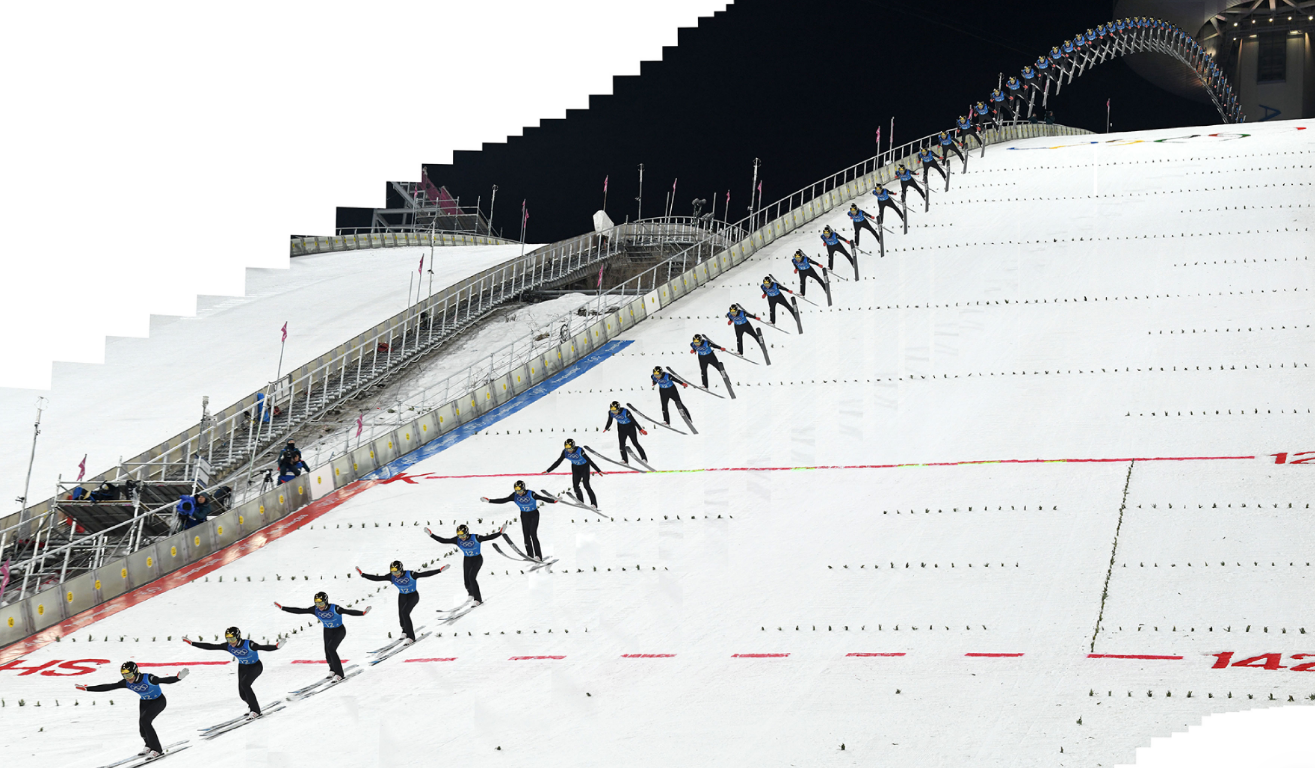
"Every extra centimeter on a suit counts,” in regard to the BBC, FIS ski jumping men's race director Sandro Pertile gave a clarification. “If your suit has a 5 percent bigger surface area, you fly further.”
Yet, during an Olympic press conference, Olivier Niggli, the director general of the World Anti-Doping Agency (Wada), clarified that the agency is unfamiliar with the use of hyaluronic acid in sports.
"I am not aware of the details of ski jumping, and how that could improve performance,” the BBC reported what he stated. "If anything was to come to the surface, we would look at it and see if it is doping related. We don't address other [non-doping] means of enhancing performance."
However, FIS communications director Bruno Sassi told BBC Sport that the accusations might simply be that. “There has never been any indication, let alone evidence, that any competitor has ever made use of a hyaluronic acid injection to attempt to gain a competitive advantage."

Sometimes, the Olympics are the opportunity to either go home or go big. However, prior to the February 6 Milano Cortino Winter Olympics, representatives of the International Ski and Snowboard Federation (FIS) addressed allegations that male athletes were attempting to obtain a competitive edge by enlarging their penises. The group responded to accusations from the German daily Bild in January that ski jumpers had injected hyaluronic acid into their penises before to having their outfits measured this week.
According to Bild, a 3D scanner measures ski jumpers before to every season, with the genital area having the lowest position. The season's outfit is then designed using the measurements.

Hyaluronic acid, a lubricant frequently used in skincare products, can be injected to enlarge the circumference of the penis by one or two centimeters, though this is not prohibited in the sport. According to the FIS, this could add a few millimeters of fabric to the suits. This could therefore improve a skier's aerial flight and possibly aid them in the competition.
Register for Tekedia Mini-MBA edition 20 (June 8 – Sept 5, 2026).
Register for Tekedia AI in Business Masterclass.
Join Tekedia Capital Syndicate and co-invest in great global startups.
Register for Tekedia AI Lab.
"Every extra centimeter on a suit counts,” in regard to the BBC, FIS ski jumping men's race director Sandro Pertile gave a clarification. “If your suit has a 5 percent bigger surface area, you fly further.”
Yet, during an Olympic press conference, Olivier Niggli, the director general of the World Anti-Doping Agency (Wada), clarified that the agency is unfamiliar with the use of hyaluronic acid in sports.
"I am not aware of the details of ski jumping, and how that could improve performance,” the BBC reported what he stated. "If anything was to come to the surface, we would look at it and see if it is doping related. We don't address other [non-doping] means of enhancing performance."

However, FIS communications director Bruno Sassi told BBC Sport that the accusations might simply be that. “There has never been any indication, let alone evidence, that any competitor has ever made use of a hyaluronic acid injection to attempt to gain a competitive advantage."
Share this:
- Click to share on Facebook (Opens in new window) Facebook
- Click to share on X (Opens in new window) X
- Click to share on WhatsApp (Opens in new window) WhatsApp
- Click to share on LinkedIn (Opens in new window) LinkedIn
- Click to email a link to a friend (Opens in new window) Email
- Click to print (Opens in new window) Print