

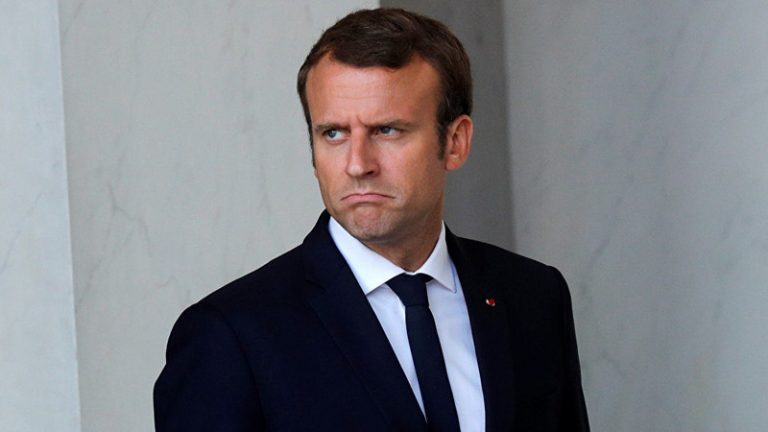
As the global race for artificial intelligence (AI) supremacy heats up, France is set to announce a €109 billion ($112.5 billion) private sector investment package in its AI sector during the Paris AI Summit, which begins today.
The move, hailed by President Emmanuel Macron as a significant boost to France’s technological ambitions, includes major investments from Canadian asset management giant Brookfield and the United Arab Emirates (UAE).
The financing package includes €20 billion from Brookfield, primarily earmarked for cutting-edge data centers, and a potential €50 billion investment from the UAE, which will fund AI-related projects, including a 1-gigawatt data center. Macron’s office stated that these investments aim to position France as a leader in AI infrastructure in Europe, a continent that has so far lagged behind the U.S. and China in the AI arms race.
Register for Tekedia Mini-MBA edition 20 (June 8 – Sept 5, 2026).
Register for Tekedia AI in Business Masterclass.
Join Tekedia Capital Syndicate and co-invest in great global startups.
Register for Tekedia AI Lab.
While this announcement signals a step forward for France and Europe, the reality is that Europe remains far behind the AI superpowers, China and the United States. Compared to the massive investments made by Washington and Beijing, the French initiative, though impressive by European standards, represents baby steps in a battle already in full swing elsewhere.
For years, Europe has struggled to compete in the AI space, lagging behind the U.S. and China in research, infrastructure, and computing power. The European Union has focused heavily on AI regulation, aiming to create legal guardrails for AI development and deployment. However, this approach has put the region at a disadvantage, as regulatory hurdles have slowed AI advancements while tech giants in the U.S. and China aggressively expand their capabilities.
The lack of major European AI champions comparable to Google DeepMind, OpenAI, or China’s Baidu and Tencent has also hampered progress. Unlike the U.S., which benefits from a deep venture capital ecosystem and AI research hubs concentrated in Silicon Valley, Seattle, and Boston, Europe’s fragmented tech landscape has made it difficult for companies to achieve AI breakthroughs at scale.

France’s recent announcement of private sector-driven AI investments is a much-needed boost, but experts argue that Europe must ramp up its AI ambitions dramatically to compete with its global rivals.
The U.S. Takes the Lead with $500 Billion AI Initiative “Stargate”
Just weeks before France’s AI summit, the United States made a game-changing move to assert its dominance in AI. Last month, U.S. President Donald Trump announced a massive $500 billion AI investment initiative dubbed “Stargate.” The program, which aims to safeguard America’s lead in AI, has backing from major tech players, including SoftBank Group, OpenAI, and Oracle.
Stargate is designed to massively expand America’s AI infrastructure, focusing on high-performance data centers, AI model training, and next-generation computing power. It represents one of the largest AI investments in history and is seen as a direct response to the growing threat of China’s AI advancements.

The U.S. has already funneled billions into AI research, with leading tech giants such as Microsoft, Google, Amazon, and Meta making record-breaking AI investments in 2024. Microsoft alone has committed $80 billion to AI-powered data centers this year, with over half of that spending taking place in the United States.
China’s DeepSeek Breakthrough
While the U.S. is leading in terms of private sector investment and infrastructure, China has made significant AI breakthroughs, particularly in open-source AI development. The latest shockwave in the AI industry came from China’s DeepSeek, a powerful open-source AI model that shook the tech industry at launch.
Unlike its U.S. counterparts, which require billions in computing resources, DeepSeek reportedly costs a fraction of what American AI models like OpenAI’s GPT-4 cost to develop and train. This development has raised alarms in Silicon Valley, as it demonstrates China’s ability to produce highly efficient AI models at a significantly lower cost.
DeepSeek’s success triggered a massive stock selloff in AI chipmakers such as Nvidia and Broadcom, which lost a combined $800 billion in market value in a single day last week. The selloff was fueled by fears that cheaper Chinese AI alternatives could disrupt the lucrative AI hardware market dominated by American firms.
As a result, tech CEOs in the U.S. have been forced to justify their hefty AI spending, with Amazon, Microsoft, Alphabet, and Meta all doubling down on their AI infrastructure investments.
France’s Long Road in the AI Race
While France’s €109 billion AI investment package is a significant step forward, it pales in comparison to the scale of U.S. and Chinese AI initiatives. Macron has been vocal about making France a leader in AI research and development, but there has been little effort to walk the talk.
A major challenge facing France and Europe is the energy-intensive nature of AI development. AI data centers require massive amounts of electricity, and Europe’s struggling energy sector may not be able to keep up with the demands of next-generation AI infrastructure.
Macron’s government is expected to use the Paris AI Summit to outline strategies to attract more AI firms, secure energy infrastructure for AI projects, and accelerate research and development efforts.
While the €109 billion investment is a start, experts warn that Europe must dramatically scale up its AI ambitions to compete with the U.S. and China. With the U.S. pumping half a trillion dollars into AI and China proving it can develop powerful AI models at a fraction of the cost, France’s latest move represents a small but necessary step in a race where every second counts.