

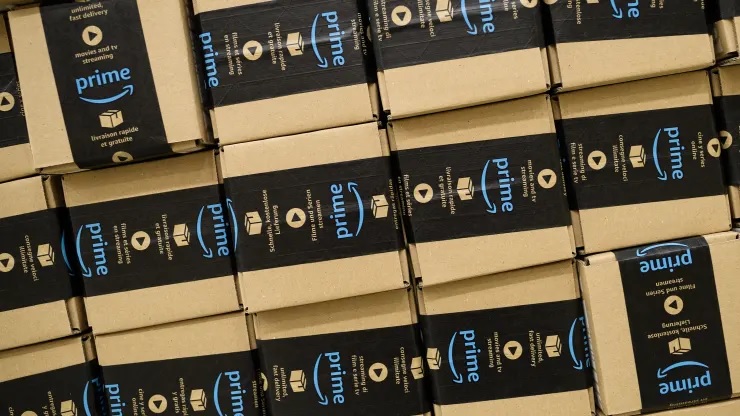
The Federal Trade Commission (FTC) has begun its courtroom battle with Amazon this week over what it calls deceptive practices surrounding the company’s moneymaker Prime subscription program, Gizmodo reports.
The trial, expected to last about a month, could redefine the boundaries of consumer protection in the digital subscription economy, with implications extending well beyond Amazon.
The FTC alleges that Amazon “tricked millions of customers” into signing up for Prime and then made cancellation deliberately complex. In court filings earlier this month, the regulator accused the company of refusing to address a “known problem,” which employees internally described as an “unspoken cancer,” fearing that simplifying the process would lead to fewer paying subscribers.
Register for Tekedia Mini-MBA edition 20 (June 8 – Sept 5, 2026).
Register for Tekedia AI in Business Masterclass.
Join Tekedia Capital Syndicate and co-invest in great global startups.
Register for Tekedia AI Lab.
Central to the case is Amazon’s internal “Iliad” system—the cancellation flow that, according to the FTC, deters or confuses users attempting to quit Prime. The FTC says the labyrinthine mechanism misled some consumers into believing they had successfully canceled when they had not.
The lawsuit, originally filed two years ago under Biden-era FTC Chair Lina Khan, marks Amazon’s first major showdown with the agency, though another high-stakes trial is already looming. In a separate case, the FTC has filed antitrust charges against Amazon, with proceedings scheduled to begin in early 2027.
Prime remains Amazon’s golden goose. In 2023, the company earned more than $44 billion from subscriptions, which include audiobooks and music, though Prime leads the pack. Beyond that revenue, Prime members also spend heavily across Amazon’s marketplace, making them doubly valuable.

Details of the case
The FTC argues that Amazon concealed critical terms—like pricing and automatic renewals—deep in the fine print when users signed up for free trials. Shoppers lured by free shipping at checkout, for example, might not realize they were enrolling in a free Prime trial that renews automatically after 30 days.
Cancellation, too, became an ordeal. The multi-step process—internally dubbed “the Iliad,” a nod to Homer’s decade-long Trojan War—was designed to discourage cancellations. Consumers had to navigate multiple pages, with Amazon dangling exclusive offers and Prime Video teasers along the way.
In some cases, the FTC says, users were shown a banner thanking them for their membership and offering a “look back at your journey with Prime,” several steps before the cancellation was final. The FTC contends this tricked users into believing they had successfully opted out.

These practices, the FTC alleges, violate Section 5 of the FTC Act, which bans “unfair” commerce practices, and the Restore Online Shoppers’ Confidence Act (ROSCA), which requires companies to disclose all terms upfront, obtain explicit consent, and allow simple cancellation.
Amazon executives in the crosshairs
Amazon itself is not the sole defendant. Three executives—Prime Vice President Jamil Ghani, Amazon Health Services Senior Vice President Neil Lindsay, and Senior Vice President of International Consumers Russell Grandinetti—are also named.
The FTC says Ghani and Lindsay approved clarity improvements to Prime’s enrollment flow but rolled them back when sign-ups dipped. Grandinetti allegedly dismissed internal concerns about unintentional enrollments in favor of boosting Prime’s subscriber base.
Judge John H. Chun of the U.S. District Court for the Western District of Washington has already delivered a preliminary win to the FTC, ruling that Ghani and Lindsay would automatically be liable if Amazon is found guilty.
Amazon denies wrongdoing. “The bottom line is that neither Amazon nor the individual defendants did anything wrong – we remain confident that the facts will show these executives acted properly and we always put customers first,” a spokesperson told Gizmodo.
Dark patterns under fire
The FTC characterizes Amazon’s tactics as “dark patterns”—deceptive design choices crafted to manipulate user behavior. These range from confusing enrollment buttons to misleading cancellation steps.
Dark patterns are increasingly drawing global scrutiny. The European Union is preparing to address such practices through the upcoming Digital Fairness Act. Meanwhile, in the United States, the FTC under Khan pushed for a “click to cancel” rule to simplify cancellations, but the effort was struck down under the Trump administration.
Implications beyond Amazon
The FTC notes that Amazon is far from alone in complicating subscription cancellations. Many platforms—from streaming services to digital newspapers—use similar tactics to reduce churn. But Amazon, as one of the world’s largest subscription services, represents the highest-profile test case yet.
If the court sides with the FTC, it could ripple across the digital economy, forcing companies to rethink how they present sign-ups and cancellations. Consumer advocates say such a ruling could finally standardize practices and limit manipulative design.
A comparative lens
The Amazon trial echoes similar disputes unfolding globally. In Europe, regulators have taken aim at companies like Apple and Google for “dark pattern” practices around app store subscriptions, while India’s Consumer Protection Authority has begun cracking down on opaque renewal terms across e-commerce platforms.
Netflix and Spotify have also faced criticism in markets like Germany and France, where regulators required clearer cancellation processes. Compared to these cases, Amazon’s alleged tactics stand out not only for their scale—affecting millions of Prime users—but also for the internal acknowledgment that the practices amounted to a systemic issue.
That global context highlights the stakes of the Washington courtroom battle. If the FTC prevails, it would bring U.S. standards closer to those now emerging in Europe, potentially setting a new benchmark for digital subscriptions worldwide.