

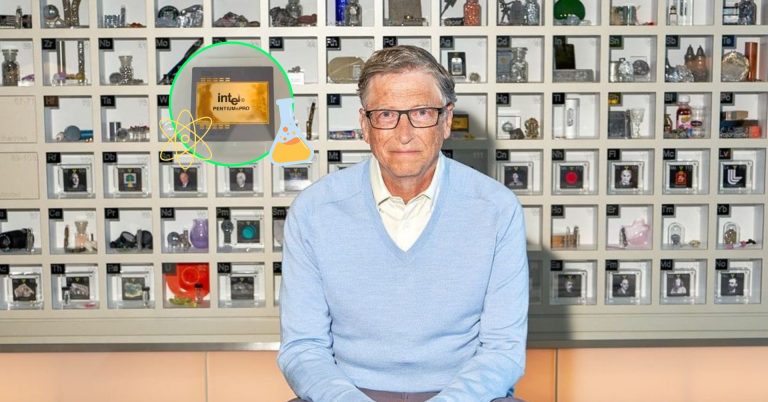
Bill Gates’ last-minute withdrawal deepened scrutiny of an AI summit that drew over $200 billion in pledges but was overshadowed by cancellations, organizational lapses, and traffic chaos in New Delhi.
Bill Gates withdrew from India’s AI Impact Summit just hours before his scheduled keynote address on Thursday, compounding pressure on an event that has secured more than $200 billion in investment pledges but has been overshadowed by high-profile cancellations and widespread complaints over the organization.
The Bill & Melinda Gates Foundation said the billionaire would not deliver his address “to ensure the focus remains on the AI Summit’s key priorities,” per Reuters. The decision came only days after the foundation dismissed speculation that he would not attend and maintained he was on track to participate.
Register for Tekedia Mini-MBA edition 20 (June 8 – Sept 5, 2026).
Register for Tekedia AI in Business Masterclass.
Join Tekedia Capital Syndicate and co-invest in great global startups.
Register for Tekedia AI Lab.
Gates’ absence followed the earlier cancellation of Jensen Huang, chief executive of Nvidia, and added to what has become a difficult start for a summit billed as the first major artificial intelligence forum in the Global South. India has sought to use the gathering to cement its role in shaping global AI governance.
The withdrawal also came weeks after the U.S. Department of Justice released emails that included communication between the late financier and convicted sex offender Jeffrey Epstein and staff at the Gates Foundation. Gates has previously said his interactions with Epstein were confined to philanthropy-related discussions and described meeting him as a mistake.
Despite the controversy, the six-day summit delivered a wave of headline investment commitments. Reliance Industries announced a $110 billion plan for AI infrastructure in India, accounting for more than half of the total pledges disclosed during the event. Tata Group signed a partnership agreement with OpenAI, underscoring India’s push to deepen collaboration between domestic conglomerates and global AI leaders.

Prime Minister Narendra Modi used his keynote address to frame AI development as both an economic opportunity and a social responsibility. Standing alongside French President Emmanuel Macron and top technology executives, including Sundar Pichai, Sam Altman, and Dario Amodei, Modi called for vigilance in safeguarding children online.
“We must be even more vigilant about children’s safety. Just as a school syllabus is curated, the AI space should also be child- and family-guided,” Modi said.
The leaders gathered on stage to mark the launch of the New Delhi Frontier AI Commitments, a set of voluntary principles aimed at promoting inclusive and responsible development of frontier AI models. A symbolic unity pose, however, produced an awkward moment when Altman and Amodei — heads of rival firms OpenAI and Anthropic — stood side by side but did not join hands, even as others did.

Behind the high-profile announcements and photo opportunities, the summit faced mounting criticism over its execution, according to Reuters. On Thursday, exhibition halls were abruptly closed to the public, angering companies that had invested in elaborate pavilions and stalls. The venue compound, which had drawn large crowds earlier in the week, appeared largely deserted.
An incident involving Galgotias University further dented the summit’s image. The university was asked to vacate its stall after a staff member presented a commercially available robotic dog manufactured in China as an in-house innovation, triggering public backlash.
Traffic management emerged as one of the most contentious issues. Police repeatedly shut down major roads in New Delhi to facilitate VIP movements, disrupting daily life in a city of roughly 20 million residents. The government apologized for the inconvenience caused during the initial days of the summit.
On Wednesday, social media footage showed attendees walking long distances through central Delhi after roads were closed, with limited access to taxis and no visible shuttle services. The scenes fueled criticism from opposition parties and industry participants alike.
Pawan Khera, spokesperson for the opposition Indian National Congress, said: “How can you expect your engineers, AI guys to walk such distances … And then we complain that entrepreneurs are leaving India.”
Jay Gala, a researcher at Microsoft, wrote on X: “The whole summit is, sorry was, meant for researchers, founders, builders who are grinding in the field every day. Instead we get treated like we don’t matter, blocked for hours so some minister or official can pass through.”
For the Modi government, the summit was intended to showcase India’s ambition to become a global AI powerhouse — pairing large-scale capital commitments with a voice in shaping norms around frontier technologies. The scale of investment pledges underscores significant corporate appetite for building AI infrastructure in one of the world’s fastest-growing digital markets.
Yet the contrast between sweeping financial commitments and logistical breakdowns has created a more complicated narrative. With two prominent technology leaders withdrawing and operational missteps dominating headlines, the event underpins both India’s growing weight in the AI ecosystem and the challenges of delivering a seamless global platform at scale.