

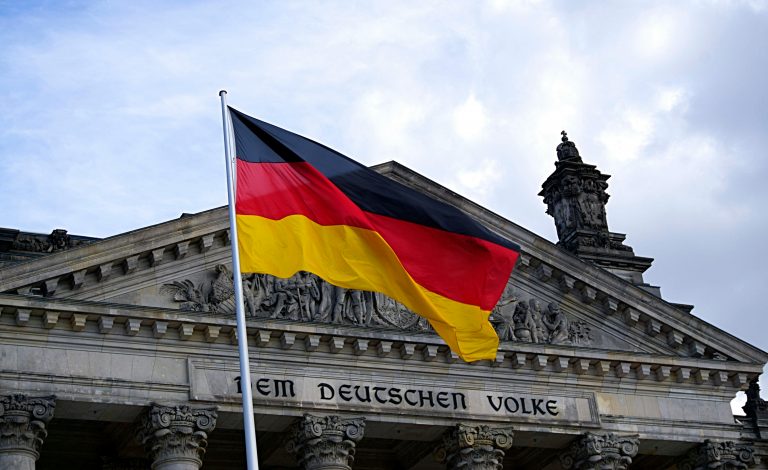
The consensus among Germany’s leading economic institutes is one of stability, but stagnation. The country’s economy has stabilized after two years of contraction, but remains deeply entrenched in a phase of meagre, structurally weak growth.
The eagerly anticipated fiscal expansion planned for the coming years is expected to provide only limited and delayed momentum, leading multiple institutes to cut their growth forecasts for 2026 and 2027.
Forecasts Downgraded Across the Board
Three major economic institutes—Ifo, Kiel, and RWI—released forecasts on Thursday that paint a picture of persistently weak underlying conditions for Europe’s largest economy.
Register for Tekedia Mini-MBA edition 20 (June 8 – Sept 5, 2026).
Register for Tekedia AI in Business Masterclass.
Join Tekedia Capital Syndicate and co-invest in great global startups.
Register for Tekedia AI Lab.
| Institute | 2025 GDP Growth (Current Forecast) | 2026 GDP Growth (Previous vs. Current) | 2027 GDP Growth (Current Forecast) |
| Ifo Institute | 0.1% (Down from 0.2%) | 0.8% (Cut by 0.5 ppt) | 1.1% (Cut by 0.5 ppt) |
| Kiel Institute | 0.1% (Following 2 years of contraction) | 1.0% (Down from 1.3%) | 1.3% (Slightly up from 1.2%) |
| RWI Institute | 0.1% (Down from 0.2%) | 1.0% (Down from 1.1%) | 1.4% (Unchanged) |
For the current year, all three institutes expect growth to hover at a barely perceptible 0.1%. The expected stronger headline growth rates of 1.0% to 1.3% in 2026 and 2027, driven partially by government stimulus and more working days, are widely seen as masking a persistent lack of self-sustaining momentum. As the Kiel Institute warned, “A self-sustaining upswing is still not in sight.”
Headwinds: Tariffs, Red Tape, and Delayed Stimulus
The slow pace of recovery is being attributed to a combination of persistent structural problems and external geopolitical pressures. U.S. tariffs continue to have a noticeable and damaging effect on Germany’s critical export industry. The Ifo Institute estimates that higher tariffs will dampen GDP growth by 0.3 percentage points in 2025 and a more significant 0.6 percentage points in 2026. This pressure compounds structural weaknesses and forces manufacturers to adapt in a volatile global trade environment.
The head of forecasts at Ifo, Timo Wollmershaeuser, pointed to deep-seated issues that are hindering adaptation. He stated, “The German economy is adapting only slowly and at great expense to the structural shift through innovation and new business models.”

He specifically noted that companies, particularly start-ups, are being severely constrained by excessive red tape and outdated infrastructure.
A key source of disappointment is the slow rollout of planned public investments. The hoped-for stimulus from the €500 billion special fund for infrastructure and climate neutrality is “still failing to materialize,” according to the RWI Institute. RWI Chief Economist Torsten Schmidt cautioned: “The later they arrive and the more fundamental reforms fail to materialise, the greater the damage to the German economy.”
The slow pace of public investment is failing to offset weak demand and falling private investment.

Widening Deficit and Labor Constraints
The expected increase in public spending, though delayed, will come at a cost to the government’s balance sheet. The Kiel Institute projects Germany’s general government budget deficit will widen significantly, climbing from 2.4% of GDP in 2025 to 4.0% in 2027.
Regarding the labor market, a gradual recovery is expected as activity picks up, with the unemployment rate projected to fall from 6.3% this year to 5.9% in 2027. However, this recovery will be immediately constrained by long-term structural issues.
The report warns that larger employment gains will increasingly be limited by a demographic shortage of workers, a major hurdle for the economy’s potential growth.