

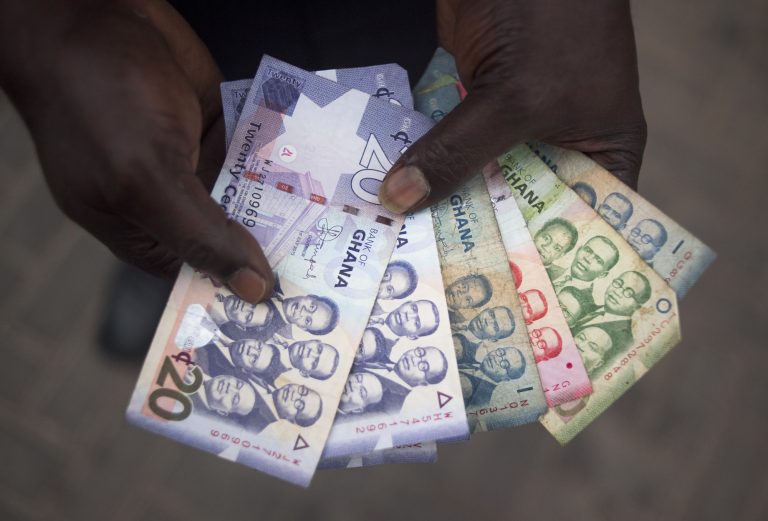
Ghana’s economy grew by 5.5% year-on-year in the third quarter of 2025, underpinned by strong performances in agriculture and services, the Ghana Statistical Service reported on Wednesday.
The growth, while positive, slowed from a revised 7.0% recorded in the same period last year, largely due to weak industrial sector performance, which expanded by just 0.8%, government statistician Alhassan Iddrisu told reporters.
Agriculture emerged as a key driver, with fishing and crop production pushing sector growth to 8.6%. The services sector, covering finance, insurance, trade, and education, also contributed significantly with a 7.6% expansion.
Register for Tekedia Mini-MBA edition 20 (June 8 – Sept 5, 2026).
Register for Tekedia AI in Business Masterclass.
Join Tekedia Capital Syndicate and co-invest in great global startups.
Register for Tekedia AI Lab.
“Agriculture’s contribution to growth was outsized, showing a sector that is recovering quickly and adding real weight to the national output,” Iddrisu said.
Non-oil GDP rose by 6.8%, slightly below last year’s 7.8%, reflecting continued challenges outside Ghana’s resource sectors. The country, a major producer of gold, oil, and cocoa, is gradually emerging from its most severe economic crisis in decades.
Macroeconomic stability appears to be improving. Annual inflation fell for the 11th consecutive month in November to 6.3%, the lowest level since a 2021 rebasing exercise. In response, Ghana’s central bank has reduced its main interest rate by a cumulative 1,000 basis points this year, citing both the improved economic outlook and expectations for continued declines in inflation.

Analysts note that the recovery is heavily reliant on agriculture and services, while industrial stagnation poses a risk to sustaining higher overall growth. Policy measures, including supportive fiscal and monetary policies, are likely to remain critical to strengthen manufacturing and industrial activity, diversify the growth base, and ensure that the recent decline in inflation translates into broader economic gains for households and businesses.
Comparative Analysis: Ghana’s 2025 Economic Performance in West Africa and Sub-Saharan Africa
This growth, while moderate in absolute terms, situates Ghana above the average expansion expected across Sub?Saharan Africa in 2025, where growth forecasts cluster broadly around the lower to mid?4?percent range according to the latest outlooks from multilateral institutions. In the West African sub?region, Ghana’s performance also compares favorably with regional peers, reflecting relative resilience even as the country works to diversify its economic base.
Ghana’s economic figures signal a rebound in parts of the economy that have been under pressure in recent years. By contrast, industrial output was sluggish, growing by only 0.8?percent, which underscores persistent weakness in manufacturing and construction activity.

Comparatively, some regional peers such as Senegal and Côte d’Ivoire are expected to record higher growth rates in 2025, benefiting from robust energy investment and sustained private investment. Senegal, for example, is forecast to grow at close to 8½?percent, and Côte d’Ivoire has been projected in some assessments to expand at roughly 6?percent, supported by infrastructure spending and diversified services.
Across Sub?Saharan Africa, growth remains uneven. Nigeria’s expansion is expected to be more modest, constrained by structural bottlenecks that have limited non?oil activity. South Africa — the continent’s largest economy — is forecast to post relatively low growth, weighed down by subdued investment and long?standing structural challenges.
In this wider context, Ghana’s around?5½?percent rate places it above many of its peers and signals a stronger recovery trajectory, particularly when coupled with improving macroeconomic conditions.
However, Ghana’s recovery is not without vulnerabilities. The industrial sector’s weak performance remains a concern because manufacturing and construction are key conduits for job creation and broader value addition. Dependence on primary commodity exports — gold, cocoa, and oil — leaves the economy exposed to global price volatility and external demand shifts, a weakness shared by many Sub?Saharan economies that have yet to achieve deep export diversification.
Inflation, while slowing, could remain sensitive to external shocks, and fiscal pressures observed across several African countries may constrain the scope for public investment unless revenue mobilization improves.
Looking ahead to 2026, forecasts generally indicate that Ghana will continue to register moderate growth, with projections pointing to rates in the high?4?percent range. This suggests a gradual continuation of the recovery, supported by stable prices, expansion in agriculture and services, and policy measures that sustain confidence among investors.
Across Sub?Saharan Africa, growth is expected to strengthen modestly in 2026, but the picture will remain heterogeneous with divergence across countries. Some West African economies with robust energy sectors and investment inflows are expected to outperform, while others grappling with weaker commodity revenues or structural constraints may lag.