

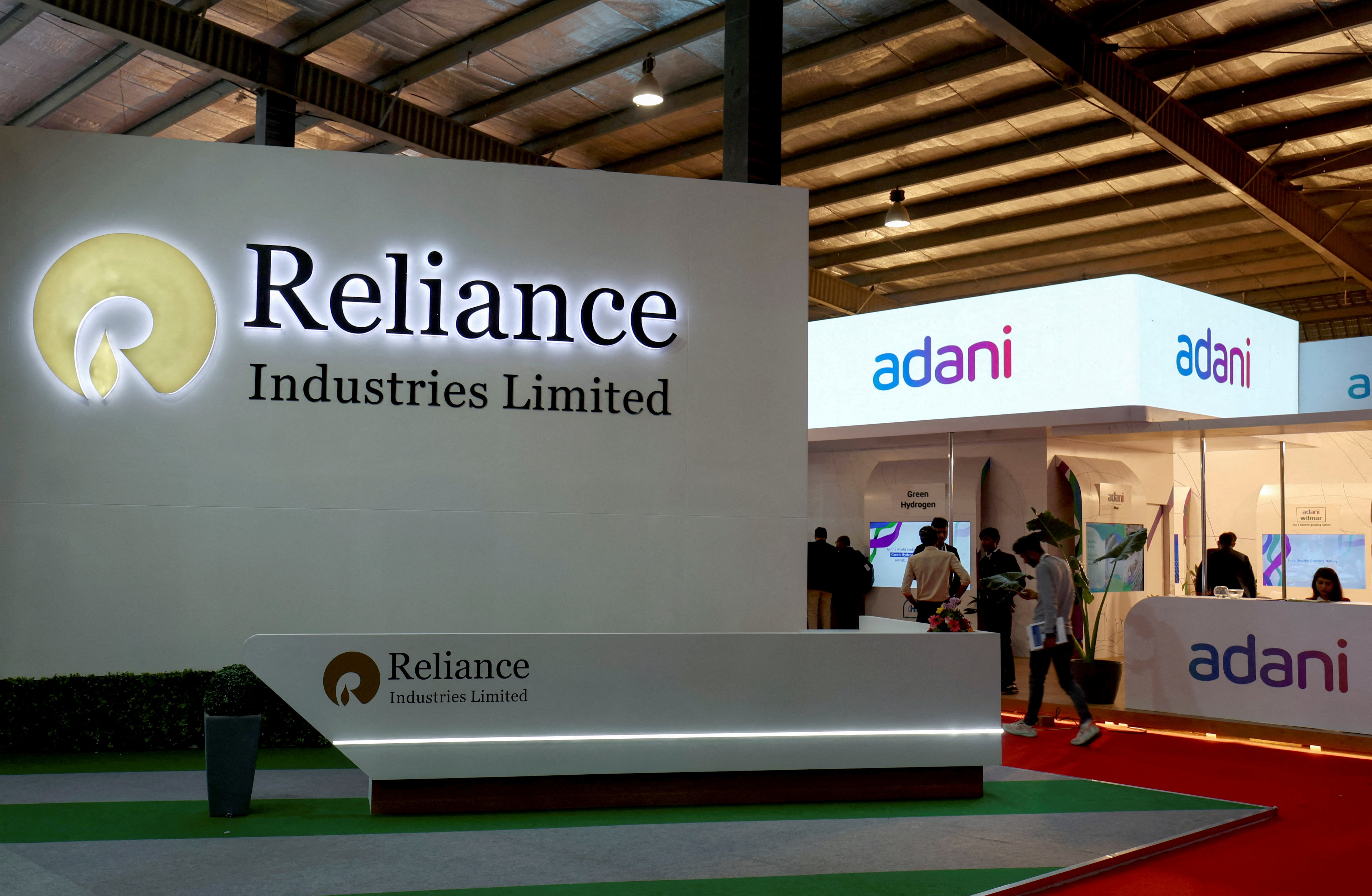
Reliance Industries is expected to report a mild decline in the March-quarter profit, highlighting the strain that surging crude prices are placing on its core oil-to-chemicals business even as its telecom arm continues to provide stability.
Consensus estimates point to a 3.7% year-on-year drop in net profit, with revenue projected to rise 8.1%. The divergence tells a margin story rather than a demand problem. Higher crude prices inflate top-line figures but compress refining profitability when input costs rise faster than product realizations.
The current cycle is particularly complex due to the volatility of the oil market. Brent crude has climbed more than 40% since late February amid geopolitical tensions tied to the Iran conflict and disruptions around the Strait of Hormuz. For refiners, this would typically translate into stronger “crack spreads” — the margin between crude input costs and refined product prices. But analysts say the usual benefit is being diluted.
Register for the next Tekedia Mini-MBA.
Register for Tekedia AI in Business Masterclass.
Join Tekedia Capital Syndicate and co-invest in great global startups.
JP Morgan analysts noted, “Refiner (including Reliance) earnings should in theory benefit from higher cracks, but high crude premiums and operating costs could be a material, uncertain drag.”
That “premium” means geopolitical risk embedded in crude pricing, effectively raising feedstock costs beyond what end-product pricing can fully absorb.
Jefferies added that operating profit in the oil-to-chemicals segment is likely to be hit by a combination of elevated freight rates, tighter crude availability, and a higher share of lower-margin output such as liquefied petroleum gas. These factors point to a squeeze not just from price levels, but from the structure of refining economics in a disrupted supply environment.

Reliance’s scale amplifies the impact. As operator of the world’s largest refining complex, the company is highly exposed to global crude flows and shipping dynamics. Freight costs, insurance premiums, and sourcing constraints, all of which have risen with geopolitical risk, feed directly into its cost base.
Investor sentiment reflects that pressure. The stock has declined about 8% since its last earnings release, underperforming the Nifty 50, which has fallen 5.8% over the same period. The underperformance suggests markets are discounting near-term earnings weakness while waiting for clearer visibility on margin recovery.
The broader question is whether the current pressure is cyclical or structural. In previous oil price spikes, refiners benefited more directly from margin expansion. This time, the combination of supply disruption, higher logistics costs, and volatile demand patterns is producing a more uneven outcome.

Against that backdrop, Reliance’s diversification strategy is being tested.
The retail business, once a high-growth engine, is expected to slow further. Jefferies estimates around 8% growth for the quarter, marking a second consecutive period below 10%. The moderation reflects intensifying competition, a more price-sensitive consumer environment, and the law of large numbers as the business scales.
While still growing, the retail segment is no longer providing the outsized expansion that previously offset volatility in energy earnings. That shifts more attention to execution quality, margins, store productivity, and supply chain efficiency — rather than headline growth.
In contrast, the telecom arm remains a consistent performer. Jio Platforms is expected to deliver steady subscriber additions and incremental improvements in average revenue per user. Estimates suggest around 5 million net additions in the quarter, taking the base to roughly 520 million users.
ARPU is projected to edge up to about 216 rupees, underlining tariff hikes and migration to higher-value plans. While growth is moderating as the market matures, the business continues to generate predictable cash flows, reinforcing its role as a stabilizing asset within the group.
The telecom segment also carries strategic importance beyond operational performance. Investors are closely watching for signals around a potential IPO of Jio Platforms, which could unlock value and provide a clearer market benchmark for the digital business. Reports of discussions with foreign investors over stake sales suggest preparatory steps may be underway, though timelines remain uncertain.
At a portfolio level, Reliance is navigating competing forces. Its legacy energy business is exposed to global volatility and geopolitical risk. Its consumer and retail operations face domestic competitive pressures. Its telecom unit offers stability but is entering a more mature growth phase.
The interplay of these segments is expected to shape earnings quality going forward. A sustained recovery in refining margins would ease near-term pressure, but the longer-term investment case increasingly relies on the performance and monetization of its digital and consumer platforms.
The current quarter, therefore, is less about the headline profit decline and more about signals. Investors will be watching management commentary on margin outlook in oil-to-chemicals, demand trends in retail, and capital allocation priorities — particularly in relation to Jio.