

Iran has presented the United States with an expansive 14-point proposal aimed at ending the war that has shaken global energy markets, disrupted shipping flows, and revived fears of another inflationary shock to the world economy.
But early reactions from Donald Trump suggest Washington remains far from accepting Tehran’s terms.
The proposal, submitted through mediators in Pakistan and reported by Tasnim News Agency, marks Tehran’s most comprehensive diplomatic offer since the conflict erupted following U.S. and Israeli strikes on Iran on February 28.
Register for the next Tekedia Mini-MBA.
Register for Tekedia AI in Business Masterclass.
Join Tekedia Capital Syndicate and co-invest in great global startups.
Iran’s demands go well beyond a temporary ceasefire. The framework reportedly calls for guarantees of non-aggression against Iran, the withdrawal of U.S. military forces from areas surrounding the country, the lifting of the naval blockade on Iranian ports, the release of frozen Iranian assets, compensation payments, removal of sanctions, and an end to military operations across all connected fronts, including Lebanon.
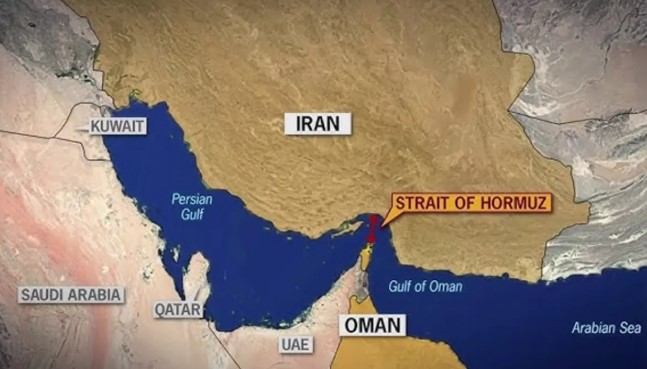
Tehran is also seeking what could become one of the most geopolitically contentious elements of the negotiations: a new mechanism for managing the Strait of Hormuz, the strategic maritime corridor through which roughly 20% of global oil supplies and large volumes of liquefied natural gas normally transit.
Iran reportedly insisted that the major issues be resolved within 30 days and emphasized that discussions should shift away from merely extending the ceasefire toward achieving what it called a permanent end to the war.

The proposal immediately raised questions about whether the two sides remain fundamentally too far apart for a settlement.
“I will soon be reviewing the plan that Iran has just sent to us, but can’t imagine that it would be acceptable in that they have not yet paid a big enough price for what they have done to Humanity, and the World, over the last 47 years,” Trump wrote Saturday on Truth Social.
Trump’s comments reinforced the view among analysts that the White House is unlikely to accept any framework that appears to reward Tehran economically or strategically without significant concessions from the Iranian side. That skepticism matters enormously for global markets because the conflict has already triggered one of the largest geopolitical disruptions to energy trade since the early stages of the Russia-Ukraine war.

Although a ceasefire that began on April 8 has been extended indefinitely, the arrangement has failed to calm oil markets because Iran continues to exert tight control over maritime traffic around Hormuz. Traders increasingly believe the region has entered a prolonged phase of geopolitical risk in which energy flows remain vulnerable even without full-scale military escalation.
Oil prices have surged since the conflict began, while tanker insurance premiums, freight rates, and shipping security costs have all climbed sharply. Energy executives warn that the current market still has not fully absorbed the extent of the disruption because global inventories and emergency reserves have so far softened the immediate blow.
Analysts at HFI Research warned that the longer the conflict drags on, the greater the likelihood of deeper supply shortages, refinery disruptions, and secondary inflation shocks spreading through manufacturing and consumer industries worldwide.
“The gas pump is only the opening act. The real household inflation hit comes later, hidden inside everyday products,” Mark Malek, the chief investment officer at Siebert Financial, told Business Insider.
That warning reflects growing concern on Wall Street that the Iran conflict could evolve into a broader structural inflation problem rather than a temporary energy spike. Rising fuel prices eventually filter into food transportation, aviation, plastics, chemicals, packaging, logistics, and retail pricing, creating ripple effects that can persist long after crude prices stabilize.
Central banks are now facing the possibility that progress made against post-pandemic inflation could begin reversing. Economists warn that if oil prices remain elevated through the second half of the year, policymakers may be forced to delay expected interest-rate cuts or even tighten financial conditions again.
The conflict is also reshaping geopolitical alliances and trade calculations far beyond the Middle East. Iran’s demand for a new Hormuz governance framework appears designed to institutionalize its regional leverage after demonstrating its ability to disrupt one of the world’s most important energy chokepoints. For Tehran, the war has boosted the value of maritime control as both a military deterrent and an economic pressure tool.
For the United States and Gulf Arab states, however, any restructuring of oversight in Hormuz could be viewed as unacceptable because it would potentially legitimize Iran’s influence over global energy flows.
The proposal’s inclusion of sanctions relief and compensation further complicates negotiations. Iran’s economy has suffered years of restrictions on oil exports, banking access, and foreign investment. Tehran appears to be seeking not only military de-escalation, but also a broader economic reset that would allow it to regain access to international markets and stabilize domestic conditions.
That ambition collides directly with Trump’s longstanding “maximum pressure” posture toward Iran. Since returning to the office, Trump has framed the conflict not simply as a regional security issue but as part of a broader effort to weaken Tehran’s military and economic capabilities.
The involvement of Pakistan as a mediator also reflects the widening regional concern surrounding the war. Countries across Asia, the Gulf, and Europe are increasingly worried that a prolonged standoff could destabilize trade routes, worsen inflation, and weaken already fragile economic recoveries. Shipping companies, airlines, and manufacturers are already adjusting operations around prolonged uncertainty in the Gulf. Some cargo routes have become longer and more expensive as operators attempt to reduce exposure to potential escalation zones.
Meanwhile, energy-importing economies, particularly in Asia and Europe, remain highly vulnerable to extended disruption in Hormuz. Nations heavily dependent on Gulf crude and liquefied natural gas could face rising industrial costs, weaker currencies, and deteriorating trade balances if the crisis intensifies further.
The diplomatic challenge now facing Washington and Tehran extends well beyond military de-escalation. At stake is the future structure of energy security in the Gulf, the credibility of U.S. power projection in the region, and the stability of a global economy that remains deeply dependent on uninterrupted Middle Eastern energy supplies.