

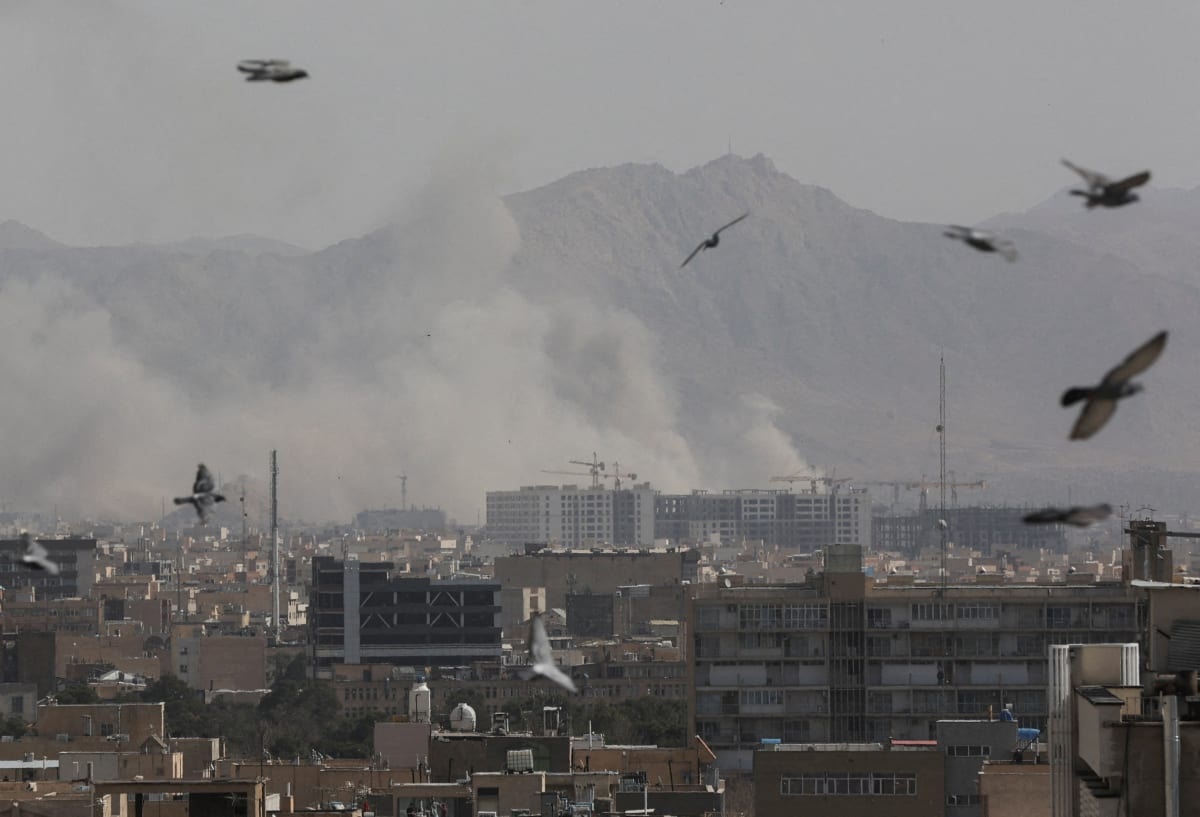
Recent reports indicate that Iran has issued threats to target facilities and infrastructure associated with major US tech companies, including Microsoft, Amazon, Nvidia, and others, amid the ongoing escalation in the regional conflict involving Iran, Israel, and the United States.
Iran’s Islamic Revolutionary Guard Corps (IRGC)-affiliated media, particularly the Tasnim news agency, published a list of potential targets under titles like “Iran’s New Targets” or references to “enemy technology infrastructure.” This follows claims of an Israeli strike on a bank in Tehran, which Iran described as illegitimate and prompted a shift toward targeting “economic centers and banks tied to the US and Israel.”
The named companies include: Amazon including AWS data centers and offices in locations like Tel Aviv, Haifa, and the Gulf. Microsoft (offices and cloud infrastructure). Nvidia (R&D centers, notably in Haifa, Israel). Others such as Google, Palantir, IBM, and Oracle.
These targets are primarily regional offices, cloud service facilities, data centers, and R&D sites in Israel, the UAE, Qatar, Bahrain, and other parts of the Middle East. Iran has framed this as expanding the war into “infrastructure warfare,” citing these companies’ alleged links to US/Israeli military applications.
Register for Tekedia Mini-MBA edition 20 (June 8 – Sept 5, 2026).
Register for Tekedia AI in Business Masterclass.
Join Tekedia Capital Syndicate and co-invest in great global startups.
Register for Tekedia AI Lab.
Iran has reportedly already conducted drone strikes on Amazon Web Services (AWS) data centers in the UAE and Bahrain, causing regional outages for banking, payments, and other services. This has raised alarms about the vulnerability of physical tech infrastructure in the Gulf, where major US firms have invested heavily in AI and cloud expansion.
The threats appear focused on Middle Eastern assets rather than US homeland facilities, likely aiming to disrupt economic/digital ties, retaliate asymmetrically, and pressure Gulf states aligned with the US/Israel. Analysts note this could jeopardize trillions in tech investments and AI growth in the region.No confirmed strikes on the newly listed non-Amazon targets have been reported, but the rhetoric has heightened concerns, with some companies reportedly assessing or adjusting operations for employee safety.
Cyber threats to tech firms, particularly major US companies like Microsoft, Amazon, Nvidia, Google, Oracle, IBM, and Palantir, have escalated significantly in the context of the ongoing Middle East conflict. The most immediate and prominent threat stems from Iran’s stated intentions to target physical infrastructure associated with these companies.
Iran’s Islamic Revolutionary Guard Corps (IRGC)-affiliated media, including the Tasnim news agency, has published lists labeling offices, data centers, cloud facilities, and R&D sites as “Iran’s new targets” or “legitimate targets.” This rhetoric frames the expansion into “infrastructure warfare,” retaliating against perceived US/Israeli-linked economic and technological assets.

Iran has already conducted drone strikes on Amazon Web Services (AWS) data centers in the UAE and Bahrain, causing regional outages affecting banking, payments, enterprise services, and consumer apps. These are described as the first known military attacks on a major US hyperscaler’s physical infrastructure.
Iran cites these companies’ alleged ties to US/Israeli military operations. The threats intensified after an alleged Israeli strike on a Tehran bank, prompting a shift to economic/digital targets. This represents a hybrid threat blending physical kinetic attacks with potential cyber elements, though reports so far emphasize physical strikes disrupting cloud availability and regional digital services.
Beyond the Iran-specific escalation, tech companies face a range of evolving cyber risks: AI-Driven Attacks: Sophisticated phishing, malware, and adaptive threats using generative AI to evade detection. Increasingly strategic attacks stealing and threatening to leak data.

Exploitation of third-party vendors and zero-day flaws. Nation-state actors including Iran-aligned groups targeting critical infrastructure, with reports of Iranian hacktivist mobilization post-escalation. Rising as a top intrusion vector. These general trends compound regional risks, where physical damage to data centers could cascade into widespread cyber-disruption.
Threats jeopardize trillions in AI/cloud investments in the Gulf. Outages have already hit services; prolonged conflict could stall regional AI growth. Firms like Amazon, Google, Nvidia, and others are assessing sites, implementing emergency protocols, temporarily pausing operations, or shutting facilities for employee safety.
Highlights vulnerabilities of hyperscale cloud infrastructure in geopolitically volatile areas, potentially forcing diversification of data storage and rethinking “secure” locations. The situation remains fluid amid the broader US-Israel-Iran conflict—no major new confirmed strikes on the expanded list (beyond prior AWS hits) —but the rhetoric and precedent raise serious concerns for tech sector resilience.